
Train Simulator PRO MOD APK (Free Shopping)

Description
Train Simulator PRO puts you in a fully interactive engineer’s cabin where real levers, working gauges, and a live damage system respond to every decision you make on the rails. This post targets both new players taking their first run across the eastern US and returning players who want to push their railway company further. Below you will find sections covering locomotive controls, the damage system, the signaling system, progression and profit strategy, and the best tips for beginners.
What Is Train Simulator PRO and How Does It Play
Train Simulator PRO is a mobile railway simulation from Mageeks Apps and Games. It covers almost 1000 square miles of the eastern United States. Players take the role of a train engineer, picking up jobs across 15 cities, hauling passengers or freight, and building their own railway company from the ground up.
The game targets realism over casual play. You manage a functioning engineer’s cabin, respond to live signals, and deal with a damage system that punishes careless driving. Each run feels purposeful because your profit directly funds the growth of your company.
How the locomotive driving mechanic and engineer cabin work
The core mechanic is hands-on locomotive operation. Each of the 6 unique locomotives comes with a carefully modeled engineer’s cabin. Inside, you interact with working levers and functional gauges — not decorative buttons but actual controls that affect speed, braking force, and locomotive health.
Speed limits, rail crossings, and live signals all demand your attention at the same time. You also share the track environment with other trains and road traffic. This combination of real-time variables is what separates this sim from lighter mobile train games.
The eastern US setting, tone, and railway company premise
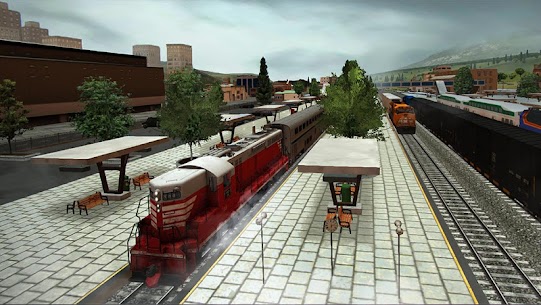
The game spans a large stretch of the eastern United States. You travel through cities, suburbs, factories, and countryside, all rendered with photo-realistic graphics and a dynamic weather and day/night system. The visual range keeps long runs interesting.
The tone is practical rather than arcade. Your goal is to plan routes wisely, maximise profits, and build the most powerful railway company in the US. There is no story campaign — the game rewards smart planning and clean driving with greater earning power.
How Train Simulator PRO compares to Indian Train Simulator and Trainz on Android
Among mobile train sims, Indian Train Simulator by Highbrow Interactive focuses on India’s rail network and prioritises route variety over cab detail. Trainz Simulator offers next-generation graphics and a wide range of train types but leans toward management over driving feel.
Train Simulator PRO occupies a different space. Its interactive cabin with real levers and a live damage system creates a more physical driving experience than either competitor. However, Indian Train Simulator offers more total routes and a broader locomotive roster for players who value variety over realism depth.
How to Use Train Simulator PRO Locomotive Cabs and Controls
The engineer’s cabin is the heart of this sim. Every locomotive presents a unique cab layout with specific lever positions and gauge displays. New players often rush through this screen without reading the gauges, which leads directly to overspeed violations and damage penalties.
Spend time in each new cab before pulling the throttle. The gauges display current speed, braking pressure, and locomotive condition. Reading them correctly is the single most important habit you build in this game.
How each locomotive cabin differs in lever layout and gauge readout
Each of the 6 locomotives has a distinct cab interior. The passenger locomotives show speed gauges calibrated for faster running, while freight movers display load-weight indicators alongside standard speed readouts. Levers control throttle input and brake application on all models, but their physical position and resistance differ between cabins.
Switching from a passenger engine to a heavy freight locomotive without adjusting your throttle habits causes problems. The freight movers respond more slowly to throttle changes. Therefore, applying the same quick acceleration you use on a passenger run results in wheel slip and early wear.
How the throttle, brake, and speed monitoring interact in real time
Throttle and brake are not binary controls. Gradual throttle application accelerates the train smoothly and protects the drivetrain. Similarly, progressive braking spreads stopping force across all wheels. Hard application of either control stresses the locomotive system.
Speed monitoring ties directly to the game’s signaling system. As you approach a speed zone boundary, the required limit appears on screen. Reduce speed before the zone marker, not after. The game tracks every second you spend over the limit and reflects it in your job completion score.
What happens when you complete a passenger or freight job successfully
A successful run pays out a cash reward based on distance, cargo type, speed compliance, and locomotive condition on arrival. Passenger jobs reward punctuality most heavily. Freight jobs weight carrying capacity and damage-free delivery above speed.
Your completed job earnings feed directly into your railway company’s capital. Additionally, consistent clean runs across different city pairs increase the range of jobs available to you. Over time, more demanding routes between the 15 cities become accessible.
How the Locomotive Damage System Works in Train Simulator PRO
The damage system is one of the most underserved topics in content about this game. Almost no other resource explains exactly how and when damage accrues. Understanding it protects your earnings and keeps your locomotives running longer between repairs.
Damage accumulates through two primary actions: reckless speed management and incorrect braking. Both are preventable once you understand the triggers.
How hard braking triggers the locomotive damage penalty
Pushing the brakes too hard and holding them too long overheats the brake system and stresses the wheel assemblies. This is not a one-time event — damage compounds across a run. A single hard stop may reduce locomotive condition by a small amount. Repeated hard stops on the same run can reduce it significantly by journey’s end.
The gauge showing locomotive condition sits in the upper section of most cab displays. Watch it actively during descent sections and when approaching stations. Consequently, begin your braking sequence earlier than feels natural. Smooth deceleration over a longer distance causes far less damage than a last-second hard stop.
How reckless driving at rail crossings causes compounding damage
Rail crossings demand a specific approach speed. Entering a crossing above the posted limit applies a damage penalty regardless of whether a collision occurs. The game treats speed violations at crossings as mechanical stress events.
Additionally, ignoring signals at crossings risks collisions with road traffic. A collision causes a larger damage event and often ends the current job with a failed status. Therefore, slow to crossing speed well before the gate and hold it through the crossing zone completely.
How to protect your locomotive and keep repair costs low
The simplest protection strategy is smooth input discipline. Accelerate gradually, brake early, and treat speed limit transitions as fixed deadlines rather than suggestions. On freight runs with heavy car loads, begin braking sequences twice as early as you would on a passenger run.
Between jobs, check locomotive condition before accepting a new run. A locomotive at reduced condition earns lower rewards because damage affects haul efficiency. Repairing before a long freight run costs less than losing job completion bonuses across multiple runs.
Why the Signaling and Speed Limit System Trips Up New Players
The advanced signaling system in this game uses real railway signal logic. Players familiar with casual mobile games expect a simple green-or-red system. Instead, Train Simulator PRO presents multi-stage signals that communicate approach speed, stop requirements, and crossing priority.
New players often ignore yellow signals entirely, treating them as green. This causes overspeed violations at the next signal, which compounds into failed job conditions.
What each signal type means and how to respond correctly
A green signal allows normal running at the current speed limit. A yellow signal requires the player to reduce speed and prepare to stop. A red signal requires a full stop before the signal head. Entering a red signal zone at speed triggers an immediate penalty.
Rail crossings use a separate indicator system. The crossing warning appears on the approach, not at the gate itself. This means players need to begin their slowdown as soon as the crossing warning shows, not when the gate becomes visible.
How speed zones change across the 1000 square miles of terrain
Speed limits vary by zone type. Urban areas around the 15 cities impose lower limits to reflect road traffic density and the proximity of stations. Rural stretches across countryside and factory zones permit faster running. Suburban zones sit between the two.
The game does not always give long notice before a zone change. Therefore, watch the speed display continuously, especially when transitioning from open terrain into a city approach. Reducing speed proactively before the zone marker appears prevents violations that cost job completion points.
How ignoring signals affects your profit and job completion rating
Each missed signal or speed violation deducts from your completion percentage. A run completed at 100 percent pays full rate. A run completed at 70 percent after multiple violations pays proportionally less. Over time, consistent signal violations lower the effective profitability of every job you take.
Moreover, repeated violations on the same run can trigger a job failure, returning you to the depot with no pay. The signaling system is therefore not just a realism feature — it is the primary mechanic controlling your income and company growth.
How Progression and Profit Work in Train Simulator PRO
Progression ties directly to profit. Every successful run earns money. That money funds access to new routes and locomotives. There is no separate experience point system — your railway company grows because you earn enough to grow it.
This structure rewards players who plan their runs carefully rather than those who simply complete the most jobs in the shortest time.
How to select the most profitable routes across the 15 cities
Short-distance jobs between nearby city pairs pay less but carry lower risk. Long-distance freight runs across multiple city zones pay significantly more but demand consistent signal compliance and damage-free delivery across a longer run.
For new players, short passenger jobs build reliable early income. However, switching to medium-distance freight runs as soon as you understand the damage system accelerates company growth considerably. The 11 freight car types offer different payout multipliers, so heavier and rarer cargo loads carry greater rewards.
How passenger and freight jobs differ in payout and difficulty
Passenger jobs with the 3 passenger car types emphasise punctuality. Arriving late reduces payout even if signal compliance was perfect. Freight jobs with the 11 freight car types emphasise arrival condition. A late freight delivery with no damage earns more than an on-time delivery with locomotive wear.
Therefore, match the job type to your current driving strength. Strong at precise timing? Take passenger runs. Confident in smooth, damage-free driving but less focused on speed? Choose freight.
What expanding your railway company unlocks over time
As company capital grows, additional locomotives become available. Each new locomotive covers the eastern US terrain differently. Some passenger engines reach higher top speeds, unlocking faster runs between distant city pairs. Freight movers with higher tow ratings carry heavier car combinations for larger single-run payouts.
New city connections also open as company reputation builds. The full 15-city network becomes reachable over time, giving experienced players access to the longest and most rewarding routes.
Top Common Mistakes in Train Simulator PRO and How to Avoid Them
Most players who struggle with this game repeat the same three errors. None of them relate to lack of skill. All of them relate to habits carried over from lighter mobile games that do not apply here.
Why new players misread the interactive cab gauges and overspeed
The interactive cabin presents multiple gauges simultaneously. New players focus on the speed gauge alone and ignore locomotive condition and brake temperature indicators. As a result, they overspeed approaching zones without noticing the condition drop building alongside it.
Fix this by scanning all gauges every few seconds rather than watching speed alone. Treat the cab display as a system dashboard, not a single dial. Each gauge tells a different part of the locomotive’s story.
Why skipping freight car coupling steps causes failed jobs
Freight runs require coupling the correct car type and count before departure. Rushing this step, or selecting the wrong car combination, causes a job failure at delivery even if the run itself was flawless. The game checks car configuration against the job specification at arrival.
Before starting any freight run, verify the car type against the job requirements. Then check the count. This takes under ten seconds and prevents the most frustrating failure type in the game.
Why poor route planning early on slows railway company growth
Players who accept the highest-paying jobs first without the driving skills to complete them cleanly earn less per run than players who take medium-tier jobs consistently. A failed high-pay run earns nothing. Three successful medium-pay runs earn more than one failed premium run.
Build route confidence before chasing payout. The progression system rewards consistency. Consequently, early-game players who focus on clean completion rates reach advanced routes faster than those who gamble on premium jobs too soon.
Best Train Simulator PRO Tips and Tricks for Beginners
How to read locomotive cab gauges before you pull the throttle
Before each departure, spend five seconds scanning the full cab display. Check locomotive condition, identify the posted speed limit for your departure zone, and confirm your brake system reads normal pressure. This pre-departure habit prevents the most common early-run mistakes.
Then apply throttle gradually. Most beginner locomotive damage happens in the first minute of a run, not mid-journey. Smooth early acceleration protects the drivetrain from the start and builds the muscle memory needed for longer freight runs.
How to pick your first freight vs passenger job to build profit faster
Start with short passenger runs between adjacent cities. These jobs have forgiving completion windows, lower speed requirements, and less punishment for minor signal errors. Additionally, the 3 passenger car types are simpler to couple than the 11 freight options.
Once you complete five clean passenger runs, switch to a short freight job with a single car. This introduces the freight coupling check without overwhelming you with complex car combinations. Mastering this transition early sets up every future freight run in the game.
How to handle rail crossings and live traffic without triggering damage
Crossings require a specific approach speed. Slow to crossing speed as soon as the warning indicator appears — not when the crossing itself is visible. Hold that reduced speed through the entire crossing zone, including the section after the gate.
Live traffic on roads also affects crossing timing. Other vehicles move through crossing zones independently. Therefore, even at low speed, watch for road traffic patterns and do not rush through the gate. A slow, clean crossing costs you a few seconds. A collision costs you the entire run.
Frequently Asked Questions About Train Simulator PRO
Is Train Simulator PRO available on Android and iOS?
Yes. Train Simulator PRO 2018 runs on both Android via Google Play and iOS via the App Store, designed for iPhone and iPad. The Android version is free with in-app purchases. The iOS version carries a base price of $5.99 with optional in-app purchases. Both versions share the same 6 locomotives, 15 cities, and 1000 square miles of US terrain.
How many locomotives does Train Simulator PRO have?
Train Simulator PRO includes 6 unique locomotives covering both passenger and freight types. Each locomotive has a fully modeled engineer’s cabin with distinct levers and gauges. Additionally, 14 car types attach to these engines — 3 passenger cars and 11 freight cars — giving players a wide range of haul combinations across the eastern US map.
Does Train Simulator PRO work offline?
Train Simulator PRO plays offline after the initial download. No internet connection is required to drive routes, complete jobs, or build your railway company. This makes the game well suited to commuting or travel sessions. However, any in-app purchases made through the game require an active connection at the time of transaction.
What Type of Player Will Get the Most from Train Simulator PRO
Train Simulator PRO suits players who value simulation depth over casual replay. The interactive engineer’s cabin, live damage system, and multi-stage signaling give detail-oriented players a genuinely demanding mobile experience. Personally, after running both short passenger hops and long freight hauls, the combination of cabin realism and profit strategy delivers a sense of progression that most mobile sims do not match. Players who enjoy building a business alongside driving will find the railway company structure particularly rewarding. This game earns its PRO label — it asks for focus, rewards clean technique, and gives you a real reason to improve with every run.
Images



Download links
ℹ️ Download link not working? Please refresh the page and try again.
Developer's apps









New Apps
Most Played Mobile Games


