
Off The Road MOD APK (Free Shopping)

Description
Off The Road hands you one small truck called Carry, a cable winch, and an island map with no invisible walls stopping the climb. Newer drivers who keep sliding backwards down the same hill will find the anchoring order and the spending order that end those wasted repair bills. Coins saved for card packs usually build a stronger garage than early engine upgrades do, and that single habit shapes the first ten hours.
How to Play Off The Road: Winch, Wheels and Water
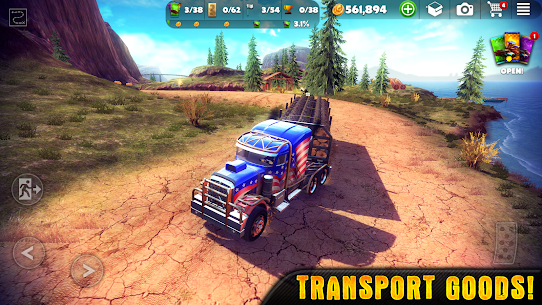
Off The Road is a free open world off-road simulator where players drive 4x4s, trucks, boats and helicopters across eight separate maps. Progress comes from beating timed challenges, hauling cargo and unlocking cars, rather than from a story campaign.
The game opened on Google Play in 2018 and has since passed 100 million installs, with a 4.5 average from roughly 526,000 ratings. DogByte Games still ships updates to it. Freedom is the whole pitch here, so the map never blocks a route that physics would allow.
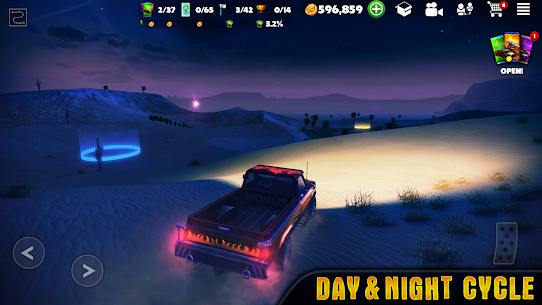
Players start on Islands with the Carry truck. From there, the garage grows through card packs, Coins and level rewards. Boats float on genuinely simulated water, helicopters shortcut the mountains, and a day and night cycle rolls over the whole thing while you work.
What the Winch and Rope Physics Actually Do
The winch fires a cable at nearby scenery and reels the vehicle towards the anchor point. Because the rope physics run properly, the cable sags, swings and snaps tight like real steel. Slack rope pulls badly, so tension matters more than throttle on a rock face.
Most beginners treat the winch as a rescue tool. However, experienced drivers use it as a climbing tool from the start of the hill. Anchor high, crawl forward at low revs, then re-anchor before the cable reaches full stretch.
Eight Maps From Islands to Frozen Lake
Eight maps ship with the game: Islands, The Shore, Snowfields, Red Canyon, Volcano, Valley, Frozen Lake and Archipelago. Each one holds its own challenge set, its own collectibles and its own completion tracker. Unvisited ground sits under a dark shroud until you drive through it.
Terrain changes the whole feel between them. Red Canyon rewards long fast lines, for example, while Snowfields punishes every optimistic braking point. Volcano hides a small city with skyscrapers in one corner, which most new players never reach.
How It Compares to Other Android Off-Road Sims
Three mobile rivals sit closest to this one. Off Road 4×4 Driving Simulator leans harder into trail crawling with fewer systems around it. Extreme Car Driving Simulator trades terrain for city stunts, and Car Parking Multiplayer builds its whole loop around social rooms and vehicle trading.
None of those three simulate a working cable winch with real rope tension. That single feature changes the way you read a hill. Similarly, none of them let you park a truck, walk off on foot, and pick up hidden collectibles on the same map.
Android, Windows and the Newer Sequel Compared
The same build runs on Android phones, on iOS, and on Windows through the Google Play Games PC store. Touch steering suits the slow crawling style well, since precision throttle matters more than fast steering inputs. On a keyboard the driving feels sharper, though the winch is easier to aim with a finger.
A full sequel arrived in 2026 with a single seamless map. The original still holds two advantages for a lot of players. It runs comfortably on older hardware, and it plays offline without any account setup.
Driving Controls, Tyre Pressure and Damage Repairs
Three inputs carry almost all the driving here: throttle, brake and the camera. Tyre pressure sits under those inputs as a simulated value, and tyres visibly deform under load, which changes grip on soft ground.
Damage is equally physical. Falls and crashes bend the chassis, and that damage stays on the vehicle until a repair is paid for. Mud coats the bodywork too, although driving into water washes it off for nothing.
Every vehicle in the garage handles its own way. Consequently, a heavy hauler that shrugs off a bad landing may bog down in the same mud a light 4×4 crosses easily. Getting out on foot is always an option when a route looks impossible from the driver’s seat.
Throttle, Nitro and Tyre Pressure on Loose Ground
Feathering the throttle beats flooring it on loose surfaces. Wheelspin digs the tyres in, and the mud physics make that hole deeper every second you hold the pedal. Short bursts with brief pauses climb far better.
Nitro exists for straights, not for slopes. Because it dumps power instantly, it usually breaks traction halfway up a climb. Save it for flat runs between checkpoints instead, where the tyre pressure simulation has grip to spare.
Winch Anchoring, Rope Angles and Recovery
Rope angle decides whether the winch helps or hurts. A cable pulling from directly ahead lifts the nose and keeps the wheels loaded. By contrast, a sideways anchor rolls the vehicle onto its roof with surprising speed.
Recovery works the same way in reverse. Flip a truck, hop out, and winch the chassis back onto its wheels from a high anchor point. The cable also drags loose world objects, so a stubborn boulder blocking a trail can simply be pulled aside.
Walking, Swimming and the Parafoil Drop
Stepping out of the vehicle opens the half of the game most articles skip. On foot the player can swim, squeeze between rocks, and reach ledges no tyre will ever touch. A parafoil handles the long drops back down.
Certain collectibles only exist for players on foot. Card packs and Relics both sit in spots that require walking, so a driver who never leaves the seat misses a chunk of the content. Park somewhere sensible first, because vehicles stay where you left them.
How to Unlock Cars With Card Packs and Coins
Card packs unlock new vehicles by showing three cards, shuffling them face down, then letting the player choose one. Coins can then be spent to open either or both of the two cards left behind, which is where most early spending decisions go wrong.
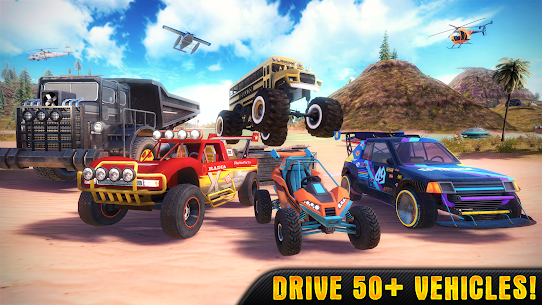
The store lists 55 cars in the current version, plus boats, helicopters, airplanes and a train. Not all of them come from packs. Some can be bought straight out with Coins, and per map special vehicles sit outside the main garage entirely.
Coin income arrives from challenge payouts, loose pickups and Goldmines. Spending competes with repairs and upgrades, so the real skill is deciding what to leave unbought. In my runs, roughly two solid challenge payouts covered opening a second card, which is also about the price of a mid tier upgrade.
The Three Card Shuffle and Its Coin Cost
The shuffle is a straight gamble with a visible price tag. Pick one card free, then pay to reveal the others if the first pull disappoints. Paying twice in a row drains a balance fast.
A useful habit is to open packs only when the Coin balance is comfortable. That way a bad pull costs nothing except the free card. Duplicate pulls still feed the collection, so nothing is truly wasted.
Buying Cars Outright Instead of Waiting
Some vehicles carry a straight Coin price, which removes the gamble completely. For a beginner that certainty is often worth more than a shot at something rarer. A known workhorse beats a random legendary you cannot afford to repair.
Per map special vehicles work differently again. They stay tied to the map where the purchase happened, with one notable exception. The 120 metre luxury yacht is bought once and then belongs to you on every map.
Which Starter Vehicles Earn Their Keep
Carry, the starting truck, stays useful far longer than most players expect. It is light, it recovers easily, and it fits through gaps that wider rigs cannot enter. Keep it repaired rather than replacing it immediately.
Mid tier 4x4s become worthwhile once challenge payouts grow. Weight helps on rock, though it hurts badly in deep mud. Owning one light vehicle and one heavy vehicle covers nearly every situation the maps throw at you.
How to Beat Checkpoint Hunt and Pathfinder Runs
Checkpoint Hunt, Pathfinder and Transport challenges make up the three challenge families in this off-road simulator. Checkpoint Hunt runs on a timer, Pathfinder tests terrain skill over raw speed, and Transport challenges ask for materials delivered intact to a set location.
All three pay Coins and XP. Failure costs nothing except time, so restarting a bad line is almost always correct. A single run fits inside a few minutes, which makes a full session cycle around ten minutes long.
Route choice separates good runs from frustrating ones. Distances to nearby objects appear on screen, and those readings double as clues during checkpoint hunts. Trailers change everything about how a route should be driven, since load weight shifts the balance point of the whole rig.
Checkpoint Hunt: Route Choice Beats Top Speed
Speed matters less than the line you pick. Cutting straight across broken ground usually loses more time than a longer smooth arc. First scan where the next two markers sit, then commit.
Downhill sections are where runs are won. Let gravity carry the vehicle, brake early, and avoid landing on the nose. Nitro belongs on the flat sections between markers, never mid descent.
Pathfinder: Reading Slopes Before You Commit
Pathfinder rewards patience above everything else. Approach angle decides whether a ridge is climbable, so line the vehicle square to the slope before touching the throttle. Diagonal approaches roll trucks constantly.
The winch turns impossible ridges into slow, boring, successful climbs. Anchor, crawl, re-anchor, repeat. Boring is exactly what you want here, because every rollover costs repair Coins later.
Transport Challenges, Trailers and Load Balance
Trailers attach at the rear and change the physics of every corner. Weight pushes the tow vehicle around on descents, therefore braking must start much earlier than usual. Cargo can spill, and spilled cargo means a restart.
Winch dragging offers an alternative for awkward objects. Attach the cable, then pull the load slowly across flat ground instead of loading it properly. Slower, certainly, although far more stable on uneven terrain.
How XP Levels, Relics and Flags Build Your Garage
XP levels rise every time a challenge finishes, and each level pays a reward that feeds back into the garage. Coins run alongside XP as the spendable half of progression, while collectibles track how thoroughly each map has been covered.
Relics are small hidden objects grouped into themed sets, most of which reference other DogByte Games titles. Completing a full set pays out. Flags scattered around the maps change colour once touched, and the game counts how many you have reached.
Map completion is the quiet long game. Shroud lifts as you drive new ground, collectibles fill in, and challenge lists empty out. Goldmines top up the Coin balance along the way for players who go looking.
Where Coins Come From: Goldmines and Pickups
Coins appear loose in the world and get collected simply by driving through them. Challenge payouts form the reliable income, though. Goldmines add a third stream for players willing to detour off the challenge route.
Spending discipline matters more than income rate. Repairs, trim and upgrades all pull from the same balance as card packs. Set a floor you refuse to drop below, and the game stops feeling like a grind.
Relic Sets, Flags and Map Completion
Relics hide in scenery rather than on obvious paths. Look under bridges, behind rocks and inside small structures, since the placement rewards curiosity over speed. Full sets pay a bonus that partial sets never do.
Flags are simpler and function as a coverage tracker. Touch one, watch it change colour, move on. Chasing them naturally pushes players into corners of the map that challenges never visit.
What Rising XP Levels Actually Give You
Levels arrive steadily rather than dramatically. Each one delivers rewards that shorten the wait for the next vehicle or upgrade. Nothing here gates content behind a paywall, which keeps the free version fully playable.
Steady challenge completion is the fastest XP route. Meanwhile, collectible hunting pays in Coins and completion percentage instead. Alternating between the two stops either activity from feeling repetitive.
Construction Sites: Houses, Bridges and Roads
Construction sites accept delivered materials and then build houses, bridges, roads and vehicles once the required loads arrive. Each site displays what it needs, and the player supplies it using trailers or the winch.
Building changes the map permanently. A finished bridge removes a river crossing problem that previously cost several minutes per trip. Roads smooth out routes that used to shake cargo loose.
This system connects directly to the Transport challenges. Same skills, same trailers, different payoff. Players who ignore construction usually wonder why their favourite map still feels awkward to cross fifty hours in.
How a Build Order Works Step by Step
Approach a site to see its materials list. Collect the required loads, haul them back, and drop them at the marked point. Repeat until the structure completes itself.
Multiple trips are normal for larger builds. Because of that, choosing a vehicle with decent towing stability matters more than choosing a fast one. Plan the route once, then run it repeatedly.
Best Rigs for Hauling Heavy Materials
Heavy trucks handle loaded trailers far better than light 4x4s. Their weight keeps the rear planted, and their torque copes with the drag on inclines. Speed is irrelevant here.
Helicopters solve certain problems instantly. For example, an island site separated by water becomes trivial once you fly the route rather than drive it. Boats fill the same gap for coastal deliveries.
Why Building Pays Better Than It Looks
The payoff is not really the reward screen. Finished structures cut travel time across a map for every future session, and time saved becomes Coins earned. That compounding effect is what most articles miss entirely.
Construction also opens routes to collectibles that were previously awkward to reach. Around three or four completed builds noticeably changed how quickly I could move across a map in my own runs. Progress there feels slow, then suddenly obvious.
Multiplayer Rooms and Weekly Ranked Race Events
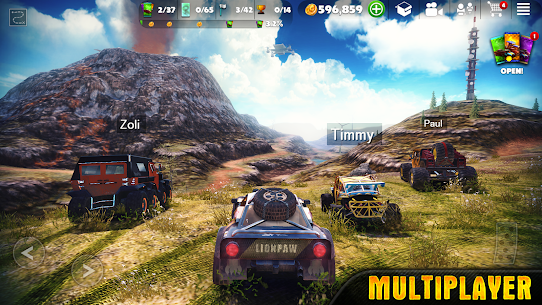
Weekly Ranked Race events reset on a schedule and pay rewards based on finishing position against other players. Standard multiplayer sits alongside them, with sandbox rooms for free driving and competitive rooms for structured racing.
MCoins are the multiplayer currency and stay entirely separate from the Coins earned in single player. That separation is genuinely important. Offline grinding cannot fund your multiplayer goals, no matter how many challenges you complete alone.
Connection quality shapes the experience more than skill does on a bad night. Vehicles behave slightly differently against real drivers, especially in contact situations. Still, the physics remain the same, so winch habits and route reading carry straight across.
Sandbox Rooms vs Competitive Racing
Sandbox rooms are for messing about with other drivers. No timer, no pressure, plenty of accidental stunt attempts. New players often get more comfortable here than in solo play.
Competitive rooms tighten everything. Racing lines matter, contact costs positions, and hesitation gets punished. Treat early races as practice rather than as a rank push.
How MCoins Differ From Regular Coins
MCoins accumulate only through multiplayer participation. They cannot be topped up by farming Goldmines or finishing solo challenges. That design keeps the two economies honest.
Plan around it rather than fighting it. If a multiplayer reward matters to you, schedule actual online sessions. Otherwise the balance simply sits there while your single player garage grows.
Scoring Well in Weekly Ranked Race
Consistency beats heroics in ranked weeks. Finishing every race cleanly outperforms one spectacular run followed by three crashes. Damage carries consequences here too.
Vehicle choice deserves real thought. Pick something stable rather than something fast, because the event routes rarely stay on smooth ground. Entering early in the week also leaves room to improve a result later.
Common Mistakes That Cost Coins and Repair Time
Repair bills are the quietest drain on a Coin balance in this game. Every heavy landing, rollover and collision adds cost, and those costs arrive at exactly the moment you were saving for something better.
New players make three expensive errors repeatedly. They upgrade a starter vehicle before the garage is worth upgrading. They treat mud and water as scenery instead of as physics. Finally, they never leave the vehicle, which hides whole categories of content.
None of these mistakes are permanent. Awareness fixes all three within an hour of play. Correcting them early simply saves several hours of avoidable grinding later on.
Upgrading Too Early Instead of Saving
Early upgrades feel productive and mostly are not. Coins poured into a starter truck vanish the moment a better vehicle arrives from a pack. Waiting is uncomfortable but correct.
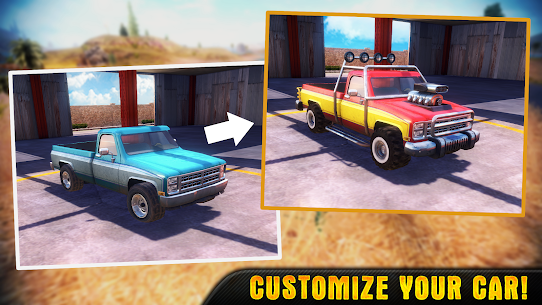
Repairs deserve priority over cosmetics and trim. A damaged chassis affects handling, whereas paint affects nothing. Keep a reserve balance so an unexpected crash never blocks progress.
Ignoring Mud Physics, Water and Damage
Mud is a real surface with real depth, not a texture. It deforms, holds tyres, and slows heavy vehicles badly. Reading the ground before entering it prevents most bogging situations.
Water works as an actual physics volume with buoyancy. Shallow crossings wash mud off the chassis for free, which saves a repair visit. Deep water, on the other hand, ends the attempt entirely.
Hidden Extras: Arcade Machines and the Yacht
Hidden arcade machines run a small 8bit Ninja game inside the world, marked by joystick icons on the mini map. Finding them takes deliberate wandering. Almost nobody stumbles across them by accident while racing.
The luxury yacht is the other overlooked extra. At 120 metres it dwarfs anything else that floats, and it stays available on every map after a single purchase. Owning it changes how island heavy maps feel to cross.
Best Off The Road Tips and Tricks for Beginners
Good habits in this off-road simulator start with the winch rather than the throttle. Anchor points, spending discipline and map focus decide how quickly a new player stops repeating the same expensive mistakes.
These three habits apply from the first hour. Each one targets a specific failure that costs Coins, time or both. None require a purchase or a high level to work.
Experienced players do the same things instinctively. Watch anyone competent play and you will see slow climbs, patient anchoring and a Coin balance that never hits zero.
Anchor the Winch Before the Wheels Slip
Fire the cable while the vehicle still has grip. Anchoring after a slide starts means fighting momentum instead of using tension. Prevention costs nothing, whereas recovery costs a repair.
Pick anchor points above the vehicle line where possible. High anchors keep the nose down and the wheels loaded. Re-anchor often rather than stretching one cable to its limit.
Bank Coins Between Card Pack Openings
Set a personal floor for your Coin balance and hold it. Opening a pack with an empty balance means no repairs afterwards. Discipline here converts directly into faster garage growth.
Space out pack openings across challenge sessions. Two or three completed runs rebuild a comfortable reserve. That rhythm keeps the gamble fun instead of frustrating.
Pick a Home Map and Finish It First
Spreading effort across all eight maps stretches progress thin. Islands works well as a home base because the tutorial content lives there. Finish its challenges, collectibles and Flags before moving on.
Completion gives structure that free roaming lacks. Later maps then feel like fresh ground rather than more of the same. Your garage will also be ready for the harder terrain waiting in Snowfields and Volcano.
Frequently Asked Questions About Off The Road
Is Off The Road free to play?
Yes. Off The Road installs free on Google Play and the App Store, and it carries ads plus optional purchases. A one time ad removal costs around two dollars in most regions. The OTR VIP Club runs as a monthly subscription instead. Google rates the game suitable for ages three and up.
Can you play the game offline?
Yes, single player driving works without a connection, so challenges and coin pickups still count. The ranked events and MCoins need you online, and those rewards will not appear in an offline session. Long flights suit it well, since a full challenge run takes only a few minutes.
Does the game still get new cars and updates?
Yes. The car roster now sits at 55, and updates through 2026 added vehicles, fixes and event changes. Legendary entries such as Titanium and Voltage arrive through packs rather than the shop. A sequel launched in May 2026, though the original still receives support on both stores.
Who This Off-Road Simulator Suits Best
Off The Road suits patient drivers who enjoy terrain problems more than lap times. Newcomers on mid range Android phones get the most from it. The physics run smoothly, and the single player side works offline. Anyone chasing tight circuit racing should look elsewhere, because progress here comes from winch work, hauling and map completion. After weeks with the winch, my honest verdict is simple. The quiet climbs beat every legendary car I opened. Install it, finish the Islands map first, and treat every spare Coin as a card pack in waiting.
Images
Download links
ℹ️ Download link not working? Please refresh the page and try again.
Developer's apps

Related apps




What's new
Ho Ho Ho, WHole new update :
-New Christmas collection to find
8 items on each map, find them all, win a car!
-New Reindeer car, it can fly and has red nose, guess who?
-Fixed some of issues
New Apps
Most Played Mobile Games


