
Sands of Salzaar APK (FULL GAME)

Description
Sands of Salzaar drops players into a sprawling fantasy desert where five rival tribes fight for control after the fall of the Old Empire — and a creeping darkness waits in the shadows behind every battle. This post is written for new players and returning fans who want a solid understanding of how the game works before committing hours to a single class or faction path. It covers combat, class selection, the faction diplomacy system, the Jade economy, common rookie mistakes, and the tips that make the difference between a stalled army and a dominant faction.
What Is Sands of Salzaar and How Does It Play
Sands of Salzaar is an open-world strategy action RPG developed by Han-Squirrel Studio and published by XD (X.D. Network Inc.). Players start with a single hero and a handful of troops. From there, they recruit units, complete quests, navigate faction politics, and lead their army into real-time battles across a desert world with six distinct biomes — including canyon, uplands, snow, and swamp regions alongside the main desert zones.
The game runs in two main modes. Story Mode follows a class-specific narrative with unique plot quests tied to each of the eight hero classes. Sandbox Mode strips away the scripted story and gives players full freedom to pursue any goal from day one. Both modes share the same open world, the same army-building loop, and the same faction diplomacy system.
How the open-world army-building mechanic works
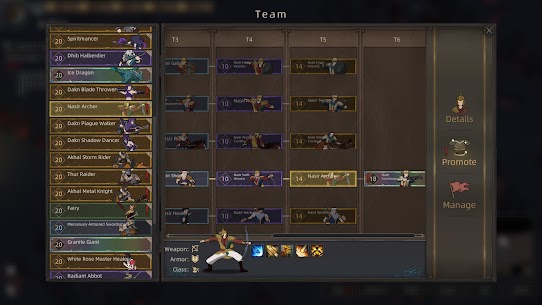
Players begin every run by selecting a class, customizing a hero, and spending Legacy Points in the Legacy Store to unlock starting advantages. After that, the game places them in the desert with caravan guide Whelan and asks them to pick a starting region. The army-building mechanic works through troop recruitment at outposts, towns, and keeps. Players talk to Village Elders or mercenary captains to hire units, then bring those units into battle to earn XP and promote them through tiers. However, the game never explains this clearly up front. Players have to piece it together as they go.
Every unit added to the party increases daily food consumption by one. So army size and food supply are always in tension. The game rewards players who expand carefully rather than those who recruit everything at once and run out of rations two maps later.
The desert setting, fallen empire story, and comic-book art style
The world of Salzaar is built on a fantasy blend of Turkic, Mongolian, Chinese, and Arabic cultures. Five major factions — led by named characters like Husnu of the Nasir Clan, Bahat of the Akhal Clan, Ruha of the Dhib Clan, and Ludo Khan of the Thur Clan — each control territory across the six regions. Each area has settlements that factions fight over, and the balance of power shifts constantly as battles play out across the map.
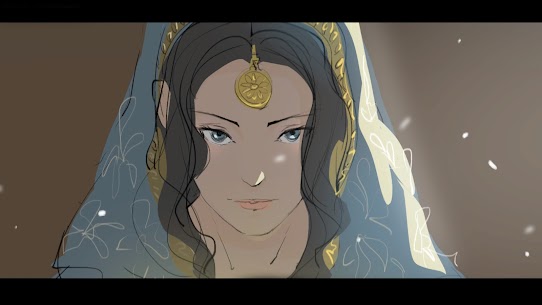
The art style uses illustrated 2D comic-book visuals with text-based narrative sequences. Because the game skips elaborate cutscenes in favor of illustrated story panels and dialogue, the tone feels grounded and intimate even during massive battles. The growing darkness behind the inter-tribal war is the overarching story thread that connects every class-specific narrative.
How Sands of Salzaar compares to Evertale and Genshin Impact on mobile
Compared to Evertale, Sands of Salzaar is considerably heavier on strategy and army management. Evertale focuses on turn-based monster collection and story-driven JRPG combat. Sands of Salzaar replaces that with real-time regiment battles, faction diplomacy, and a fully open-ended progression path. The two games share fantasy world-building and character customization, but they feel very different in practice.
Genshin Impact offers a more polished open-world experience with gacha-driven character acquisition and elemental combat. Sands of Salzaar, by contrast, is a premium paid title with no gacha mechanics. Players earn every unit and piece of equipment through battles, quests, and exploration. That distinction makes the army-building feel more personal and the victories more earned.
How Combat and Controls Work in Sands of Salzaar
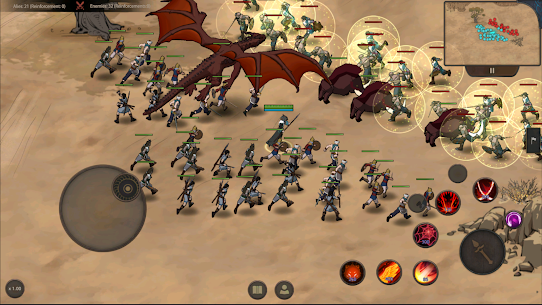
Combat in Sands of Salzaar runs in real-time and splits into two layers. The first layer is the player character’s own fighting — using skills, dodging, and positioning to deal damage while keeping the hero alive. The second layer is regiment command — controlling groups of hired troops who fight alongside the hero on a shared battlefield.
Both layers matter. A powerful hero with weak troops loses large-scale battles. Strong troops with a poorly built hero struggle in dungeon fights where the player character fights solo. Players who understand how these two layers interact from early on avoid the most common run-ending mistakes.
How real-time battlefield combat works for the player character
Players control their hero directly using a virtual joystick on mobile or keyboard and mouse on PC. Each class has a unique set of combat skills assigned to hotkeys or on-screen buttons. The Sentinel uses a grappling ability to pull groups of enemies into AOE range. The Knight Errant fires magic blades and slashes through enemy lines in long sweeping strikes. The Spiritmancer uses a ranged mind bullet skill that cannot be dodged. Each of these skills has a cooldown, so players manage their ability timing alongside positioning throughout every fight.
Glowing objects on the battlefield and map are interactive. Players who tap or click them pick up resources, loot, and items needed for army upkeep. Early in a run, grabbing everything that glows is good practice. Later, players can afford to be selective.
How players command regiment squads during large-scale battles
In large battles against rival faction armies, players give commands to their regiment squads using hotkeys or the command buttons on the right side of the screen. Squads rush forward, hold position, or focus on specific targets based on player input. However, the AI handles the moment-to-moment fighting. Players focus on positioning the hero, triggering skills at high-impact moments, and issuing broad commands to shift the flow of battle.
Numbers matter enormously. A smaller army almost always loses to a larger one, even when the hero is twice as strong. Therefore, building army size quickly in the early game is more valuable than spending time upgrading a single powerful unit.
What happens after winning a battle and how XP and loot are distributed
After a battle, the game distributes XP to every hero and squad that participated and that is below level 20. Above level 20, the soft cap kicks in and progression slows sharply without Wisdom Crystals. Loot from battles includes gold (Utars), equipment, food, and occasionally Jade — the resource used to promote units to higher tiers.
Players can also capture enemy heroes in battle and recruit them or ransom them back to their faction for gold. Captured heroes who come from a prison rescue or random event sometimes cannot be promoted right away. Players need to check the Activate button at the bottom of the army window and combine partial units before promotion becomes available.
How the Faction Diplomacy and NPC Favor System Works
The faction diplomacy system is one of the most underserved topics in Sands of Salzaar content. Most new players treat it as background noise. In reality, it determines which towns players can enter, which heroes will agree to join, and whether a faction declares war unprovoked. Understanding this system separates players who constantly fight on three fronts from players who move through the map with allies covering their flanks.
There are five major factions, each with a faction-level reputation score and a separate set of individual character favor scores. These two tracks operate differently. Players can have high favor with a faction leader’s rival while still maintaining neutral standing with the faction itself. That distinction creates room for complex diplomatic maneuvering that the game never explains outright.
How faction reputation affects access to towns and recruitment
Each town and outpost has its own prestige score with the player. Higher prestige unlocks higher-tier units for recruitment from that location. Players raise town prestige by completing quests for nearby NPCs, defeating bandit groups, and participating in battles that benefit the controlling faction.
When players form their own faction by conquering a settlement, every other faction automatically becomes hostile. This is a permanent shift. However, individual heroes who had positive favor with the player remain recruitable even after their faction declares war. So building favor with non-leader heroes before making a territorial move is the key step most players miss.
How the individual hero favor system operates between named characters
Each named hero in the world has a hidden social network — friends and enemies among other characters. When players help a hero’s friend in battle or give that friend a gift, the favor score rises with both the friend and the hero. The game does not surface this connection clearly. Players who hover over characters and ask their party members about recent alliances uncover these links.
Gifts are the most efficient way to raise favor with any character. Inventory space is limited, so players should save gifts specifically for heroes they want to recruit rather than spending them randomly. Reaching a favor score of 50 or higher with a non-leader hero makes them recruitable. At that threshold, asking them to join the party usually succeeds without additional quests.
How players use the Intel and Diplomacy menu to shift alliances
The Intel tab in the bottom-right of the screen contains the Diplomacy and Strategy submenu. From here, players can spend Utars to declare goodwill toward a neutral or hostile faction, triggering a ceasefire or moving toward alliance status. Players can also formally declare war, set up trade guild routes, and appoint a Sultan to govern a conquered settlement.
Appointing a Sultan from the player’s current party members is mandatory after a successful siege. The Sultan then recruits their own army and defends the settlement. Players who siege a city without immediately appointing a Sultan lose the territory quickly.
What the Eight Classes Are and How Each Changes the Game
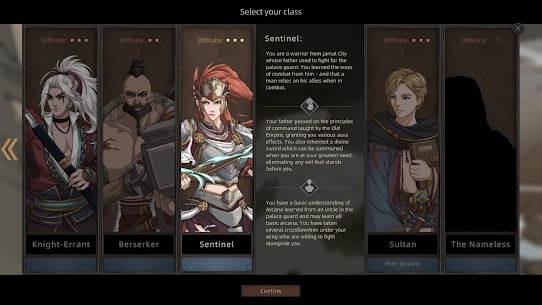
Class selection is the most consequential choice players make at the start of a run in Sands of Salzaar. Each of the eight classes — Berserker, Jackal, Knight Errant, Sentinel, Shaman, Spirit Witch, Spiritmancer, and Sultan — brings a unique skill set, a unique set of class-specific plot quests, unique starting troops, and in some cases a unique starting relationship with the game’s factions.
Some classes begin as outlaws hostile to every faction. Others start with allies. Some have access to arcana and magic skill trees. Others focus entirely on physical damage. Because class choice shapes who players can recruit, which quests they access, and how early battles play out, no two runs of the game feel the same.
How Spiritmancer and Sentinel play as beginner-friendly starting classes
The Spiritmancer is the most recommended starting class for new players. It is rated as the easiest class by the game itself and begins with a ranged Psychic Bullet skill that deals reliable damage without requiring close-range positioning. The Spiritmancer also has a class-specific story quest with a true ending that rewards players who follow the narrative carefully.
The Sentinel is another strong beginner option. Its signature ability is a grappling skill that pulls enemy groups into melee range and taunts them. This makes the Sentinel effective at drawing fire away from weaker squad members. It also has reliable AOE skills that scale well into mid-game battles. Additionally, the Enlarge talent increases survivability significantly when maxed out.
How Knight Errant and Berserker work as high-risk advanced options
The Knight Errant is a high-damage melee class that starts hostile to every faction. Towns close their gates. Characters attack on sight. Players who pick this class immediately fight without safe zones for resupply. However, this hostility lessens over time. After being defeated by a faction once or twice, their aggression drops and the outlaw status can fade. The Knight Errant also starts with extra skill points, making it powerful once the early danger passes.
The Berserker uses a single combat skill called Outburst that activates a berserk mode with high damage output but no access to other abilities during activation. Because it relies on one skill, the Berserker demands precise positioning and strong supporting troops to function. New players who underestimate the importance of squad numbers often fail early with this class.
How class choice determines story access and faction starting relations
Each class with a defined background story gives players access to class-specific plot quests. These quests often unlock unique outcomes, such as the Spiritmancer’s true ending, which requires specific dialogue choices during the Nagukka arc. Classes without a fixed background story, sometimes listed as Nameless Mode, let players write their own path with no class-specific narrative but with the freedom to select skills from multiple class trees.
Faction starting relations also shift based on class. Sultan players begin aligned with a specific faction. Knight Errant players begin outlawed. Sentinel players tend to start neutral. These starting conditions determine how quickly players can access higher-tier recruitment outposts and how aggressively rival armies respond in the first few in-game weeks.
How Progression and the Skill Tree Work in Sands of Salzaar
Every level-up in Sands of Salzaar adds one skill point to the player’s pool. Those points go into the class-specific skill tree to unlock active combat abilities, passive damage boosts, or utility skills. There is also a Talent tree — a separate system covering life quality upgrades like faster travel speed, potion brewing, and inventory expansion. Players choose talent paths based on the endgame passive they want and then work backward through the prerequisite nodes.
The Legacy Store is a third progression layer that operates between runs. Legacy Points accumulate from completing in-game tasks and achievements. Players spend these points before each new run to start with better troops, extra skills, or resource advantages. This means every completed run makes the next one stronger, which gives the game significant replayability.
How the skill point and Talent tree system advances the hero
Skill points and Talent points come from separate sources. Skill points come from leveling up through battle XP. Talent points come from spending Utars at special teachers found in certain towns — though most teachers require a completed dungeon before they will train the player, plus materials like wood, stone, or forge tools in addition to gold.
The soft cap on skill points sits at 20. After hitting 20, players cannot add more skills through standard leveling. They need Wisdom Crystals to push past this threshold. However, Wisdom Crystals are rare enough that players should plan their skill tree in advance rather than spending points randomly. Committing to one combat direction early prevents wasted points.
How Jade scarcity controls unit promotion in mid-game army growth
Jade is the resource used to promote units to higher tiers. Early game, players find enough Jade in chests scattered across the map and from bandit camps to promote their first few squads without issue. However, around mid-game, the Jade supply dries up sharply. This is especially painful for players who want to field spell casters or high-tier cavalry, as those promotions are expensive.
Jade chests on the world map respawn after a few in-game days. Players who mark chest locations during early exploration can return to farm them on a regular cycle. Capturing towns with Jade quarries helps too, though quarry buildings sometimes are destroyed during siege and rebuilding costs are high in the early-to-mid game window.
What Wisdom Crystals and Heroic Soul Statues unlock beyond the skill cap
Heroic Soul Statues are boss encounter locations scattered across the six regions. Players face a solo boss fight — the player character alone, no party — and victory awards Wisdom Crystals, legendary equipment, and Inset Jewel items that enhance unit stats. Wisdom Crystals allow the hero to exceed the level 20 soft skill cap, adding skill points that would otherwise be permanently locked.
Title Dungeons work similarly. They list their possible rewards in advance so players can plan which dungeons to prioritize. Unlike Heroic Soul Statues, the full party can participate in Title Dungeons. Both systems reward players who invest time in exploration rather than rushing toward faction conflict too early.
What Beginners Get Wrong in Sands of Salzaar
Sands of Salzaar does not hold players’ hands. There is no proper tutorial, and the game drops players into the desert with minimal explanation of its most important systems. As a result, most new players make the same three mistakes — and all three are preventable once players understand what the game is actually tracking under the surface.
The mistakes are not about skill. They come from misreading which resources matter most in the first few hours of a run. Fixing these habits early saves players from the most common failure spirals in the game.
Why neglecting food supply ends runs faster than any enemy faction
Every unit in the party costs one ration per in-game day. Players who recruit aggressively in the first region quickly build an army of twenty or thirty units — then run out of food within a few days and watch their hero sent back to the respawn point without a single enemy landing a hit. Food management is more immediately dangerous than combat difficulty at any stage of the early game.
Players need to hover over food items to read their durability score, which tells them how many daily rations that item contains. Buying food from markets, completing food-related quests, and keeping the army size proportional to the current food stockpile prevents this collapse. Additionally, reducing troop count temporarily is a valid survival strategy when supply is short.
Why attacking a settlement too early destroys faction relations permanently
The moment players conquer a settlement without being employed by a faction, every other faction declares war simultaneously. New players who do this in the first in-game week face war on every front before their army is large enough to survive a sustained siege. The faction warfare never fully resets. Even if a ceasefire is purchased through the Intel tab, the underlying hostility remains higher than it was before the siege.
The correct approach is to spend the first several weeks completing quests, raising favor with multiple factions and their non-leader heroes, and building an army large enough that multiple allied heroes will reinforce the player during a siege. Timing the first conquest is more important than the conquest itself.
How players misread the Jade system and stall their army at the worst time
New players often treat Jade as an infinite resource and promote units freely in the first region. By the time they reach mid-game, where enemy armies field high-tier cavalry and archers, their own Jade stockpile is empty and they cannot promote any new units to compete. This stalls army growth at exactly the moment when combat difficulty spikes.
The fix is to spend Jade selectively. Promoting a few squads to tier two or three early is useful. Spending all Jade on early-game units that the player will replace anyway is wasteful. Planning promotions around the tier of enemy armies in the next region — not the current one — keeps the Jade economy stable through mid-game.
Best Sands of Salzaar Tips and Tricks for Beginners
How to pick the right starting region using Whelan’s region selection prompt
After the opening battle sequence, Whelan presents players with a choice of starting region. Redstone Valley is the best choice for new players. It is smaller than other regions, enemies are weaker, and it sits under the control of the powerful Nasir faction led by Husnu. Because Nasir dominates the area, rival faction armies rarely contest it in the first few in-game weeks. This gives players time to complete early quests, fill out their regiment with affordable units from local outposts, and understand how the diplomacy system operates before things get complicated.
Sandbox Mode skips this opening sequence entirely. Players who choose Sandbox without understanding the game’s systems often feel immediately overwhelmed. Starting in Story Mode once before trying Sandbox gives players the mechanical foundation to make Sandbox runs rewarding rather than confusing.
How to build favor with non-leader heroes before forming a faction
Before attempting any siege, players should raise their favor with at least five to ten non-leader heroes to 50 or above. Non-leader heroes at 50 favor are recruitable even after their faction declares war. This means players can siege a city, trigger universal faction hostility, and still build a strong party from former enemies who liked them personally before the conflict began.
Gifts are the fastest way to raise hero favor. Players find gifts through exploration, dungeon rewards, and quest completions. However, each character has different gift preferences, so hovering over a character’s profile to check what they appreciate prevents wasted items. Meanwhile, completing quests for specific heroes raises their favor faster than gifts alone — especially if those heroes are stationed in towns the player visits regularly.
How to farm Jade from respawning map chests without conquering quarries
Jade chests and ground-level Jade deposits on the world map respawn every few in-game days. Players who memorize two or three reliable Jade locations in Redstone Valley and Umbra Cliffs can cycle between them as a regular part of their travel route. This creates a steady Jade income without the expense of capturing and rebuilding quarry structures.
Bandit camp victories also award small Jade piles, particularly from camps with visible Jade chests that players can preview before engaging. Mousing over a bandit camp before initiating dialogue reveals what loot is available inside. Players who identify Jade-rich camps early build a supply buffer that carries their army through the mid-game promotion wall without stalling.
Frequently Asked Questions About Sands of Salzaar
Is Sands of Salzaar available on Android and iOS?
Sands of Salzaar is available on Android through Google Play and TapTap, and on iOS through the Apple App Store. It is a paid premium title, not a free-to-play game. The Android version on TapTap is updated more frequently than the Google Play version. Players who want the latest content on Android should consider purchasing through TapTap instead.
How long does it take to finish Sands of Salzaar?
A single story mode run in Sands of Salzaar typically takes between 20 and 40 hours depending on class choice and playstyle. Players who pursue all faction quests, dungeon clears, and the full diplomacy path extend that well beyond 40 hours. Sandbox Mode and repeated playthroughs with different classes add significant additional time, as each class changes the story quests and starting faction relations substantially.
Does Sands of Salzaar have replayability across multiple playthroughs?
Sands of Salzaar is highly replayable. Eight playable classes each have unique skill trees, unique story quests, and different starting faction relationships. The Legacy Score system carries progress between runs, making each new run slightly stronger than the last. Because the world map is open-ended and faction dynamics shift based on player choices, no two runs follow the same path even when using the same class twice.
Why Sands of Salzaar Rewards Players Who Take Their Time
Sands of Salzaar is best suited for players who enjoy open-ended strategy RPGs with real depth behind a minimal tutorial. It rewards patience over aggression, planning over improvisation, and relationship-building over immediate conquest. The faction diplomacy system, the Jade economy, and the class diversity give it genuine long-term value that most mobile strategy games cannot match. After spending hours with the desert factions, tracking hero favor scores across three regions, and surviving a Jade shortage through careful chest farming, the sense of control that emerges feels genuinely earned rather than handed over. Players who approach it expecting a casual experience will bounce off it fast — but players who dig in will find one of the most substantial open-world RPGs available on mobile.
Images

Download links
ℹ️ Download link not working? Please refresh the page and try again.
Developer's apps







New Apps
Most Played Mobile Games


