
JDM Racing MOD APK (Unlimited Money)

Description
JDM Racing puts iconic Japanese cars from the 80s to today on drag strips and twisting circuits, with online races for up to 7 players. New drivers who keep bogging down at the line or burning credits on the wrong parts get practical tips here, built around a clear upgrade order. In my runs, the quickest credit gains came from winning short 1v1 Random Multiplayer duels, not from replaying the same offline event.
How to play JDM Racing: drag and drift basics
JDM Racing is a free drag racing simulator for Android and iOS where you drive legendary Japanese cars, tune them with credits, and race bots or real players. You pick a car, choose an event such as drag or time attack, then win races to earn credits and Career mode experience.
The game comes from Starkom, the studio behind Drift Legends, and Google Play lists it under Black Fox Ent. More than one million players have installed it. Store ratings sit around 4.5 stars, so the online lobbies stay busy.
Driving here rewards patience over raw speed. Clean shifts and steady throttle beat extra horsepower in most early events.
How drag launches and gear shifts drive every race
The core loop starts at the line. You hold the revs, launch, and then shift up through the gearbox at the right moment. Real engine sounds for every car tell you when to shift, so your ears matter as much as the tachometer.
Each car carries its own weight and power, and the physics model makes that difference clear. A light 80s coupe jumps off the line. A heavier modern car, however, needs smoother throttle or it bogs down. Because of this, one driving habit will not work in every car you own.
An Initial D mood built on cars from the 80s to today
The developers pitch the game straight at fans of Gran Turismo style racing and Initial D cartoons. There is no story campaign with characters. Instead, the cars carry the mood on their own.
That mood comes through in the sound design too. Turbine whine, gearbox clunks, and tire squeal all play as separate layers, so a tuned car sounds different from a stock one. Tracks range from straight drag strips to twisting circuits built for sliding, and each one suits a different build.
How it stacks up against CarX Drift Racing 2 and P2R Power Rev Racing
CarX Drift Racing 2 is the biggest rival on Android, but it centers almost everything on drift scoring. JDM Racing splits its time between drag launches, timed laps, and survival runs. As a result, it suits players who want variety more than one deep drift system.
P2R Power Rev Racing sits at the other end. It offers over 50 JDM cars but focuses on one-tap drag shifting in straight-line battles. By contrast, JDM Racing adds full 3D circuits and real steering, so it asks more of your hands and gives more back.
Android version vs Nintendo Switch and Mac editions
The same studio also sells JDM Racing on Nintendo Switch and the Mac App Store. Those editions are one-time purchases, and the Mac version costs roughly a dollar. Android, by contrast, is free to start with optional in-app purchases.
The bigger difference is online play. The Switch store listings describe offline single-player racing, while the phone version adds Custom Multiplayer and Random Multiplayer lobbies. So if you want to race real people, the phone is the platform to pick. Touch players also get tilt steering, which a controller-first console edition never needed.
Best JDM Racing controls, from buttons to accelerometer
Four control schemes ship with JDM Racing: on-screen buttons, a virtual steering wheel, accelerometer tilt, and a physical controller. Each one changes how precisely you hold a slide or time a launch.
You can swap schemes in the settings at any time. In my runs, buttons gave the cleanest drag starts. The steering wheel, on the other hand, felt far better on twisting circuits with long corners.
Picking a scheme is only half the job. The car you choose decides the rest, because weight and power change how each input lands. Getting both right early saves credits on parts that cannot fix a bad input.
Buttons and the steering wheel for steady drag starts
Buttons give you fixed left and right inputs. That sounds crude, yet it works well in drag events because you barely steer at all. Your thumbs stay free for the throttle and shift taps. Buttons also suit a quick 1v1 duel, where most of the race is a straight launch.
The virtual steering wheel adds finer control in corners. It takes a few sessions before your thumb stops overcorrecting, though. I would start on buttons, then move to the wheel once checkpoint events and circuit races start to matter.
Accelerometer tilt and controller play for long slides
Accelerometer steering turns the whole phone into the wheel. Tilt gives smooth, gradual input, which helps you hold a long slide through a fast sweeper. The downside is comfort, since long sessions tire out your arms.
A physical controller fixes that problem. Analog sticks give the fine steering of tilt without the arm strain. The game lists controllers as a supported option, so the input feels native rather than bolted on.
How weight and power change the feel of each car
Every car in the garage has its own weight and power. The store listing tells you to find your balance, and that is a real instruction, not a slogan. A light car turns in sharply but loses grip fast once you add too much power.
Heavier cars settle into slides more slowly, so they reward early steering and gentle throttle. When I moved from a small coupe to a heavier GT, my first three launches all bogged down. I only fixed it by easing off the throttle at the start.
All JDM Racing race modes, from drag to survival
Drag racing, time attack, sprint, checkpoints, survival, and street racing make up the six event types in this drag racing simulator. Each one rewards a different skill, from a perfect launch to steady laps under a clock.
All six formats pay credits and Career mode experience when you finish well. That shared reward means no session in JDM Racing is wasted, even after a loss. Still, some formats pay off faster than others for the time they take.
Daily Events rotate these same formats with fixed rules. Knowing the base modes, then, helps you clear them quickly. They also push you into cars you would normally leave parked.
Drag racing and street racing on short strips
Drag racing is a straight-line sprint over a short strip. You win it at the line and through each shift, since steering barely matters. Street racing moves the fight onto city roads with a few corners, so it blends drag timing with light steering.
These are the best events for a new driver. They usually last about a minute, and a clean launch often decides the result. Because of that, they make a fast test track for any new gear ratio.
Time attack and sprint events against the clock
In time attack, you race the clock instead of other cars. One clean lap matters more than aggression, and a single wall tap can ruin the run. Sprint works like a short point-to-point race against rivals.
Both modes punish a car that has more power than grip. So when your laps keep ending in a spin, the fix is usually tires or suspension, not more engine. I gained more time from a softer setup than from my last power upgrade.
Checkpoints and survival runs that punish a single spin
Checkpoint events put you on a timer that you extend by reaching each gate. Miss the pace and the run ends early, even when no rival passes you. That makes steady speed worth more than a high top speed.
Survival feels more like an endurance test. In my runs, the event kept going as long as I held the pace, and one spin ended everything. A calm, predictable car therefore beats a twitchy fast one here.
How Custom Multiplayer and Random Multiplayer work
Online racing in JDM Racing splits into two modes: Custom Multiplayer, where you pick a car, track, and 2 to 6 players, and Random Multiplayer, an instant 1v1 race against a stranger. Online competitions run alongside them for up to 7 people, and wins pay credits for upgrades.
Online play is where the game earns its replay value. A bot race follows a script, but a real driver might brake late or miss a shift. That uncertainty makes every win feel earned.
Daily Events sit next to these lobbies and reset on a schedule. There is always a fresh target, even on a short break.
Custom Multiplayer rooms for 2 to 6 drivers
Custom Multiplayer lets you build the race yourself. You choose the car, the track, and how many drivers can join, from 2 up to 6. Players from anywhere in the world can fill the open slots, so you rarely wait long.
This is the mode for showing off a finished build, from paint to rims. Friends can join, or you can let random drivers in to test your setup. I use it to try a new gear ratio against real people before I trust it in quick duels.
Random Multiplayer 1v1 duels that start in 15 seconds
Random Multiplayer is the fastest way into an online race. The game finds a 1v1 duel opponent in about 15 seconds, and there is no lobby setup at all. You just need to win to collect credits.
That short loop is the best credit source I found. A duel lasts about as long as a drag run, so several wins fit into the time one offline event takes. The payout depends on winning, however, so bring your strongest car, not a project build.
Daily Events and online competitions for up to 7 drivers
Daily Events add a rotating challenge each day. They reuse the core race formats but lock in rules, cars, or tracks. Online competitions run beside them with room for up to 7 people.
These challenges are worth checking every session. They often force you into a car class you ignore, which exposes weak spots in your garage. As a result, they double as a free test of what to upgrade next.
How to unlock secret cars in JDM Racing Career mode
To unlock secret cars in JDM Racing, you race through Career mode, where each finished event earns experience that raises your driver rank. Higher ranks steadily open new events and hidden cars, taking you from Beginner up to the Pro League tier.
Career mode is the backbone of solo play. It runs offline, so it works on a flight or in a dead zone. Offline Campaigns follow the same idea and pit you against bots.
Progress here also feeds your credit balance. Every win pays out, and the career ladder funds the cars you unlock along the way. In practice, the solo side of the game pays for itself.
Earning experience from Beginner to Pro League
Experience comes from finishing events, and better finishes give more. Your rank climbs in steps. Each step opens a harder group of races, and the top of that ladder is the Pro League, where rivals drive much faster builds.
Do not rush the early tiers. I skipped ahead once with a weak car and lost five races in a row, which cost more time than the grinding I tried to avoid. Clear each tier with a car that wins comfortably, then move up.
Offline Campaigns for practice against bots
Offline Campaigns give you a set run of races against AI drivers. They need no connection and no wait for a match. That makes them the calmest place to try a new setup.
The bots hold fairly steady lines, so they suit practice more than big payouts. Still, they count toward progress and pay credits like any other win. I treat them as a warm-up before I jump online.
Where secret cars come from in the career ladder
Secret cars unlock through career progress rather than a simple shop purchase. That gives you a reason to keep climbing even when your current car feels fine. Each new rank can bring a fresh option into the garage.
The full roster spans legendary Japanese cars from the 80s up to modern models. Older cars feel light and raw, while newer ones carry more power and weight. A hidden car often means a jump in class, so tune it before you face harder rivals.
How tuning parts and credits build your JDM Racing garage
Every upgrade in JDM Racing costs credits, the in-game currency you spend on tuning parts, paint, and rims. You earn credits by winning races, mostly through quick online duels and career events, while optional in-app purchases add more for paying players.
The tuning tree goes deeper than most mobile racers. The current store listing names gear ratios, ride height, camber, suspension, and aero as adjustable. Each change shifts how the car behaves, so a drag build and a circuit build pull in different directions.
That depth also sets the main trap. Spending on raw power feels good, but grip and gearing win more races per credit.
Performance tuning parts: gearbox, suspension, and camber
Gear ratios decide how hard you launch and how fast you reach top speed. Short gears give a punchy start for drag runs. Longer gears, by contrast, help on fast circuits where you hold speed for longer.
Ride height, camber, and suspension control grip in corners. First, lower the car and add camber for circuits. Then stiffen things up for straight-line launches. I keep separate cars tuned for each job instead of retuning one car before every race.
Paint, rims, and visual customization
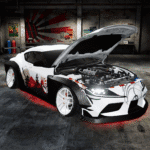
Paint and rims change how your car looks, not how it drives. You pick colors and wheel styles to make each build your own. This matters most in online lobbies, where other drivers see your car on the grid.
Spend on looks only after your performance parts are sorted. A great livery on a slow car still loses.
The fastest ways to earn credits without paying
Wins are the only steady credit source that costs no real money. Quick 1v1 duel wins paid the most per minute in my sessions. Career events, meanwhile, give slower but predictable income.
The game is free to play with optional in-app purchases. Paying speeds things up, but it is not required. I reached competitive builds without spending anything, although it took patience and a lot of short online races.
Common JDM Racing setup mistakes that lose races
Setup errors, not slow reflexes, lose most races for new JDM Racing players. The three biggest are using one tune for every event, keeping the wrong control scheme, and grinding credits in the slowest place.
None of these show up in the tutorial, and the store page does not warn you either. I made all three in my first week. The good news is that the physics model is consistent, so a fix that works once keeps working.
Fixing them costs almost nothing. Most fixes are a settings change or a different event choice, not a new part.
Running one tune for drag runs and circuit laps
A drag setup wants short gears and a stiff launch. A circuit setup wants grip and balance through corners. Running one tune for both means you lose a little everywhere and win nowhere.
Keep at least two cars, one for each job. The garage of legendary Japanese cars is big enough for this. For example, a cheap 80s car tuned for straights can beat a pricier car set up for corners. That split alone turned my drag times around.
Sticking with buttons on drift-heavy tracks
Buttons work for drag, but they make long slides jerky. Each tap is full lock or nothing, so holding a smooth angle is hard. Many players blame the car when the input is the real problem.
Try tilt or a controller before you buy more grip parts, especially for checkpoint events with tight turns. I wasted credits on tires before switching to the wheel. The switch fixed more than the tires did.
Grinding offline bot races when duels pay faster
Repeating Offline Campaigns feels safe, so many players farm them for credits. The bots are predictable, and you can win again and again. Each win, however, takes longer than a quick online duel.
Use offline races to test a tune, then take it online to earn. In my sessions, a run of short duels roughly doubled what the same time offline paid. That gap also grows as your car gets stronger.
Best JDM Racing tips and tricks for beginners
Beginners in JDM Racing improve fastest by fixing launches first, buying grip before power, and moving online once one car is strong. Those three habits matter more than any single expensive car.
Every tip here comes from my own early sessions with the game’s real engine sounds, tuning parts, and career ladder. None of it needs a big credit balance. Instead, it needs a few minutes of practice per car.
Small habits beat spending. A player with a tidy launch and a balanced car will beat a richer player who only bought power.
Shift by engine sounds for cleaner drag launches
Watch the tachometer at first, then start shifting by ear. Every car has real engine sounds, and the note changes right before the best shift point. Once you hear it, your shifts get faster than your eyes allow.
Launch with steady revs instead of a full throttle slam. A heavy car bogs down if you over-rev, while a light car simply spins its wheels. Test each car in a few drag runs before you race it online.
Spend credits on grip and gearing before power
Power is the most tempting upgrade and the least useful early on. Extra horsepower without grip just turns into wheelspin. Gear ratios and tires, on the other hand, give more speed per credit in the first hours.
Save visual parts for later, too. Paint looks great, but it never wins a race. My rule is simple: no cosmetic spending until my main car wins its tier.
Beat checkpoint events and survival challenges with a stable car
Checkpoint events and survival challenges are where most beginners stall. One spin costs too much time to recover, so the run ends early. A stable car with modest power clears them far more often than a fast, nervous one.
Brake a little earlier than feels right and keep the car straight out of corners. These events reward finishing, not heroics. I only cleared my first survival run after I stopped chasing top speed.
Frequently Asked Questions About JDM Racing
Can you play JDM Racing on PC?
JDM Racing has no native Windows release, but PC players run the Android version through emulators such as BlueStacks or LDPlayer. Mac owners can buy a separate App Store edition. On phones, the iOS build needs an iPhone 6S or newer, so very old devices will not run it.
Is JDM Racing hard for beginners?
Not very. The game offers driving assists for newer players and advanced settings that remove them once you want full control. Start with assists on, clear the early career tier, then turn them off one at a time. Most players feel comfortable within a few sessions, though drift-heavy tracks take longer.
Does JDM Racing get new cars and updates?
Yes. The developer adds new events and cars on a regular basis, according to the current store listing. Recent builds also include cinematic replays and a photo mode, so you can save shots of a tuned car or rewatch a close finish. Online leaderboards give long-term goals after the career ladder ends.
My verdict: who should play JDM Racing
JDM Racing suits players who love Japanese car culture and want drag launches and circuit racing in one free app. It is a strong pick for Initial D fans, setup tinkerers, and anyone who wants quick online duels on a phone. Pure drift scorers may prefer a drift-only rival, since sliding here is one skill among several. After many hours in my own garage, I think the tuning depth and real car audio beat most free racers on Android. Install it, build one drag car and one circuit car, and climb toward the Pro League.
Images


Download links
ℹ️ Download link not working? Please refresh the page and try again.
Developer's apps


Related apps

What's new
technical update
New Apps
Most Played Mobile Games


