
Bad 2 Bad Apocalypse MOD APK (Free Shopping)

Description
Bad 2 Bad: Apocalypse drops a four-slot animal special forces team into a virus-wrecked planet spread across more than 60 maps and regions. New squad leaders who keep running out of crafting materials by the third region get the resource economy sorted out here, along with the squad picks that fix it. The single biggest early gain comes from recruiting Beo for his 20% material acquisition skill before you start farming seriously.
How to Play Bad 2 Bad: Apocalypse as Delta Team
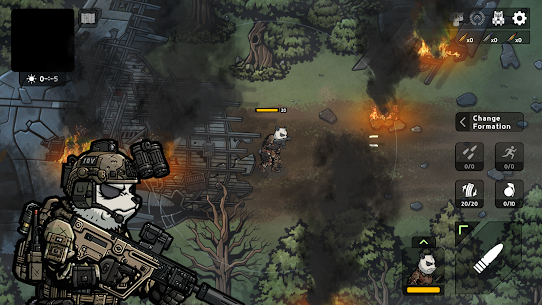
Bad 2 Bad: Apocalypse is an open world survival RPG where you lead Delta Team across more than 60 maps and regions. Players shoot infected Wilders, gather materials, fish, craft gear and upgrade a home Base Camp to rebuild a virus-hit world.
The camera sits above your squad, so every fight reads like a tactical board. You pick four fighters, walk them into a region, and everything you carry home feeds the next upgrade.
Dawinstone built this as the third entry after Delta and Extinction. The studio sits in Seoul, and the animal-soldier art style carried straight over. However, the survival layer is new, and it changes how the whole loop feels.
What the Squad Shooter Core Loop Does
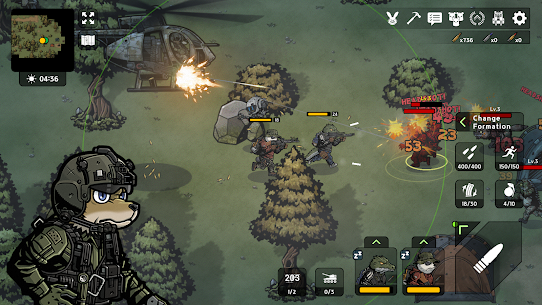
Every session follows the same shape. First you deploy, then you clear hostiles, gather what the region holds, and fly back before your fighters run dry on ammo and repair kits. That loop repeats across the campaign, and it tightens as region levels climb.
Your squad runs one leader plus three members, so four active slots per deployment. Formation switching lets you shift between an aggressive firing posture and a defensive shield wall mid-fight. Because slots are limited, every pick has an opportunity cost. Players who bring four damage dealers hit harder but fold faster against Pillager camps.
The Virus Story, Major Pan and the Wilders Threat
Major Pan leads Delta Team through a world that the Human Forces broke with an engineered virus. Infected survivors became Wilders, and the campaign follows the squad from bare survival toward actual reconstruction.
The tone stays surprisingly grounded for a cartoon-animal cast. Story beats land through World Missions and base conversations rather than long cutscenes. Aggregated completion data puts the main story at around 12 hours, so it reads more like a compact console campaign than an endless mobile grind. For example, the mid-game shift to a new national base functions as a clear act break.
How Apocalypse Compares to Other Android Survival Shooters
Last Day on Earth: Survival and LifeAfter dominate this genre on Android, and both lean on timers, servers and multiplayer pressure. Apocalypse takes the opposite route. It runs single-player, works offline, and never gates your session behind an energy bar.
Zombie Forest 3: Underground sits closer in spirit, since it also pairs squad control with base management. The difference is scale. Apocalypse spreads across 60+ regions with global World Missions, while most rivals loop a smaller map set. Consequently, the pacing here rewards patient route planning instead of daily login habits.
Android Version vs the PC Version on Steam
The Steam build launched on 30 October 2024 at $19.99 as a one-time purchase, with no ads and no in-app purchases. The mobile build is free, carries ads, and sells items between roughly $0.99 and $14.99. Steam reviews sit near 77% positive across about 879 posts, while Google Play shows 4.5 stars from roughly 44,700 reviews.
Players who have run both report a real gameplay difference, not just a payment one. Enemy drop rates were raised significantly on the PC build, so material farming moves faster there. Touch controls handle the top-down aiming fine on phones, although a controller makes tight Pillager fights noticeably cleaner. Valve also rates the game Steam Deck Playable.
Gameplay Mechanics and Controls in Apocalypse
Apocalypse controls with a left virtual stick for movement and a right-side button cluster for firing, reloading, grenades and item use. Aim tracking does the fine work, so your thumbs handle positioning and timing instead.
Positioning matters more than reflexes. Wilders swarm, Pillagers shoot back, and your squad follows your lead unless you order a formation change.
Survival systems run underneath all of it. Hunger, fatigue, weapon durability and inventory weight all tick along while you fight. Because of that, a clean firefight can still end badly if you ignored the clock.
Aiming, Reloading and Weapon Handling on Touch
Each fighter carries a primary and a secondary weapon, and you swap between them mid-fight. Reload timing is the skill that separates a comfortable clear from a wipe. Firing dry in the middle of a Wilder pack usually costs a knockdown.
Weapon durability drops with use, so repair kits belong in every loadout. Shotguns and machine guns burn through condition fastest. In addition, weapon stats scale with the carrier’s proficiency in that weapon class, which means handing a marksman rifle to the wrong fighter quietly halves its value.
Gathering, Fishing and the Day and Night Cycle
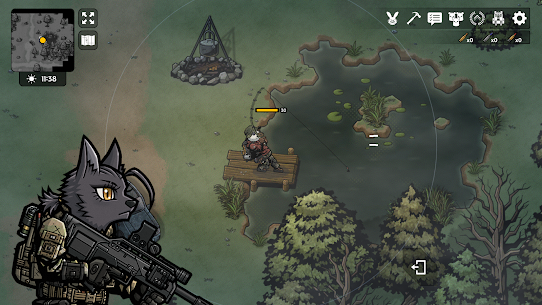
Gathering, fishing and crafting form the survival spine of the game. You pull plants, ore and scrap from world nodes, catch squid, rock fish and crab at marked water, then convert everything at the Crafting Tool back home. A Seafood Merchant now sits on each base runway to trade the catch.
Night changes the rules completely. Wilders become enraged after dark, hit harder, and drop noticeably more material. Cooked food adds stacking buffs, and rockfish soup in particular raises ingredient acquisition chance. Therefore night runs are the highest-yield farming window in the game, provided your squad can survive them.
What Happens When a Squad Member Goes Down
Downed fighters do not die permanently. They pass through an Injured stage first, which heals fast if you stand over them, and then a Dying stage with a much longer revive timer. Ignore both and the fighter gets pulled back to base.
Recovering them is simple but annoying. You return home and talk to the member to re-recruit them, or speak to Bunny for paid characters. Losing the squad leader is the expensive outcome, since some carried material goes with them. Most of it can be recovered afterward.
How to Unlock and Upgrade Your Base Camp
The Base Camp accepts 28 separate upgrade steps across a full playthrough, and each one raises what your squad can build, store and repair. Upgrades cost gathered material rather than real money, so progress here tracks how well you farm.
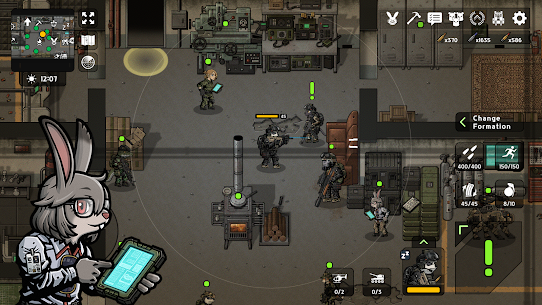
Inside the camp you get a Bed, Storage, a Crafting Tool, a Shooting Range, a Training Center and a Cooking Pit. Three of those start broken.
Outside the north entrance sits a runway holding the Transport Helicopter and the 0-22 Helicopter. Off-duty squad members hang around the camp, and so do Irina, Bunny, Bigfoot and EB once you find them. A Training Room was added to each base runway in a recent update.
Repairing the Shooting Range, Training Center and Cooking Pit
The Shooting Range, Training Center and Cooking Pit all arrive broken and need repair before they function. Prioritise the Cooking Pit first. Food buffs feed directly into farming output, and farming output funds everything else.
The Training Center comes second for most players, since raising weapon proficiency shortens every later fight. Meanwhile the Shooting Range is the safest of the three to delay, because its benefit compounds slowly. Repair costs scale with your camp tier, so pushing a repair one tier too early wastes material you will want for gear.
Storage, the Crafting Tool and Bunny the Merchant
Storage splits into two types, and expanding it is the upgrade beginners underrate most. Inventory weight limits how much a region run can return, and a full bag mid-route forces you to discard finds. Discarded material from a finite node is gone for good.
Bunny operates as the camp merchant and the re-recruitment contact for paid characters. The Crafting Tool converts raw material into equipment, food and clothing skins, and Challenge Mode adds its own exclusive crafting recipes on top. For example, upgrading the Crafting Tool before a long farming stretch turns a bag of scrap into repair kits you would otherwise have bought.
Why Helipads Cut Travel Time Between Maps
Helipads scattered across regions unlock fast travel once repaired, and repairing them early is the highest-value spending decision in the opening hours. Without them, crossing 60+ regions on foot eats an enormous share of your session.
Rough accounting from typical playthroughs suggests around a third of a first run goes to travel and gathering rather than combat. Every repaired helipad shaves into that number directly. So if you can afford a helipad repair, take it over a weapon upgrade almost every time.
How to Unlock Battle Armor and Support Weapons
Riding Battle Armor turns Apocalypse from a squad shooter into a walking weapons platform for the length of one deployment. Access unlocks through story progression rather than purchase, and the Goliath frame arrived with four separate levels.
Support weapons work differently. Self-propelled artillery, attack helicopter air support and combat drones all attach to your squad as callable assets.
Each option trades resources for burst power. Drones can take a squad slot, artillery support hits a marked area, and air support clears open ground fast. However, none of them replaces a well-built squad, and leaning on them early drains materials you need for gear.
Goliath Battle Armor and Core Enhancement Stages
Goliath is the headline Battle Armor and functions as a rideable mech with its own health pool and heavy weapons. It shipped with four levels, and a later update added a second stage of core driving part enhancement on top of those.
Deployment is situational rather than constant. Boss encounters and dense Pillager bases are where the frame earns its cost. By contrast, using it for routine gathering wastes the enhancement material that keeps it relevant later. Save it for the fights that have already killed you once.
Artillery Support, Air Support and Combat Drones
Artillery support calls in self-propelled guns against a marked position, and it flattens grouped enemies better than any handheld weapon in the game. Air support from attack helicopters covers wider open ground and works well in exterior region fights.
Combat drones behave more like a fifth squad member. Aerial drones equip weapons directly, and their gear ceiling rises as you enhance them, though several weapon classes stay off limits. Ground drones fire rockets on a reload cycle instead. Functional items such as material acquisition boosters can be fitted to a drone, but not alongside a weapon.
When Support Costs More Than It Returns
Support assets consume resources every single use, and beginners burn through their stock long before they need to. A Wilder pack on a level 2 region does not justify an artillery call. Ordinary rifle fire clears it for free.
The honest threshold is simple. If a fight has already wiped your squad once, support is worth it. Otherwise, bank the material toward the next Base Camp step or a generation upgrade, because those benefits stay with you permanently while a support call lasts seconds.
How Weapon Generations, Skills and Loot Progression Work
Weapons and armor sit in numbered generations, and the current ceiling is 5th generation weapons paired with 4th generation armor. The equipment enhancement system applies only to those top tiers, which makes them the real end-game target.
Underneath generations sits a per-character proficiency layer. Every fighter has one primary weapon class plus secondaries, and each class levels independently through use.
Loot feeds all of it. Equipment cores drop from specific regions, attachment parts come from clearing structures, and the whole chain rewards deliberate route choices over random wandering.
Weapon and Armor Generation Tiers
Generation number is the single strongest predictor of an item’s stats. Rarity stacks on top and adds damage in steps, so a high-rarity 4th generation rifle can outperform a plain 5th generation one for a while. Attachment parts push the numbers further.
Farming targets shift as you climb. Regions that drop 4th generation armor cores and 5th generation weapon cores contain no Wilders at all. That detail matters more than it sounds, because it means the top-tier farming spots cannot be night-farmed. You need a different route strategy for the final tiers than the one that carried you through the mid-game.
Squad Member Skills and Weapon Skill Levels
Each fighter brings an active skill and passive traits. Beo’s morale skill raises material acquisition chance by 20%, and Letty adds 10% to ingredient and food acquisition. Others lean toward damage, penetration or damage reduction buffs for the whole squad.
Weapon proficiency levels through damage dealt. Primary classes climb higher than secondary ones, and unlocking a secondary class costs currency up front. Consequently, spreading a fighter across many weapon types is slower than committing them to one. Pick the class that matches their skill kit and stay with it.
What Night Vision and Accessories Change
Night Vision was added as part of the deeper customization layer, and it solves the practical problem that night farming creates. Enraged Wilders drop more, but you cannot fight what you cannot see. Goggles make the highest-yield window actually playable.
Accessories go well beyond cosmetics. Vests, attachments and functional items shift reload speed, durability loss and acquisition rates. EB, the Electronic Buddy companion, unlocks visible enemy health bars once repaired. That single change turns guesswork about a boss into a readable fight.
All 60+ Maps, World Missions and Region Difficulty
Each region in Apocalypse carries a difficulty level, and that number decides whether your current gear survives contact. The world spans over 60 maps, and the campaign moves you between national bases as the story opens up.
Region levels run from the gentle opening areas up through level 8 and beyond. Enemy density, damage and loot quality all scale together.
World Missions layer global objectives across that map set. Extermination Missions and Challenge Mode sit alongside them as repeatable content, and one recent update opened a fresh batch of countries for the second World Mission arc.
How Region Levels Gate Your Squad
Difficulty level functions as a soft wall rather than a hard lock. You can walk into a level 6 region with level 3 gear, and you will get roughly ninety seconds to regret it. Enemy damage scales faster than your health pool does.
The reliable rule is to stay one tier behind your comfort zone while farming and push forward only for story objectives. Level 1 to 3 regions are where you find EB early. Similarly, mid-tier regions carry the best balance of drop quality against risk for most of the campaign.
World Missions Across Global Bases
World Missions send Delta Team to objectives spread across different countries, and they double as the campaign’s structural backbone. Completing them opens new bases, and new bases mean new merchants, new runways and shorter travel routes to nearby regions.
Progress here also gates certain squad members. Irina, for instance, becomes available again at a specific story point rather than through farming. So players stuck without a shield-carrying tank should push the story rather than grind, because the fix is a mission, not a drop.
Challenge Mode and Extermination Missions
Challenge Mode arrived as repeatable content with its own exclusive crafting recipes attached, which makes it more than a score chase. The recipes it unlocks cannot be reached any other way.
Extermination Missions clear designated areas and reset afterward, forming a reliable renewable income source once your gear can handle the target region. Shields you drop during these missions now persist through a reset, which removes an old annoyance. In addition, monster skin variants added in recent updates change what you face in these repeat runs.
Common Mistakes New Players Make in Apocalypse
New squads lose more progress to finite resource nodes than to enemy fire. The world’s gathering points do not respawn, and beginners routinely strip their opening regions bare before they understand what that means.
Two other habits cause almost as much damage. Fatigue gets ignored until a squad wipes, and EB gets skipped because its benefit sounds cosmetic.
None of these mistakes look serious in the moment. Each one quietly costs hours later, and all three are avoidable inside your first session.
Stripping Finite Resource Nodes Too Early
World gathering nodes are limited, and once harvested they are gone. Enemy drops and night-time enraged Wilders are the only two infinite material sources in the game. That distinction is the most important economic fact in Apocalypse, and almost nobody tells new players about it.
The practical consequence is straightforward. Never harvest a node when your bag is nearly full, because discarding the overflow destroys material permanently. Instead, clear enemies first, dump low-value scrap at base, then return for the nodes. Players who invert that order run out of crafting stock somewhere around the fourth region and assume the game is badly balanced.
Staying Awake Too Long on High Level Regions
Fatigue accumulates across in-game days, and it degrades your squad’s performance well before you notice it happening. On level 5 to 8 regions, staying awake past roughly three in-game days is where runs collapse.
Sleeping at the Bed resets the cycle and costs almost nothing. The mistake is treating sleep as wasted time during a productive farming streak. However, a rested squad clears a region faster than a tired one clears half of it. Upgrading the Bed early pays for itself within a few sessions.
Skipping EB and Playing Without Enemy Health Bars
EB, the Electronic Buddy, hides in low-level regions between level 1 and 3, and repairing it unlocks visible enemy health bars. Many players walk past it because the description sounds minor.
Playing without health bars means every boss fight becomes guesswork about whether to commit or retreat. With them visible, you know when one more magazine finishes the target. Find EB during your opening hours, before difficulty scales, and the rest of the campaign reads far more clearly.
Best Bad 2 Bad: Apocalypse Tips and Tricks for Beginners
Beo’s morale skill raises material acquisition chance by 20%, which makes him the single most valuable early squad pick for anyone planning to farm seriously. Pair him with Letty’s 10% ingredient bonus and the compounding gets obvious fast.
The other two habits that separate smooth runs from stalled ones are route discipline and squad balance.
Every tip here comes from the specific systems this game runs, not general survival advice. Looting behaviour, night timing and role coverage all interact, and getting two of the three right still leaves you short.
Night Farming Enraged Wilders with Beo and Ratty
Enraged Wilders spawn after dark with raised drop rates, and camping a single area overnight returns more material than a full daytime sweep. Bring Beo for the 20% acquisition skill and Ratty for his damage output.
Eat before you go. Rockfish soup raises ingredient acquisition and stacks with squad skills, so cook it at the Pit before deploying. Night Vision goggles make the whole routine viable. Remember that top-tier core regions hold no Wilders at all, so this technique covers the mid-game and stops working exactly when you reach 4th generation armor targets.
Looting Every Building on the First Three Maps
Buildings on the opening maps hold gear that removes the need to farm for equivalent items later. Clearing every structure on maps one through three is slow, and it is worth it anyway.
The third map is also where the squad recruitment run happens. Head north along the paths without provoking enemies, follow the blue arrow to your first recruit, then work east and finally south. Most players finish that circuit with the full early roster. Avoiding fights during the route saves repair kits you have not yet learned to make.
Building a Squad Around One Tank and Three Damage Roles
Four slots force a real decision, and the most reliable general answer is one shield carrier plus three damage roles. Irina and Lesser cover the tank job. Dail works as an off-tank who contributes more damage while still absorbing hits.
Tankless compositions do exist and they clear content faster. They also punish a single mistake with a knockdown. For a first playthrough, take the shield. Once your generation tier climbs past the region you are farming, drop the tank and add a fourth damage role for speed.
Frequently Asked Questions About Bad 2 Bad: Apocalypse
Can you play Bad 2 Bad: Apocalypse offline?
Yes. Bad 2 Bad: Apocalypse is tagged as an offline title on Google Play and runs fine with mobile data and Wi-Fi switched off. Some players actually prefer airplane mode, since ad delivery has caused occasional crashes on certain devices. Turning the connection off also removes ad interruptions entirely.
How long does the main story take to finish?
Aggregated player data puts the main campaign at around 12 hours, though completionists chasing every region and collectible report considerably longer. Sessions break cleanly into 20 to 30 minute deployment runs, so it suits commute play. The pacing sits closer to a compact console RPG than a typical endless mobile grind.
Do squad members die permanently?
No. Fallen fighters return to base and simply need re-recruiting through conversation, or through Bunny for purchased characters. Only the squad leader’s death carries a material penalty, and most of that stock is recoverable afterward. The content rating sits at 7+ for mild violence, which reflects how forgiving the failure states are.
Who Should Put Apocalypse on Their Android Phone
This one suits players who want a real campaign on a phone rather than a daily-login habit, especially anyone who liked Extinction and wanted a bigger world around it. Offline play, no energy timers and a 12 hour story make it unusually respectful of your time for a free title. My own verdict after running it is that the resource economy, not the shooting, is what kept me coming back, and once I understood that nodes were finite the whole game clicked. Skip it if you want fast multiplayer action. Take it if you want a survival RPG that actually ends.
Images
Download links
ℹ️ Download link not working? Please refresh the page and try again.
Developer's apps




New Apps
Most Played Mobile Games


