
uCaptain MOD APK (Unlimited Money, Gold)

Description
uCaptain hands you a working fishing boat and a 250 square mile stretch of ocean to run it across. New captains who keep burning fuel on empty offshore runs will find the port order and gear order that fixes it here. uCaptain gameplay rewards steady coastal catches long before it rewards Bering Sea ambition, and that order decides your entire first week.
How to Play uCaptain: First Trip Out of Port
uCaptain starts every player at a home port with a small boat, one rod and a limited fuel supply. Players sail out, cast a lure, set the reel drag against the fish, then return to port and sell the catch for coins.
That loop sounds simple on paper. However, the fishing simulator underneath it tracks line tension, species behaviour and boat weight at the same time. Studio Pareidolia LLC built the whole thing around physical feel rather than a tap timer.
Your first hour matters more than most new players expect. Coins earned near shore fund the gear that makes deep water survivable later. Spend them badly and the ocean stays effectively closed for days.
What Cast, Reel and Drag Actually Do
Casting works off a tap and hold input. Hold longer and the lure travels further. Bites come from fish that genuinely swim past your lure, so boat position matters more than input timing.
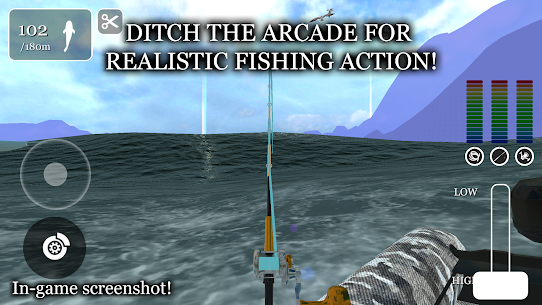
Drag is the setting most new anglers ignore completely. It controls how much line the casting reel gives up under load. Set it too tight against a marlin and the line snaps. Set it too loose and the fight stretches out while fuel keeps burning.
The Commercial Fishing Premise and Ocean Setting
You play a working captain rather than a weekend angler. Money arrives from selling what you haul in, so the boat functions as a business asset instead of a trophy. That framing shapes every upgrade decision you make.
Two named ports anchor the world. Venice, Louisiana sits in warm southern water holding bass, tuna and mahi mahi. Dutch Harbor, Alaska opens onto the Bering Sea, where crabs, cold weather and heavier gear change the entire job.
uCaptain vs Fishing Clash and Ultimate Fishing Simulator
Fishing Clash keeps players rooted to fixed spots and lure cards. By contrast, this boat simulator lets you steer anywhere across the open world map and drop commercial gear wherever you choose. Freedom of position is the core difference.
Ultimate Fishing Simulator sits closer in tone, since both titles chase realism. Still, that game centres on lakes and shorelines. uCaptain builds its economy around commercial equipment like the scallop dredge and crab pots, which neither rival really touches.
uCaptain Controls: Steering, Trolling and Fuel
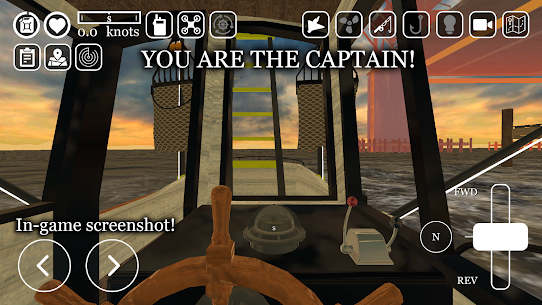
Steering runs on a throttle and rudder pair rather than a wheel, so every boat carries real momentum through a turn. Turns take space. Heavy hulls swing far wider than small ones.
Fuel sits in the middle of every decision you make. Each mile burns some, and running dry offshore genuinely ends a trip. For example, plotting a straight line north without checking the tank is how most early captains lose an afternoon.
The map screen carries route plotting, fast travel points and an in-game help panel. Most players skip that panel entirely. Opening it early saves a lot of guesswork about lures, bait and gear slots.
Steering the Boat and Plotting a Route
Drop a waypoint on the map and the boat steams toward it. Vessels hold a heading on their own once set, which lets you watch the water instead of the controls. That autopilot behaviour makes long runs bearable.
Rough seas change handling noticeably. Waves push the bow off line, and a loaded deck slows acceleration. Because of that, experienced captains plan wide arcs around headlands rather than tight coastal hugs.
Trolling With Two Rods and Lure Selection
Trolling means dragging lures behind a moving boat at low throttle. Two rods run at once, which roughly doubles your bite chances per pass. Speed matters here, since fast passes pull the lure out of the strike zone.
One quirk is worth knowing before you start. Players report that changing bait on one rod can swap the bait on the other while it sits cast. Therefore, set both rods fully before you begin any pass.
Fuel Burn and Fast Travel Between Ports
Fuel is the running cost nobody mentions in the store listing. Every trip out and back spends it, and fast travel spends it too. Budget for it the way you budget for bait.
Players also report cases where fast travel charges fuel without actually moving the boat. As a result, topping off at port before any long run is cheap insurance. Short coastal loops keep the tank cost low while your coin balance stays thin.
How to Unlock Boats and Build Your Fishing Vessel
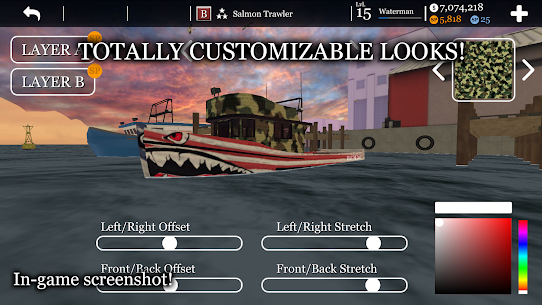
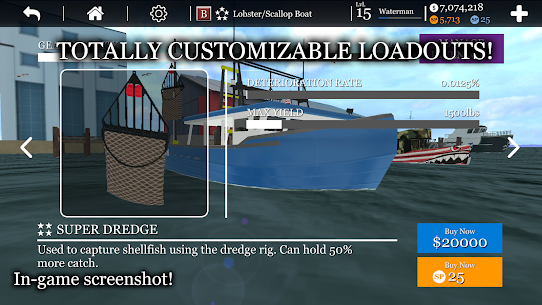
Coins and Fish Bucks both buy hulls at the port yard, and every hull carries a fixed number of gear slots. Players fit rods, shrimp nets, scallop dredges, crab pots, lobster traps or long lines into those slots depending on the target catch.
A recent update added ten new boats to the yard. That widened the middle tier considerably, since the jump from starter hull to commercial vessel used to feel brutal.
Gear choice decides income far more than hull size does. Crab pots pull steady money in cold water. Long lines suit open ocean runs. Fitting the wrong set for your current port wastes coins and deck space at the same time.
Hull Choice and Gear Slot Limits
Every hull sets a hard ceiling on how much equipment you can carry. Small boats might hold two working slots. Larger commercial vessels carry enough for a full trap line plus rods.
Speed and fuel efficiency shift with hull size as well. A bigger boat reaches distant water faster but drinks more fuel doing it. Consequently, the right hull is the one your current income can actually feed, not the biggest one on the screen.
Nets, Dredges and Long Lines
Shrimp nets and the scallop dredge both work by dragging along the bottom while the boat moves. They produce bulk volume rather than single trophy catches. Volume converts to reliable coins, which is exactly what an early captain needs.
Long lines behave differently. You deploy them, sail away, then return to haul. That delay makes them ideal for players who want to stack a crab or trap run into the same trip instead of waiting in place.
The Upgrade Order That Pays Back Fastest
Rod and casting reel upgrades return value faster than hull upgrades do. Better gear raises what you can land in the water you already reach. A bigger boat only raises what you can reach, which does nothing until the gear can handle it.
Buy the port before the big hull. Access to new fish species multiplies your income per trip immediately. Hull capacity, by contrast, only matters once you have enough gear to fill it.
How to Unlock Ports From Venice to Dutch Harbor
Ports unlock through premium currency purchases, and each one opens a different stretch of water with its own species list. Venice, Louisiana is the usual first buy at around fifty premium units, while Dutch Harbor, Alaska opens onto the Bering Sea.
Warm water pays less per fish but forgives mistakes. Cold water pays considerably better and punishes an underbuilt boat without warning.
Crab work is its own discipline entirely. Pots go over the side along a plotted line, then you steam back later to haul them. Deck space limits how many pots you carry, so route length and pot count have to be planned together.
Venice, Louisiana as the First Port Buy
Venice sits in warm southern water and holds bass, tuna, mahi mahi and sailfish. Those species sell well enough to fund your next few upgrades without demanding heavy tackle. Most players who buy it first report smoother early progress.
The water here also stays calm more often. Calm water means simpler steering and fewer failed casts. For a new angler still figuring out drag settings, that forgiveness is worth more than a higher payout.
Dutch Harbor and the Bering Sea Crab Run
Dutch Harbor opens the cold end of the open world map. Crab pots and heavier traps become the main income here, and the payouts jump accordingly. Weather and distance both work against you.
A single Bering Sea run demands fuel, deck space and patience in equal measure. Plot the pot line first, then sail the loop, then haul on the return leg. Skipping that planning step turns a profitable run into a long empty drive.
Crab Pots, Lobster Traps and Deck Space
Crab pots and lobster traps both work on a set-and-return cycle. You drop them along a route, continue fishing, then collect on the way back. Each one occupies deck space that could otherwise hold a net or dredge.
Balance matters more than raw pot count. Ten pots on a hull that cannot carry the haul back is wasted effort. Instead, match the number of traps to what your current vessel can genuinely land in one trip.
How uCaptain Coins, Fish Bucks and Progression Work
Two currencies run side by side in uCaptain: coins earned from selling your catch, and Fish Bucks kept for premium purchases. Coins cover fuel, bait and most boat parts, while Fish Bucks buy new ports, rare gear and the fastest progress shortcuts.
Treasure chests scattered across the map hold Fish Bucks, and a recent update put Fish Buck rewards directly into those chests. Sweeping for chests costs only fuel, which makes it the cheapest premium income available.
The Platinum uCaptain membership sits on top of both currencies. This auto-renewing monthly subscription lifts fish sale value by 200 percent and Fish Buck income by 400 percent. Those multipliers genuinely reshape the economy, so the game paces very differently with and without it.
Selling Catches for Coins
Every fish carries a market value tied to species and size. Selling happens at port, which means each catch only becomes money after you sail home. That return trip is part of the cost of doing business.
New species often pay a first-catch bonus on top of the sale. Because of that, deliberately targeting an unfamiliar species can outperform grinding a familiar one. Variety pays better than repetition in the early game.
Fish Bucks and the Platinum Membership Multipliers
Fish Bucks come from chests, challenge rewards and shark catches rather than routine fish sales. That separation is deliberate, since it keeps premium purchases gated behind either exploration effort or real money.
The 400 percent Platinum bonus on Fish Bucks is the number most players underestimate. It turns a slow trickle into a genuine second income stream. Anyone weighing the subscription should compare that multiplier against how many chests they actually collect per week, not against the monthly price alone.
What the 60+ Species Roster Unlocks
The roster covers more than 60 fish species and wildlife types, from largemouth bass and walleye through to marlin, swordfish and sailfish. Completing sections of it drives a large part of long term progression.
Different species also demand different setups. A pike responds to different lures than a bluefin tuna does. Filling the roster therefore forces you to rotate gear rather than settle into one comfortable loadout.
Common uCaptain Mistakes That Drain Coins and Fuel
The most expensive mistake here is buying a large hull before your income can cover its fuel and gear costs. Players have posted about this pattern repeatedly across store reviews.
A big boat demands bigger gear, and bigger gear costs coins that the coastal economy cannot yet supply. Progress stalls. The expensive vessel then sits at the dock while you grind on the starter setup anyway.
Two other errors show up constantly in player reports. One is steaming north far too early. Another is leaving reel drag at default while hooking a swordfish. Both cost a full trip, and the second costs your line as well.
Sailing to the Bering Sea With a Starter Boat
Cold water rewards are genuinely tempting. However, a starter hull carries too little deck space and too little fuel to make the round trip profitable. You arrive, fill up, and cannot haul enough back to cover the journey.
Wait until your vessel supports a full pot line. Until then, coastal trolling loops return steadier coin per minute in my experience. Patience here is worth several days of saved effort.
Upgrading the Hull Faster Than the Economy Grows
This is the gap almost every other article misses. Boat capacity and income growth are not the same curve, and they do not move together automatically. Buying ahead of your income breaks the loop that funds everything else.
A reliable check is simple. If a new hull would leave you unable to afford a full gear fit plus fuel for three trips, it is too early. Bank the coins, upgrade the casting reel instead, and revisit the yard next session.
Leaving Reel Drag at Default on Big Game Fish
Default drag suits mid sized fish and nothing heavier. Marlin, swordfish and sharks all pull hard enough to break a line set for bass. Adjusting before the cast is faster than reacting mid fight.
Loosen the drag when a large fish first runs, then tighten as it tires. That rhythm is the entire skill ceiling of the fishing simulator underneath. Get it right and a single marlin can outearn an hour of small catches.
Sharks, Challenges and Multiplayer Trips in uCaptain
Eight catchable sharks arrived in a recent update, and each one pays bonus Fish Bucks on top of its normal sale value. That makes shark hunting one of the better premium income routes available without spending money.
Challenge objectives sit alongside them, paying coin and Fish Buck rewards for specific catch targets, species counts and voyage goals. Checking the list before a trip lets you stack rewards onto fishing you were doing anyway.
Store listings also describe multiplayer sailing and real time tournaments, though the feature has appeared inconsistently across versions. Where it works, leaderboards give the whole grind an outside target rather than a purely personal one.
The Eight Sharks Added in a Recent Update
Sharks behave differently from standard fish species. They pull harder, run longer, and punish a tight drag setting immediately. Landing one is a genuine test of the tackle you have built so far.
The Fish Buck bonus is what makes them worth the risk. Ordinary catches pay coins only. Sharks pay both, so a successful shark trip funds premium purchases that would otherwise take weeks of chest sweeping.
Challenge Targets Worth Chasing Early
Early challenges tend to ask for basic milestones: a certain species, a certain count, a certain distance sailed. Most of these overlap naturally with normal play. Reading the list first simply means you get paid for what you were already doing.
Later challenges push toward specific gear use. Some want trap hauls, others want long line deployments. Consequently, keeping a spare slot free for a scallop dredge or a set of lobster traps makes challenge completion far less disruptive.
Sailing With Friends and Leaderboard Runs
Multiplayer sailing lets captains share the open world map and compete on catch totals. Availability has varied between builds, so check your current version before planning around it. When active, it turns solo routine into a race.
Leaderboard runs favour players with strong gear rather than long play sessions. A well tuned casting reel and the right lures beat raw hours spent. That balance keeps the competition from becoming purely a time contest.
Best uCaptain Tips and Tricks for Beginners
Beginners earn faster by running short trolling loops in warm coastal water than by steaming offshore chasing one big fish. Distance costs fuel, and fuel eats profit.
Three habits separate players who stall from players who progress. Chest sweeping, roster targeting and reading the in-game help panel all cost nothing but attention.
None of these require premium currency or a subscription. Each one simply squeezes more value from trips you were already making, which is exactly what a thin coin balance needs.
Sweep the Map for Treasure Chests Each Session
Chests spawn across the open world map and contain variable Fish Buck amounts. Some hold a single unit, others hold considerably more. The variance makes routine sweeping worthwhile over time.
Build the sweep into an existing route rather than making dedicated trips. Fuel spent on a chest run you were making anyway is effectively free. Over a week, that habit funds a port purchase without a single real world payment.
Work the Species Roster Instead of Chasing Weight
New players fixate on landing the heaviest fish possible. First-catch bonuses on unfamiliar fish species often pay better than a repeat trophy, though, especially early on.
Rotate lures deliberately to trigger different bites. Target a walleye one trip, a mahi mahi the next. Variety fills the roster faster and keeps your coin income climbing while your gear is still modest.
Open the In-Game Help Panel From the Map Screen
The help panel sits on the map screen and explains gear behaviour, controls and systems that the game otherwise leaves you to work out. Long time players consistently recommend reading it in the first session.
Most confusion about drag settings, trap deployment and fast travel disappears after ten minutes with that panel. Skipping it is the most common reason new captains describe the opening hours as opaque.
H2: Frequently Asked Questions About uCaptain
Is uCaptain free to play?
Yes. The download costs nothing on Android and iOS, and a Google Play Games build runs on PC. Optional purchases and a Platinum subscription exist, but uCaptain does not force ads between trips, which is unusual for a free to play simulator of this size.
How long does it take to afford a bigger boat?
Most captains need several days of regular sessions before a mid tier hull becomes affordable. A single coastal round trip runs roughly twenty to thirty minutes with selling included. Because coin income scales with gear rather than time, upgrading rods earlier shortens that stretch noticeably.
Does the game still get new content?
Yes, updates have continued adding boats, species and sharks over time. The developer also released a separate sequel on Steam under the World of Fishing name, which runs on its own early access schedule. Progress does not carry between the two titles, so treat them as different games.
The Anglers uCaptain Suits Best
uCaptain fits players who enjoy a slow build and a real economy underneath their fishing. Anyone who wants instant casts and quick tournaments will do better with Fishing Clash.
In my own runs, the moment it clicked came after three failed northern trips. Hauling a full string of crab pots out of the Bering Sea felt genuinely earned, and no other mobile fishing title has given me that. New captains should stay in warm water, sell steadily, and buy Venice, Louisiana before touching a bigger hull. Build the boat your income can actually feed, and the ocean opens up on its own.
Images

Download links
ℹ️ Download link not working? Please refresh the page and try again.
Related apps




What's new
We've been working hard to enhance your experience!
Our latest update includes bug fixes and updates to improve performance. We've made significant improvements to speed up load times and fix glitches or crashes you might have experienced.
We're constantly striving to improve uCaptain™, and we hope you enjoy the latest changes.
New Apps
Most Played Mobile Games


