
The Pirate: Caribbean Hunt MOD APK (Free Shopping)

Description
The Pirate: Caribbean Hunt starts you on a small ketch with an open Caribbean map of 11 buyable regions. New captains bleeding gold to weekly crew wages will fix it by changing what they buy first. Reaching the Panama Coast raises the tier of ships that spawn for you, so map order beats fleet size.
How to Play The Pirate: Caribbean Hunt as a New Captain
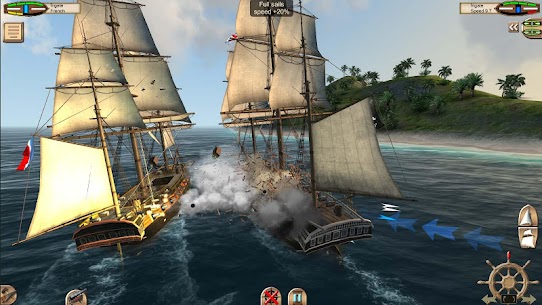
The Pirate: Caribbean Hunt is a free-to-play naval sandbox where you captain a growing pirate fleet across an open Caribbean. You steer one ship directly during battle and order the others while spending gold coins on hulls, upgrades and new map regions.
Home Net Games, a small Polish studio, built the whole thing around wind rather than around menus. That single choice shapes every fight you take.
Your first hours are quiet on purpose. Small contracts, a weak hull and a thin purse keep the pressure on. However, the loop opens up quickly once the first captain skills come online. Port missions, smuggler missions and open world sailing all feed the same experience bar and the same treasury.
How the Open Sandbox Sailing Loop Works
Two travel layers exist side by side. Port-to-port teleporting moves you instantly but burns in-game weeks, while open world sailing moves you in real time across actual water. Only the open world layer spawns shipwrecks, survivors, ghost ships and hidden ports.
Missions come from port boards and from the map itself. Merchant runs, convoy escorts, treasure digs and pirate attacks all appear without a cap. Because the pool never empties, you can grind one mission type for hours if a particular payout suits your fleet.
The Age of Piracy Setting and the Crimson King Story
The stated goal is becoming the Crimson King of the Antilles. Around that ambition sits a living world of trading nations, smugglers and the hostile Confederacy pirate faction. A day/night cycle runs constantly, so a chase started at dusk finishes under lanterns.
Two named campaigns carry the plot. “Jewel of the Caribbean” is the main line, and “A Siren’s Chilling Melody” arrived later as a follow-up written by community favourite Charles Horn. That second story pits you against King Philip III and needs the Brazil maps in hand.
How It Compares to Tempest and Sea of Conquest on Android
Tempest: Pirate Action RPG is the closest arcade rival on Android. It throws loot and active ship abilities at you within minutes, whereas this title makes you earn a second ship. Tempest also leans on mystic crystals and summoned krakens, so realism is not its aim.
Sea of Conquest: Pirate War pulls in the opposite direction, toward alliances, timers and shared maps. Coordination matters more there than steering does. By contrast, The Pirate: Plague of the Dead comes from the same studio and shares this sailing engine with a heavier undead storyline attached.
Android Version vs the Steam and Mac Version
Both versions are free, and both run the same sailing engine. Touch controls handle sail trim and the turn lock arrows well, though aiming a broadside with a mouse on Steam is noticeably tighter. Mortar arcs in particular are easier to judge on a large screen.
Progress travels between them through the studio’s cloud save service. Single player works without an account, but multiplayer needs one. Steam reviewers rate the game Very Positive, and the phone build receives the same content updates rather than a trimmed version.
Sailing Controls, Wind Angles and Battle Sails Mode
Battle sails mode reduces your canvas and unlocks the cannon controls, and it is the only state where mortars, ammo swapping and boarding icons become available. Everything tactical happens inside it.
Outside that mode you run full sails for speed. Wind direction decides whether that speed exists at all. Each hull has a dead angle, a cone straight into the wind where the ship simply stalls.
Sail trim doubles as a steering tool. Opening and closing sails against the wind pivots the hull faster than the wheel alone, and the turn lock arrows near the wheel hold a heading while you handle guns. Five ammo types then decide what a broadside actually does to the target.
Steering With the Wind and Reading the Dead Angle
Check the compass before committing to any intercept. Sailing across the wind gives the best blend of speed and turning, while a downwind run is fast but sluggish to correct. Fighting inside your dead angle is how new captains lose winnable duels.
Enemy AI reads wind too. Therefore a common escape is forcing a pursuer into the eye of the wind and slipping away on a crossing course. Larger hulls suffer more here, since a first rate turns like a cathedral compared with a brigantine.
Cannon Balls, Chain Balls and Grapeshot Roles
Standard cannon balls damage hulls. Double-shot doubles that damage but cuts range and slows reloading, so it belongs on a target that cannot escape. Many veterans skip double loading entirely because a miss costs two rounds instead of one.
Chain balls shred sails and immobilise a runner. Grapeshot ignores the hull and kills crew, which makes it the capture tool rather than a killing tool. A clean sequence is chain balls into the rigging first, then grapeshot across the deck once the target has stopped.
Mortars, Explosive Barrels and Burning Oil
Mortars lob bombs over the rail and are mandatory for smashing fort walls during port raids. You must fit them in ship upgrades and carry bombs aboard, or the fire button never appears. Their arc also works beautifully against slow, heavy ships at range.
Special weapons add dirty options. Explosive barrels drift behind you, burning oil sets water alight, and battering rams turn a collision into a weapon. Firebug is the skill that unlocks oil, so the arsenal expands as your captain levels rather than all at once.
How to Unlock Bigger Ship Classes and Better Ship Spawns
Ship classes unlock through map region purchases rather than through experience levels, so buying maps is the real gate on fleet quality. The world sells 11 regions in a fixed order, and owning more of them raises the tier of vessels that generate around you.
Twenty ship classes exist in the current version. Only select military and civil hulls appear for capture or for purchase with gold coins. Premium hulls never spawn in the open world at all.
Panama Coast is the threshold worth knowing. Once that region is open, the best hulls enter the spawn pool everywhere, and the regions after it add water and missions without raising ship quality further. Blueprints and a shipyard cover everything the spawn tables refuse to hand you.
Ship Tiers and the 11 Map Regions
The purchase order runs Windward Islands, Puerto Rico, Hispaniola, Bahamas, Florida, Cuba, Panama Coast, Yukatan, Louisiana, Mexico coast and Brasil coast. Each one costs gold coins from a port shop. Spawn tier scales with the total you own, not with which specific one you bought.
Difficulty rises alongside that tier. Enemy fleets you meet get stronger in step with your map count, which means an under-armed captain who rushes purchases meets warships instead of merchants. Buy one region, upgrade the fleet, then buy the next.
Capturing Ships With the Corsair Skill
Boarding needs the Corsair skill equipped, and nothing else substitutes for it. Approach a damaged target until a hook icon appears, tap it, then clear the defenders in the boarding mini-game. Bring a second ship along so you have enough hands to sail the prize home.
The quieter method skips the mini-game. Drop one side of the enemy hull to roughly 50 percent with standard rounds, then switch to grapeshot and empty the deck. Note that pirate ships resist capture during port-based missions and Confederacy ambushes, yet surrender normally in open world sailing.
Blueprints From Wrecks and Building at a Shipyard
Blueprints come from wrecks along beaches and from rescued survivors. Sail close to the shoreline and stop beside a wreck, and your crew searches it automatically. You need 100 percent of a blueprint before construction becomes possible.
Building then requires a shipyard on a port you own. Open the menu, choose Overview, select Blueprints and pick your hull. The shipwright building helps complete fragmented blueprints, though it costs rubies to raise.
How to Unlock the 20 Captain Skills and Fleet Command
Captain skills are equippable perks bought with skill points from levelling, and 20 of them exist across combat, trade, repair and fleet command. Each one switches on a system that stays locked without it, so your build decides which parts of the game you can actually reach.
Skill points are limited early, and swapping costs you nothing permanent. Consequently, most captains rotate a repair loadout in port and a combat loadout at sea.
Fleet size in port is uncapped. Combat is where the limit bites, since the game allows a maximum of 5 ships under your command in a fight after a later update raised the ceiling. Commodore is the skill line that gets you there.
The 20 Captain Skills and What They Open Up
Corsair enables boarding. Firebug enables burning oil. Smuggler opens smuggler reputation and their missions, while Ferryman lets you carry paying passengers between ports. None of these systems appears in your menus beforehand.
The economy skills matter just as much. Mayor, Governor and Duke each raise output from buildings on ports you hold. For a trade-first captain, those three quietly earn more gold coins per hour than any cannon upgrade.
Commodore I and II for Sailing More Ships
Sailing more than two ships at once requires both Commodore I and Commodore II equipped. Without them, extra hulls sit parked no matter how many you own. Many players hit this wall after their first successful capture and assume the game is broken.
Extra ships bring real cost. Every hull adds crew wages, ammunition and repair bills, so a four-ship group needs roughly four times the income of a solo run. Keep skeleton crews on ships you rarely deploy, just enough to prevent decay.
Repair Skills, Lumber and Sailcloth
Repairs happen outside battle sails mode and need matching cargo aboard. Hull work requires the Axeman skill and lumber. Sail work requires the Bosun skill and sailcloth, and cannon work requires spare cannons plus its own skill.
All three materials sit in port shops for modest sums. Repair kits offer the shortcut instead, arriving from daily bonus games, skill point exchanges and multiplayer tournament rewards. Stock a few before any fort assault, because mortar fire punishes an unprepared hull fast.
How Gold Coins, Rubies and Ship Upgrades Progress
Gold coins are the standard currency and pay for hulls, maps, cargo, crew and buildings, while rubies are the separate premium currency reserved for the merchant guild, the shipwright and premium shop items. Neither converts into the other through normal play.
Thirty ship upgrades sit behind gold. Rubies mostly buy convenience.
Income arrives from four honest directions and one dishonest one. Trading, missions, base production and multiplayer all pay, and raiding towns pays best per action at 5,000 gold coins a sack. Raids also torch your standing with that nation, so the profit carries a bill.
Where Gold Coins Come From Fastest
Buy low and sell high across ports. Red and green icons beside a port name flag shortages and surpluses, and port news tells you which cargo is scarce. Smuggler missions pay considerably better than open trading once the Smuggler skill is equipped.
Treasure digs scale as you repeat them, with each completed hunt raising the next payout by 200 coins. Selling the location of a hidden smuggler port instead of using it returns 3,000 gold coins. Recycling captured hulls at a fully upgraded shipyard also beats selling them in a random port.
Rubies, Daily Challenges and the Merchant Guild
Rubies come from daily challenges, periodic multiplayer tournament prizes and direct purchase. Free players accumulate them slowly but steadily. Spend nothing else until a merchant guild sits in your main ports.
That guild sells your building output automatically. Without it, you physically visit each base to move stock, which is the single biggest time sink in the mid game. The shipwright is the second priority, since it completes partial blueprints you would otherwise never finish.
Which of the 30 Ship Upgrades to Buy First
Cargo hold capacity pays for itself first on a trading hull. More space means more profit per round trip, and the effect compounds immediately. Sail and rigging upgrades come next, because speed decides whether you can refuse a bad fight.
Armour and cannon count belong on your flagship only. Spreading upgrade gold thinly across four hulls leaves you with four mediocre ships. Pick one ship to carry fights, then let the rest haul cargo and soak damage.
How to Build Player Held Bases and Home Ports
Player held bases are pirate ports you capture and keep, and they produce wares every in-game week that you can sell for steady gold coins. Multiple bases can run at once, which turns a wandering captain into a small economy.
Buildings level up to 6. Higher levels mean faster production and larger storage.
The clever part is time. Passing days from a port advances the whole world clock, so stock accumulates while you sit still. However, every week that passes also triggers a crew payday, and that tension defines the mid game more than any battle does.
Production Buildings and Warehouse Levels
Construct production buildings first, then the warehouse, then the shipyard. A base with a maxed warehouse holds several weeks of output instead of overflowing after a few days. Community reports put a fully upgraded port at roughly 1,000 gold per one to two weeks of stockpiling.
Mayor, Governor and Duke raise those numbers further. Four upgraded bases visited on a loop typically clear several thousand gold per pass. In my runs a first base repaid its construction cost in around three to four in-game weeks.
Home Ports as Free Fleet Parking
Leave one cheap hull permanently anchored at each base. Switching to that ship teleports you there without a voyage, which avoids the week of sailing time a real trip would cost. A carrack works well because it is cheap and its cargo hold upgrades generously.
Parked hulls need only a skeleton maintenance crew. Fire everyone else. Wages scale with headcount, so a fleet of lightly manned parking ships costs very little while saving enormous travel time.
Base Sieges and Fort Defence
Enemy fleets occasionally besiege your ports. A prompt appears and you choose whether to sail in and defend. There is no countdown pressure, and ignoring the prompt does not destroy the base.
Answering it anyway is usually worth doing. Siege fleets carry cargo and hulls worth capturing, and clearing them protects production for the following weeks. Premium base forts add automated defence for captains who would rather not respond every time.
Reputation With Nations, Smugglers and Your Own Crew
Four separate reputation tracks run at the same time, and each one changes a different part of the game rather than feeding a single score. Nation standing, smuggler standing, captain standing and ferryman standing move independently.
Most articles treat this as one bar. That mistake costs players real gold.
Nation standing controls docking fees and port access. Captain standing controls what your own crew charges and whether they mutiny. Smuggler and ferryman standing simply set your pay rates, and both stay dormant until the matching captain skill is equipped.
Nation Standing, Letters of Marque and Docking Fees
Good standing with a nation lowers docking fees and stops its warships hunting you. Buying a letter of marque from that nation lets you fly its flag, improves your trade prices in its ports and brings allied ships to your aid at sea. Flags are only available within their real historical years, listed beside each nation.
Raiding a town drops you straight to pirate status there. You then cannot enter any of that nation’s ports until you buy a letter of parole and resume trading. Consequently, raiding is best aimed at one nation you have written off rather than spread around.
Captain Reputation, Crew Wages and Mutiny Risk
Your captain reputation decides how many sailors are available in port, what they cost to hire and what they cost weekly. High standing means cheaper crews and larger hiring pools. Low standing means expensive, scarce sailors and genuine mutiny risk.
Two habits wreck it. Missing a payday damages your name, and dismissing crew when you sell ships does the same. Transfer sailors to another hull instead of firing them, and the number stays healthy.
Smuggler and Ferryman Standing
Smuggler standing rises when you deliver exactly what the hidden ports ask for. Better standing means better prices per unit, and smuggling already pays more than open trade. Attacking smugglers or arriving with wrong cargo drags it back down fast.
Ferryman standing works the same way for passengers. Higher standing means higher fares per head between ports. Both tracks reward specialisation, so pick one and feed it rather than dabbling in both.
All Multiplayer Modes: PvP, PvE and Port Plundering
Multiplayer sits behind the map screen’s dedicated button and hosts live matches separate from your campaign save, with PvP, PvE, Battle Royale and Port Plundering all available. Gold coins and experience earned there flow back into your single player captain.
Repairs after multiplayer battles cost nothing. Only ammunition comes out of your purse.
That detail makes multiplayer the safest income in the game for a mid-tier fleet. Tournaments run periodically on top of the standard lobbies, and their prize pool includes rubies. Player counts vary by region and hour, so lobbies fill faster in the evenings.
PvP Duels and Free Battle Repairs
PvP pits your ships against other captains in real time. Wind and dead angles behave exactly as they do in single player, which rewards anyone who practised sail trim. A two-times speed option exists for players who dislike long approach runs.
Payouts follow damage dealt rather than kills alone. Therefore a losing captain who landed heavy broadsides still walks away with gold coins. That structure makes PvP forgiving for newcomers testing an unfamiliar hull.
PvE Co-op Fleets Against AI
PvE lobbies put several human captains against AI fleets. Coordination matters, since one player running chain balls while another carries grapeshot captures targets far faster than two players firing the same rounds. Splitting roles before the match starts is worth the extra minute.
These matches also serve as low-risk practice for fort assaults. Mortar timing against AI defenders transfers directly to campaign port raids. New captains often find their aim improves more in an hour here than in a week of solo sailing.
Battle Royale, Port Plundering and Tournament Rewards
Battle Royale arrived in a later update and drops multiple captains into a shrinking fight. Port Plundering followed with an objective-based format built around seizing town wealth. Both refresh the multiplayer rotation beyond straight duels.
Tournament prizes include rubies, repair kits and occasional premium hulls. Because rubies are otherwise slow to accumulate for free players, entering tournaments is the most reliable non-paying route to a merchant guild. Chat carries an automatic translation option in multiplayer settings for cross-region crews.
Common Mistakes That Sink New Pirate Fleets
Most sunk beginner fleets die from money problems, not from cannon fire. A captain with three unpaid hulls and no cargo loses more often to a payday screen than to a Spanish frigate.
Three errors cause the majority of restarts.
Each has a simple fix once you can see it coming. Map pacing, wage control and honest assessment of what your crew can hold cover nearly everything that goes wrong in the first twenty hours. Fixing them costs nothing except patience.
Buying Map Regions Faster Than Your Fleet Grows
Every map you own raises enemy difficulty alongside spawn tier. Buying four regions with a single brigantine produces encounters your hull cannot survive. The world does not scale down again afterwards.
Treat each purchase as a commitment. Upgrade your current ships fully, bank a reserve of a few thousand gold coins, and only then open the next region. Panama Coast in particular should wait until you can field two well-armed hulls.
The Weekly Payday Trap and Idle Crews
Wages are charged per week of game time, not per battle. Teleporting between ports burns those weeks instantly, so a captain hopping around the map racks up paydays without earning anything. Sailing the same distance in the open world costs far less clock time.
Idle ships still draw wages. Strip them to maintenance crews, park them at your bases, and rehire only when you deploy. That one habit typically halves a mid-game fleet’s running cost.
Boarding Warships You Cannot Crew
A captured hull needs a minimum crew to sail. Boarding a heavy warship with one lightly manned ship leaves you with a prize you cannot move. The game will not lend you sailors.
Enemy warships also fight back hard during boarding. Bring a second ship for spare hands, soften the target with chain balls first, and check the crew requirement before committing. Merchants and civil hulls remain the reliable capture targets until your fleet is properly staffed.
Best The Pirate: Caribbean Hunt Tips and Tricks for Beginners
Rum is the cheapest performance boost available, raising both full sail speed and damage dealt for a small sum in any port shop. Most new captains never buy it.
Small habits like that compound quickly here.
The three habits below cost almost nothing and change your first twenty hours completely. Sail handling, open world scavenging and campaign sequencing each unlock value that gold alone cannot buy. Treasure maps and Jolly Roger flags both come from paying attention rather than from spending.
Rum, Sail Trim and Chase Angles
Keep rum aboard permanently and drink before any serious engagement. The speed gain often decides whether a chase ends in a capture or a lost target. Its damage bonus stacks with whatever ammo you have loaded.
Practise opening and closing sails mid-turn. A hull that pivots faster wins the angle, and the angle wins the broadside. Use the turn lock arrows to hold a heading while you switch ammo, since manual steering and gun management rarely work well at once on a touchscreen.
Treasure Maps, Survivors and Hidden Smuggler Ports
Treasure maps appear on survivors, at shipwrecks, aboard abandoned ghost ships and inside claimed chests. You can only hold one at a time, so dig the current island before hunting another. Open the menu, choose Overview, then the treasure maps tab and show it on the map.
Hidden smuggler ports hide along mainland coasts and up the rivers of Brazil. Sailing tight to shore is the only way to find them. Flying a new Jolly Roger works similarly, since each flag unlocks after you sink a pirate who was flying it.
Campaign Order: Jewel of the Caribbean First
Run “Jewel of the Caribbean” before anything else. It introduces the core systems in sequence and hands you missions sized for a small fleet. The reward pacing matches a new captain’s income far better than open world grinding does.
“A Siren’s Chilling Melody” is locked behind that first campaign plus ownership of the Brazil maps. Finishing it gives a shot at capturing a free premium hull near the end. Because premium ships respawn at Cabo de la Vela rather than vanishing when lost, that prize stays with you permanently.
Frequently Asked Questions About The Pirate: Caribbean Hunt
Is The Pirate: Caribbean Hunt free on Android?
Yes. The Pirate: Caribbean Hunt is free to install on Google Play, with optional in-app purchases for rubies, premium hulls and shop bundles. It also runs on iOS, Windows, Mac and Steam at no cost. The developer reports more than 8 million players across all platforms since launch.
Can you play the game offline?
Single player works fully offline, including the campaign, open world sailing and base management. Only multiplayer needs a connection, plus a free cross-platform cloud save account registered with an email address. Many players treat it as an offline commute title and never touch the online lobbies at all.
Does the game still get new content?
Yes, updates continue years after the January 2016 launch, adding hulls, modes and story content over time. On Steam the title holds a Very Positive rating, with 81 percent of more than 1,600 reviews positive. Sessions suit both short bursts and long voyages, which is why the community stayed active.
Who Should Command This Caribbean Pirate Fleet
This one suits patient players who enjoy reading a wind meter more than tapping an auto-battle button. Traders, sandbox builders and anyone fond of older Caribbean sim classics will get the most from it. Newcomers chasing instant power spikes should pick a faster arcade pirate title instead. After sinking a convoy with chain balls and then limping home on half sails, I came away convinced this sailing model is the best on Android in its genre. Install it, buy map regions slowly, and keep your crew paid.
Images
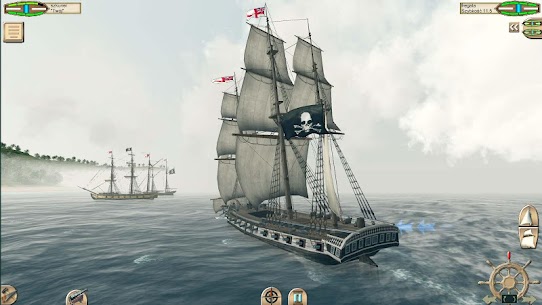
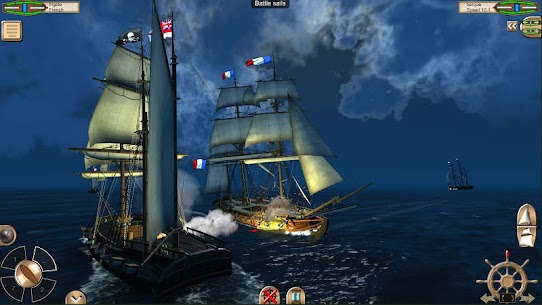
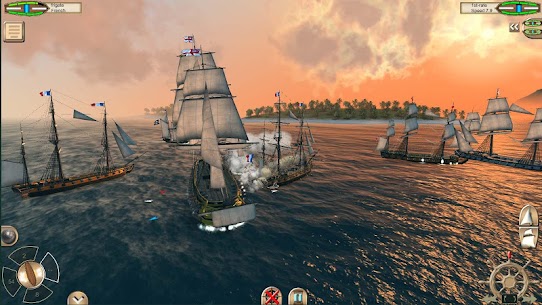
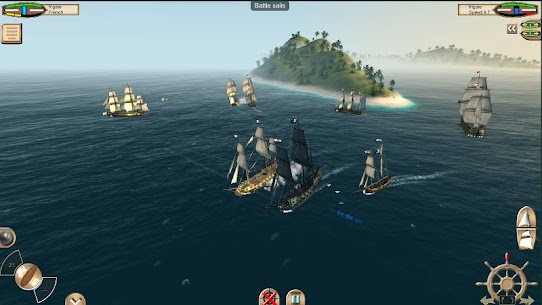
Download links
ℹ️ Download link not working? Please refresh the page and try again.
Developer's apps

Related apps




What's new
Version 10.3:
- Updated SDKs.
New Apps
Most Played Mobile Games


