
S&T Medieval Civilization MOD APK (Free Shopping)
HC GLOBAL DISTRIBUTION LIMITED
Jan 21, 2026
410 MB
1.1.14
8.0

Description
S&T Medieval Civilization drops players into a world where Vikings clash with war elephants and Mongol cavalry charge against musketeers — all driven by a general leadership system that makes every campaign feel different. This post is written for new players and returning commanders who want to build better armies and win harder battles. It covers factions, the procedurally generated general system, squad upgrades at the royal forge, scenario missions, and a full set of beginner tips.
What Is S&T Medieval Civilization and Who Is It For
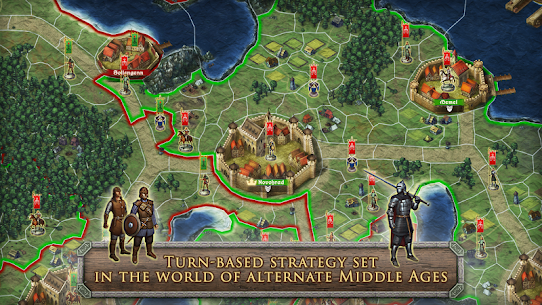
S&T Medieval Civilization is a turn-based strategy title set in Dark Ages Europe. Players take control of a small kingdom threatened by feudal rivals, nomadic invaders, and shifting political pressures. The goal is survival and eventually conquest — building an army capable of defeating every enemy on the map.
The game suits players who enjoy tactical depth without the complexity of large-scale real-time systems. However, it also rewards experienced strategy fans who want meaningful decisions on every turn. Because battles are turn-based, there is no time pressure — only the weight of the choices players make.
The Turn-Based Combat System and How It Works
Every battle in this title runs on a turn-based system. Players move squads across the battlefield map, assign attack orders, and use general abilities before ending their turn. The enemy faction then responds. This continues until one side is eliminated or retreats.
The turn structure means positioning matters more than reaction speed. A squad placed in the wrong location becomes exposed to flanking attacks. Because the combat is deliberate, players can think through every move — but one poor decision can cost a general their life or a squad their effectiveness.
The Setting, Tone, and Dark Ages Story Premise
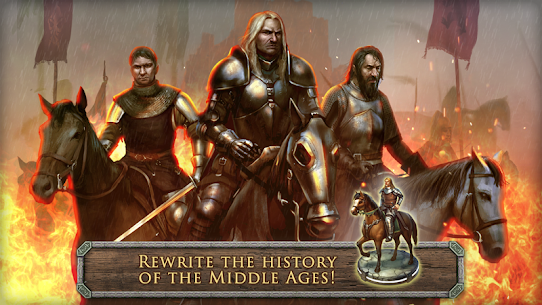
The game is set during the Middle Ages, a period the developers describe as torn apart by feuds and threatened by militant neighbors. Players begin as rulers of a small, vulnerable kingdom. The tone is grounded and serious — there are no fantasy elements, no magical units, and no armored bikinis, as the description explicitly notes.
The story premise shifts depending on the scenario selected. Therefore, players might defend a kingdom ravaged by plague in one campaign and crush a peasant uprising in the next. This variety keeps the narrative fresh across multiple playthroughs.
How This Game Compares to Total War and Civilization Titles
Unlike the Total War series, this game does not separate the campaign map from real-time battles. Instead, everything operates through the turn-based layer. Additionally, unlike the Civilization series, the focus stays on military command rather than technology trees or cultural development.
The closest comparison is a game that blends Civilization’s turn-based structure with Total War’s army composition logic. However, the general personality system — which procedurally generates unique commanders for each campaign — sets this title apart from both. No other major strategy franchise generates commanders with individual vices, talents, and weaknesses on this scale.
How Gameplay Mechanics Work in S&T Medieval Civilization
The core gameplay loop has three phases. First, players recruit and organize squads. Then, they position those squads on the battlefield under the command of a general. Finally, they execute the battle turn by turn until the enemy is defeated or the scenario concludes.
Each phase requires different thinking. Recruitment asks players to consider faction strengths. Positioning asks players to read the terrain. Battle execution asks players to manage general abilities at the right moment. These three phases combine to create a layered tactical experience.
Turn-Based Tactical Movement and Squad Commands
Players move each squad individually across the battlefield grid. Squads have defined movement ranges and attack radii. Because terrain affects movement cost, forest tiles slow cavalry and open ground advantages ranged units.
Squad commands include advance, hold, attack, and special actions tied to the general’s ability list. Players issue all commands before confirming the end of their turn. Consequently, the order in which commands are issued matters — attacking with a weakened squad before repositioning a stronger one, for example, can change the entire battle outcome.
The General Leadership System and Battle Outcomes
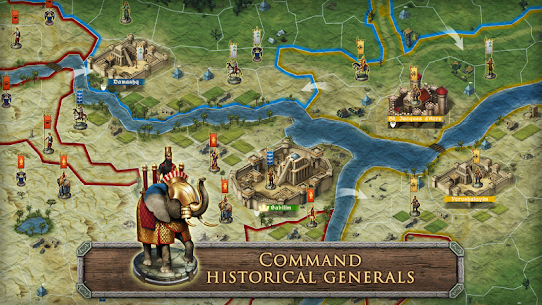
Generals are not passive stat boosts. Each general in this game has a named personality — a brave but simple knight plays differently from a talented but greedy tactical genius. Generals with high tactical ability can reposition squads further. Those with aggressive traits may increase squad morale but attract riskier engagements.
When a general falls in battle, the squad they lead loses cohesion. Moreover, the player loses that general permanently in some scenarios — making general survival a tactical priority, not just a secondary concern.
What Happens When a Scenario or Battle Is Completed
Completing a battle rewards players with resources for recruiting new squads and upgrading existing ones at the royal forge. Generals who survive gain experience, which unlocks new skills and improves existing abilities. Some scenarios also unlock new campaign options or change the political landscape of the map.
Therefore, winning a single battle is only part of the reward. The lasting gains come from keeping generals alive and channeling post-battle resources into the right upgrades. Players who spend carelessly between battles find later scenarios much harder.
Factions, Generals, and the Art of Medieval Command
The six factions in this title each represent a distinct military tradition from medieval history. Choosing a faction is the first major decision players make, and it shapes every recruitment, upgrade, and tactical choice that follows.
Because each faction has unique generals and squad types, no two faction playthroughs feel identical. Additionally, the procedurally generated general system means even the same faction produces different commanders across different campaigns.
The Six Factions and What Makes Each One Different
The Horde plays as nimble nomads — fast cavalry-based squads that excel at flanking but struggle in prolonged sieges. The Imperial faction leans on well-armored units and tactical genius generals suited to methodical, position-heavy combat. The Sea Barbarians favor aggressive, high-morale infantry clad in furs, designed for aggressive front-line pressure.
The Union brings gunpowder to the battlefield, making them effective at range but dependent on positioning to keep musketeers protected. The North fields proud knights — heavy cavalry built for decisive charges. The Twin Rivers cult factions use exotic unit compositions that confuse enemies accustomed to conventional medieval army structures.
How Procedurally Generated Generals Change Every Campaign
At the start of each campaign, the game generates a new general with a randomly assigned personality. This system means players never know who will appear next. One run might produce a bloodthirsty barbarian who instills fear in both friend and foe. The next produces a talented but greedy tactician who demands resources in exchange for loyalty.
Because these traits are not cosmetic, they directly influence battle performance. A fearful general may cause squad morale to collapse in losing battles. A greedy general may perform brilliantly but create resource management pressure elsewhere. Players must adapt strategy to the general they receive — not the general they want.
General Skills, Vices, and Battlefield Weaknesses
Every general carries both skills and weaknesses. Skills might include abilities like rapid advance, flanking bonuses, or siege expertise. Weaknesses create vulnerabilities — a general with poor discipline might cause squads to act unpredictably under pressure.
Vices add another layer. A greedy general might demand higher upkeep. A reckless general might advance beyond safe positions. Players who ignore these traits often find their campaigns collapsing in later stages. However, players who build their battle plans around a general’s weakness — using other squad placement to compensate — gain a significant edge.
Historical Troops and the Royal Forge Upgrade System
The squad roster in this title numbers over 50 unit types, all grounded in real medieval military history. Players encounter ancient phalanx legions, Mongol cavalry, Viking raiders, crusaders, and musketeers — each with historically informed stats and behaviors. This authenticity shapes tactical decisions in ways that purely fictional rosters cannot.
Because the squads reflect real historical troop compositions, players familiar with medieval history will recognize the strengths and weaknesses baked into each unit. However, even those without historical knowledge will find that the game’s mechanics naturally reward the same tactical thinking real commanders used.
Over 50 Historically Accurate Squad Types
The full roster spans multiple military eras and cultures. Nomadic horse archers from the Horde fight very differently from Union musketeers. Imperial infantry holds defensive lines that Viking Sea Barbarians are designed to break apart. Each unit type has defined counters — cavalry beats ranged, heavy infantry beats cavalry, ranged beats heavy infantry in open terrain.
Consequently, army composition is not about collecting the strongest units. It is about building a roster that covers weaknesses and exploits the specific vulnerabilities of the opponent’s faction.
How the Royal Forge Strengthens Your Squads
The royal forge is the primary upgrade mechanism between battles. Players invest resources earned from completed scenarios into specific squads. Upgrades improve attack ratings, defensive capabilities, or special abilities tied to that squad type.
The forge does not upgrade all squads equally. Players must choose which squads to prioritize. Because resources are limited in early campaigns, over-investing in one squad type leaves the rest of the army underpowered. A balanced approach — upgrading at least one squad in each role — produces more consistent results than stacking all resources into a single elite unit.
Matching Troop Types to Enemy Factions
Before each battle, players can scout the opponent’s faction to understand what squad types they field. This information should drive forge investment. For example, facing the Horde’s cavalry-heavy army means prioritizing spear infantry and ranged upgrades. Facing the Imperial faction means investing in mobility to avoid being pinned by their defensive formations.
Players who ignore troop matchups and upgrade randomly often hit a difficulty wall in mid-campaign. By contrast, players who treat each forge decision as a response to the next enemy faction progress more smoothly through even the hardest scenarios.
Scenarios, Campaigns, and the Mercenary Mission System
The game offers multiple ways to experience its medieval world. Beyond the main kingdom survival campaign, players take on mercenary missions that cast them as elite problem-solvers hired by influential powers. Each scenario presents a different military challenge with its own victory conditions.
This variety ensures that the gameplay loop does not grow stale. Players who finish one scenario type face a completely different challenge in the next.
Mercenary Scenarios and What Each One Demands From the Player
Mercenary scenarios include assignments like defeating nomad raiders, repelling coastal pirates, and crushing peasant uprisings. Each scenario changes the map layout, the enemy composition, and the resources available to the player. Some missions restrict which squads are available, forcing players to win with a limited roster.
These constraints are deliberately designed. They push players to think tactically rather than simply fielding the strongest possible army. A pirate-repelling mission, for example, often requires defensive coastal positioning rather than aggressive advances.
Kingdom Survival and the Feudal Conquest Campaign
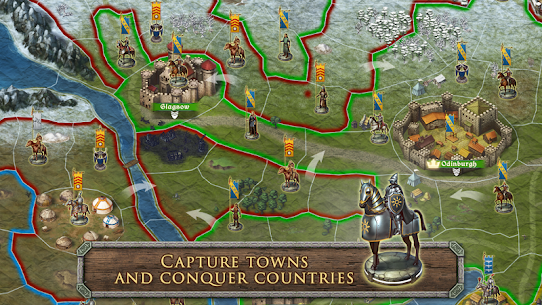
The kingdom survival campaign places players in a small medieval realm threatened by neighbors and internal feuds. The objective expands over time — from simple survival to outright conquest of rival kingdoms. Players must balance military campaigns with economic development and political decisions.
Because the campaign does not offer unlimited turns, players face real time pressure. Waiting too long to expand allows rival kingdoms to grow stronger. Moving too fast risks overextending supply lines and leaving the home kingdom exposed.
How Completing Scenarios Advances Your Army
Each completed scenario provides experience for surviving generals and resources for the royal forge. Some scenarios unlock specific squad types that are unavailable during normal recruitment. Others open new regions on the campaign map, expanding the territory available for conquest.
Therefore, scenario completion is cumulative — every mission builds the army for the next one. Players who replay earlier scenarios to grind resources also benefit, as general experience carries forward and forge upgrades persist between missions.
What Most Players Miss: Hidden Depth in S&T Medieval Civilization
The surface of this game is accessible — move squads, defeat enemies, upgrade at the forge. However, several layers of depth separate players who merely complete campaigns from those who dominate them. Most beginners miss these systems entirely until they hit a losing streak in later scenarios.
Why General Personality Traits Decide Long-Term Campaigns
Most beginners treat generals as unit buffs. Experienced players treat them as the core variable around which every other decision rotates. A brave but simple general should lead frontline infantry charges. A tactical genius should anchor a defensive formation and direct squad positioning from a protected position.
However, the real depth comes from managing vices. A greedy general drains resources if not kept well-supplied with post-battle rewards. A reckless general needs to be placed in situations where their aggression is useful, not dangerous. Ignoring personality traits means the general works against the player’s strategy instead of supporting it.
The Economic and Political Layer Beneath the Battlefield
The game includes economy and politics development alongside military conquest. Most players focus exclusively on military actions. However, economic investment reduces the resource cost of royal forge upgrades in later campaigns. Political decisions can open diplomatic options that prevent two-front wars.
Players who develop their economy alongside their army find mid and late campaign scenarios significantly more forgiving. Additionally, political choices occasionally unlock unique generals that are unavailable through standard recruitment — making political engagement strategically valuable rather than optional.
Troop Combinations That Most Beginners Overlook
Many new players field armies of a single unit type — all cavalry, all infantry, or all ranged. This approach works in early scenarios but collapses against balanced enemy factions in later missions. The most effective armies combine all three roles: cavalry for flanking, heavy infantry to absorb pressure, and ranged units to deal consistent damage from protected positions.
For example, pairing Sea Barbarian infantry with Horde-style horse archers creates a fast-moving army that can both absorb and deal damage simultaneously. Similarly, Union musketeers paired with Northern knights produce a complementary force where cavalry breaks enemy lines and musketeers punish retreating units.
Best S&T Medieval Civilization Tips and Tricks for Beginners
Starting a new campaign without prior knowledge of the general system or faction differences creates a steep early learning curve. These tips address the most common early mistakes and give new players a foundation that scales into harder scenarios.
How to Use Your General’s Strengths in Early Battles
Read the general’s trait list before assigning them to any squad. A general with high tactical ability should command a unit that benefits from repositioning — cavalry or ranged. A general with high aggression should lead frontline infantry where their morale effect is most useful.
Never place a general with poor discipline in a position where isolated combat is likely. Because such generals may act unpredictably under pressure, always keep a secondary squad nearby to cover their position if the situation deteriorates.
Best Approach to Squad Upgrades at the Royal Forge
In the first three scenarios, resist the urge to max out a single squad. Instead, spread forge resources across at least one unit in each combat role. This ensures the army remains functional against varied enemy compositions. A highly upgraded cavalry unit is useless if the opponent fields heavy anti-cavalry infantry.
After the first three scenarios, identify the general’s most effective squad type and begin prioritizing that unit for upgrades. By mid-campaign, a slightly uneven roster — with one exceptionally strong squad — becomes more effective than a perfectly balanced but uniformly average army.
What to Do When a Battle or Scenario Feels Impossible
First, check the troop matchup. Most impossible-feeling battles become manageable once players identify the counter unit type they are missing. Second, return to the royal forge and invest specifically in squads that counter the enemy’s strongest unit.
Third, consider the general’s trait list again. Sometimes a battle feels impossible because the general’s personality is working against the player’s chosen tactics. Swapping to a different general — or adjusting squad assignments to better align with the current general’s strengths — resolves many battles that seemed unwinnable.
Frequently Asked Questions About S&T Medieval Civilization
What platforms is S&T Medieval Civilization available on?
S&T Medieval Civilization is available as a mobile strategy title. The game runs on standard smartphone hardware and does not require high-end specifications. Players should check the official store listing for the most current platform compatibility details, as availability can vary by region and device generation.
How long does a typical S&T Medieval Civilization campaign take to finish?
A single campaign in S&T Medieval Civilization typically runs between five and fifteen hours depending on the scenario chosen and the player’s tactical pace. Shorter mercenary missions resolve in a single session. Full kingdom conquest campaigns spanning multiple regions require several sessions across multiple days.
Does S&T Medieval Civilization have multiple endings or high replayability?
Replayability is high. Because generals are procedurally generated at the start of each campaign, no two runs produce the same commander roster. Additionally, the six factions each offer different tactical experiences. Players who complete the game once with the Horde will face a substantially different challenge running the same campaign with the Union or the Twin Rivers.
Top Reasons to Start Playing S&T Medieval Civilization Today
S&T Medieval Civilization suits players who want strategic depth without real-time pressure — turn-based combat gives every decision the weight it deserves. The procedurally generated general system guarantees that campaigns never repeat exactly, and the six factions offer enough variety that a new run always feels distinct from the last. The historically grounded squad roster adds authenticity that most mobile strategy titles sacrifice for spectacle.
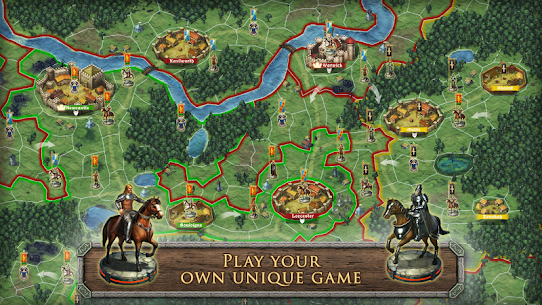
After spending time with the general personality system, the one element that genuinely stands out is how much a single commander’s traits can shift the entire feel of a campaign — a greedy tactical genius plays completely differently from a fearless but reckless barbarian, and managing that difference is where the real game lives. Players who enjoy meaningful tactical choices, historical authenticity, and campaigns that evolve differently each time will find this title worth returning to across many sessions. Start with the Imperial faction if deep tactical positioning appeals, or the Horde if aggressive fast-moving cavalry suits your instincts — either way, the medieval battlefield is waiting.
Images
Download links
ℹ️ Download link not working? Please refresh the page and try again.
Developer's apps



Related apps




What's new
This maintenance update includes:
🛠 changes to meet Google requirements;
🛠 updates of internal libraries;
🛠 minor fixes and stability improvements.
The armies are ready and waiting for your orders!
Let the battle rages on, and thanks for playing with us. 👍
New Apps
Most Played Mobile Games


