
Sky Gamblers: Storm Raiders 2 MOD APK (Unlimited Money)

Description
Sky Gamblers: Storm Raiders 2 rewards a clean deflection shot with a progressive damage system that peels wings and tails off enemy planes piece by piece. New pilots who keep stalling on takeoff, or bouncing off a carrier deck, will find the control settings and the mission order that fix both problems. Most of the historic fleet opens through play, so the five paid plane packs work as a shortcut and not as a gate.
How to Play Sky Gamblers: Storm Raiders 2 for Beginners
Sky Gamblers: Storm Raiders 2 is an arcade WWII air combat sim where you fly historic fighters, bombers and dive bombers through a short campaign and eight online modes. You take off, hit air, sea and ground targets, then land on a runway or a carrier deck.
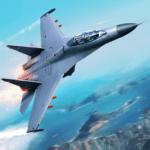
Atypical Games built and published it, and the studio’s fingerprints show in the visuals. Recreated cities across the UK, US, Egypt, Russia, Norway and Germany carry live weather, so the same map plays differently under cloud. The cockpit view sits close enough to feel the airframe shake, although most players fly in chase view instead.
Price matters here, because this is a paid app rather than a free one with timers. Google Play and the App Store both list it at $4.99, with optional plane packs on top. Ratings sit at 3.3 stars on Google Play and 4.0 stars on the App Store, a split worth knowing before you buy.
What a Sortie Looks Like From Takeoff to Landing
Every sortie starts on the ground or on a deck, and the takeoff itself counts. You throttle up, hold the nose down until the wheels lift, then climb before the scenery does the climbing for you. Rushing that first pull is the most common early crash.
Once airborne, the mission marker tells you what the game actually scores: enemy fighters, a convoy, a bomber formation, or a set of ground structures. Air targets need guns and turn rate. Ground and naval targets need bombs or rockets, so your loadout choice before takeoff decides how the whole run goes.
The WWII Setting Across Pearl Harbor, Dover and Kursk
Locations come from real theatres of the Second World War, and players regularly name Pearl Harbor, the Cliffs of Dover, Kursk and the Norwegian coast among the standouts. Scenery is destructible, so hangars and structures come apart under bomb hits rather than sitting as painted props.
Weather ties into that setting instead of decorating it. Low cloud over northern Europe hides an enemy formation until you are close, while clear desert light over Egypt gives you long visual range. Because of that, the same campaign mission can feel easy on one run and tense on another.
How It Compares to Warplanes: WW2 Dogfight and Wings of Heroes
Two mobile rivals sit closest on Android. Warplanes: WW2 Dogfight from Home Net Games is free, carries over 50 historical aircraft and wraps its missions in squadron and base management. Wings of Heroes from Rortos leans the other way, built around 5v5 online battles with monthly aircraft additions.
The difference is structure rather than subject. Warplanes: WW2 Dogfight asks you to run an air force, and Wings of Heroes asks you to grind ranked matches. This one asks for neither, since a single $4.99 purchase opens a short campaign and eight modes without energy meters or daily logins.
Android Version vs the Nintendo Switch Release
The same game exists on Nintendo Switch, and it launched there on 31 October 2019 at $19.99. Android and iOS buyers pay $4.99 for the same missions and the same fleet, which makes the handheld console version four times the price of the phone build.
Controls explain part of that gap. Switch players get sticks and shoulder buttons, while phone players use touch input or connect a gamepad. Screen size favours the console for spotting distant contacts, yet the touch build still runs the full campaign missions and every online mode, so nothing is cut on mobile.
Flight Controls and Combat Mechanics on Touchscreen
Touch input handles every flight action in Sky Gamblers: Storm Raiders 2, and the game also accepts an external gamepad with an adjustable sensitivity setting. Store update notes confirm a gamepad sensitivity fix, so controller pilots should check that slider before their first sortie.
Guns behave in an arcade way rather than a study sim way. Players note that fire near the crosshair auto locks, which means pointing the nose in the right direction matters more than perfect lead. That choice keeps dogfights readable on a phone screen.
Weapons are not interchangeable, however. Machine guns strip fighters, rockets punch armour, and bombs flatten ground targets and shipping. Your loadout locks in before takeoff, so a bad pick costs the whole run.
Touch Input, Sensitivity and Gamepad Support
Sensitivity is the setting most beginners never touch, and it changes everything. A high setting turns tight, twitchy circles and bleeds speed fast. Lower it slightly, and the plane holds energy through a turn, which is how you stay behind a target rather than overshooting it.
Gamepad support gives a second option for longer sessions. Because a controller separates throttle from steering, precise power management gets easier during a carrier landing. Phone controls still work fine for the campaign, so this is a comfort choice rather than a requirement.
Machine Guns, Rockets and Bomb Loadouts
Guns are your default answer to anything with wings. They fire in bursts, they overheat if you hold the trigger, and short taps at close range do more than long sprays from distance. Aim for the engine section rather than the tail.
Rockets and bombs exist for everything else. A recent update pulled back rocket damage, so a single salvo no longer erases a hardened target the way it once did. Convoys, gun positions and ships now want a proper dive rather than one lazy pass.
Carrier Deck and Runway Landing Handling
Landings are scored, and the carrier deck is the harder of the two. You need a shallow approach, low throttle and a stable nose, since the deck gives you far less room than a runway. Coming in fast is the reason most first attempts end in the sea.
Runway landings forgive more. Line up early, drop speed gradually, and let the wheels take the weight before you brake. Practice both in a quiet flight rather than during a timed mission, because a botched landing after a clean fight still costs you the run.
How to Unlock Planes in the Historic WWII Fleet
Planes in Sky Gamblers: Storm Raiders 2 open in two ways: you earn them by finishing campaign missions and scoring in online matches, or you buy one of the five plane packs sold inside the game. Nothing in the hangar sits behind a random draw.
The fleet splits into fighters, bombers and dive bombers, and each class handles differently in the air. Fighters turn and climb. Bombers carry weight and take punishment. Dive bombers trade agility for accuracy against ships and convoys.
Paid packs are organised by side and theatre rather than by power tier, which keeps the split historical. Store listings name five: the All Planes Pack at $9.99, the Allied Pacific Plane Pack at $4.99, the Axis Europe Plane Pack at $4.99, the Allied Europe Plane Pack at $4.99, and the Axis Pacific Plane Pack at $2.99.
Fighters, Bombers and Dive Bombers Compared
Fighters carry the campaign for most players. They climb quickly, they hold a turn, and their guns handle both enemy aircraft and light ground targets. For a first run, a mid tier fighter beats anything heavier.
Bombers and dive bombers earn their place on strike missions. A loaded bomber turns like a barge, so escort matters, and altitude matters more. Dive bombers, by contrast, want a steep run and an early release, then an immediate climb away from the blast and the flak.
The Five Plane Packs and What Each One Adds
Pack pricing hides a simple piece of arithmetic. Buying the four theatre packs separately costs $17.96, while the All Planes Pack covers everything for $9.99. Anyone planning to buy more than two packs should skip straight to the bundle.
Theatre choice is the other decision. Europe packs suit players drawn to Spitfires, Messerschmitts and the Dover and Kursk maps. Pacific packs suit carrier fans, and the Axis Pacific Plane Pack is the cheapest entry at $2.99, so it doubles as a low cost way to test whether packs are worth it at all.
Unlock Requirements and the IL-2 Adjustment
Unlock thresholds have moved since launch. Update notes record a lowered unlock requirement for the IL-2, which put that ground attack aircraft within reach of players who had not finished every campaign mission. Small changes like that reward checking the hangar again after an update.
Balance passes shifted the late fleet too. Jet hit points and jet speed were both pulled back, so the fastest aircraft no longer dominate an online lobby the way they used to. Piston engine fighters therefore stayed relevant in team matches instead of becoming a stepping stone.
How the Progressive Damage System Changes Dogfights
The progressive damage system in Sky Gamblers: Storm Raiders 2 tracks damage across separate parts of an aircraft, so wings, tails and engines fail one at a time instead of a single health bar draining. Hits shred panels visibly, and a crippled plane can still fly home.
That model rewires how you pick a shot. A burst across the wing root costs an enemy its turn rate. Engine hits cost speed. Either result wins a dogfight without a kill shot, which matters when ammunition is short.
The AI reacts to the same rules. Damaged enemies slow, wallow and become easy follow up targets, and their gunners keep firing while any of the airframe survives.
Component Damage and Falling Apart Mid Air
Watch what falls off, because it tells you what the enemy can no longer do. A missing aileron means the plane cannot roll cleanly, so it will try to escape in a straight dive. Cut the corner and meet it at the bottom.
Your own airframe reports the same way. When the controls feel heavy on one side, you have lost surface area rather than health. Turning into that damaged side makes the stall worse, so break the other way and level out first.
AI Tail Gunners and Destructible Scenery
Bombers shoot back, and players specifically credit the AI tail gunners for punishing lazy approaches. Sitting directly behind a bomber puts you in the one arc every gunner covers. Come in from below or from a high side angle instead.
Scenery joins the fight in the other direction. Structures come apart under bombs, so ground targets collapse rather than blinking away. For strike missions, that visual feedback tells you whether a target is finished before the mission text confirms it.
Flying Home Crippled Instead of Trading Wings
Trading hits feels efficient and rarely is. A damaged plane that disengages, climbs and returns still contributes, while a mutual kill ends your run and your score. Because damage is tracked by part, a wounded fighter often keeps most of its firepower.
Landing a broken aircraft is its own small victory. Approach slower than usual, expect drift toward the damaged side, and take a runway over a carrier deck if the mission offers both. That single habit saves more campaign missions than any upgrade.
How Progression, Skins and Achievements Work
Every mission finish, kill and match placing feeds the same progress pool, and that pool opens new aircraft and upgrades in the hangar. Player reviews describe the earn rate as slow outside the campaign, since online lobbies are the main source of continued scoring.
Customisation runs parallel to that progress. Skins come in two flavours: historically accurate liveries tied to real squadrons, and free form color schemes you set yourself. Neither affects performance.
Apple hardware adds a third layer. The iOS build ships with Game Center leaderboards and achievements plus iCloud sync, so progress carries between an iPhone, an iPad and an Apple TV without a manual transfer.
Scoring in Campaign Missions and Online Matches
Campaign missions pay the most reliably, since objectives are fixed and bots are predictable. Finishing the roughly 10 mission run once is the fastest route to a usable hangar. Replaying missions on higher difficulty adds more on top.
Online scoring pays better per minute when a lobby fills. Team modes reward objective play rather than raw kills, so flag runs and base defence often out earn a chase. Empty lobbies, however, stall that income completely, which is why the campaign remains the safer path early.
Historically Accurate Skins and Custom Color Schemes
Historic liveries are the draw for WWII fans, and they cost nothing extra. Picking a documented squadron scheme for a Spitfire or a Bf 109 makes formation flights read properly, and it helps you spot friendlies at a distance.
Custom color schemes serve a practical purpose online. A high contrast paint job makes your own aircraft easier to track in a crowded Free for All. Some players go the other way and pick low visibility tones, betting that a hard to see plane survives longer.
Game Center Achievements and iCloud Progress Sync
Achievements track the things the campaign never asks for directly: clean landings, difficult kills and mode specific goals. Chasing them gives a reason to revisit missions once the story runs out, which matters in a game this short.
Cloud sync is the quieter benefit. Because iCloud carries the same save between Apple devices, you can start a mission on a phone and finish the fleet on a tablet. Android players should note that this convenience is tied to Apple hardware.
All 8 Online and Single Player Modes Explained
Eight modes ship with the game: Survival, Last Man Standing, Last Team Standing, Free Flight, Free for All, Team Match, Capture the Flag and Defend the Base. Cooperative and competitive options sit side by side, and every one of them can be flown against AI bots as training.
Mode choice changes which aircraft makes sense. Fast interceptors suit elimination formats, while tougher airframes suit objective formats where you sit over a point. Loadout follows the same logic, since bombs are dead weight in a pure dogfight.
Player numbers are the honest caveat. Reviews describe a thin online pool, so filling a full competitive lobby takes patience at off peak hours. Training against bots covers the gap.
Team Modes: Capture the Flag, Defend the Base and Team Match
Capture the Flag punishes solo heroics. Someone has to run, and someone has to clear the lane ahead, so a fast fighter with guns only beats a loaded strike plane. Escorting a carrier is worth more than a kill on the far side of the map.
Defend the Base and Last Team Standing reward the opposite temperament. Both ask you to hold position and trade patiently, which suits tougher aircraft and disciplined altitude. Team Match sits between the two, where kills count but coordination still decides close rounds.
Solo Modes: Survival, Last Man Standing and Free for All
Survival is the endurance test, since waves keep coming and your damage carries forward. Conserving ammunition and picking off wounded aircraft extends a run far longer than aggressive head on passes.
Last Man Standing and Free for All reward awareness instead. Both drop you into a scrum where the winner is usually the pilot who avoided the opening fight. Climb, watch the pack thin out, then enter on your terms with an altitude advantage.
Free Flight as a Practice Space
Free Flight has no enemies and no timer, which makes it the most underused feature in the game. Use it to test sensitivity settings, to feel out an unfamiliar bomber, and to repeat carrier landings until the approach becomes muscle memory.
It also works as a scouting tool. Flying a map without pressure shows you where the terrain rises, where the cloud sits, and which approach lines a mission will later demand. Ten quiet minutes here saves several failed attempts later.
Common Mistakes That Cost Beginners Their Wing
Chasing kills instead of mission targets is the fastest way to fail a campaign mission in this WWII sim. Objectives run on their own clock, so a convoy that reaches its destination ends the run no matter how many fighters you shot down.
Two other habits cost almost as much. Diving into low altitude fights at full throttle leaves no room to pull out, and the destructible scenery does not soften the impact. Ignoring the device side of the game causes the rest of the trouble.
Battery drain is heavy, since the graphics push hard, and the online pool is thin at quiet hours. Planning around both changes how satisfying a session feels.
Chasing Kills Instead of Mission Targets
Read the objective before the first turn, then decide which aircraft you actually need to engage. Escorts exist to pull you away from the target, and following them is exactly what the mission design expects.
Discipline pays double in strike missions. Hitting the convoy first with bombs, then cleaning up fighters with guns, finishes runs that fail in the opposite order. Because ammunition is finite, spending it on optional targets leaves nothing for the ones that score.
Diving Into Ground Clutter at Full Throttle
Low fights look cinematic and end careers. At full throttle, a phone screen gives you very little warning before terrain fills the frame, and a dive bomber recovers slowly with weight still on the racks.
Set a floor for yourself and hold it. Pulling out early costs one pass, while pulling out late costs the mission. Attacking ground targets in a shallow run rather than a vertical plunge also keeps flak arcs behind you instead of ahead.
Ignoring Battery Drain and a Thin Online Pool
Players report the visuals draining batteries quickly, and long sessions get hot on older handsets. Dropping brightness, closing background apps and flying in shorter blocks keeps performance steady, which matters because frame drops ruin landing accuracy first.
Online timing deserves the same planning. Since lobbies fill slowly outside peak hours, treat multiplayer as a scheduled activity rather than a five minute filler. Bot matches in the same modes fill the quiet stretches without the wait.
Best Sky Gamblers: Storm Raiders 2 Tips for Beginners
Bomb loadouts slow a plane’s turn rate, which is why the fleet splits into fighters, bombers and dive bombers for different jobs. Matching the aircraft to the mission is the single biggest improvement available to a new pilot, and it costs nothing.
Beyond loadout, three habits separate steady players from frustrated ones. Gun handling comes first, since fire near the crosshair auto locks and rewards patience over spraying. Weapon discipline comes second, because rocket damage was reduced in a recent update.
Landing practice comes third, and it is the one most players skip. Free Flight exists precisely for that, and carrier decks stop being intimidating after a dozen quiet approaches.
Point the Nose, Then Let the Guns Settle
Short bursts beat long ones. Because the guns auto lock near the crosshair, holding the trigger through a turn mostly overheats the barrels and empties the belts. Fire in taps of half a second, then reassess.
Range discipline matters just as much. Closing to knife fighting distance before firing turns a spread of hits into concentrated component damage, which is what tears a wing off. Long range fire scores scratches and warns the target.
Save Bombs and Rockets for Ships and Convoys
Rockets and bombs are mission tools, not dogfight tools. Naval targets and ground convoys take real damage from a proper dive, while an airborne fighter dodges the same salvo easily. Since a recent update reduced rocket damage, one pass rarely finishes a hardened target.
Plan the drop before the run. Approach along the length of a convoy rather than across it, release early enough to climb away, and keep a second pass in reserve. Carrying leftover ordnance into a dogfight only costs you turn rate.
Practice Carrier Landings in Free Flight First
Carrier decks reward repetition more than talent. Set up in Free Flight, fly a slow circuit, and land ten times in a row without pressure. The approach angle and throttle setting that work will feel identical when a mission demands them.
Runway landings deserve a few reps too. Practising both means you can pick whichever is closer when your aircraft is damaged, and finishing a mission on the ground rather than in the sea protects everything you earned during the flight.
Frequently Asked Questions About Sky Gamblers: Storm Raiders 2
Is Sky Gamblers: Storm Raiders 2 free to play?
No. Sky Gamblers: Storm Raiders 2 is a paid app priced at $4.99 on Google Play and the App Store, with optional plane packs sold inside. Google Play rates it 7+, while Apple rates it 13+, so parents buying for younger pilots should check both listings first.
How long is the campaign?
Roughly 10 missions, and most pilots finish the run in about two to three hours on normal difficulty. Harder settings stretch that considerably, since AI gunners land more hits and objectives take longer to clear. Individual sessions suit short bursts of around 20 minutes.
Can you play the game offline?
Yes. The Google Play listing carries an offline tag, so the campaign and bot matches run without a connection, and only competitive lobbies need internet. Storage is the real constraint, since the iOS build measures 2.7 GB, so install it on Wi-Fi before travelling.
Who Should Buy This WWII Air Combat Sim
This one suits WWII aviation fans who want handsome dogfights in short sittings, and it suits players tired of energy meters and daily login rewards. Anyone hunting a long single player war story should look elsewhere, because 10 missions run out quickly. Having flown the campaign twice and a stack of Survival rounds, my honest verdict is that the progressive damage system carries the whole experience, and watching a Bf 109 lose a wing to a well placed burst never got old. At $4.99 with no timers attached, it earns its place on a phone.
Images


Download links
ℹ️ Download link not working? Please refresh the page and try again.
Developer's apps
Related apps


What's new
small fixes
New Apps
Most Played Mobile Games


