
Street Racing Mechanic MOD APK (Free Shopping)

Description
Street Racing Mechanic hands you a small balance and a yard full of battered cars, then asks you to turn one of them into a winner. New drivers who spend everything at the dealership in the first hour and then stall out will find a cheaper path through the city here. Salvage cars plus steady job money buy speed faster than any showroom purchase, and that order shapes your entire first week.
How to Play Street Racing Mechanic and Build Your First Car
Street Racing Mechanic starts you with a small balance and full access to the scrapyard, where cheap project cars wait. Jobs pay steady flat cash, repairs make the car run, and drift, circuit, drag or point-to-point wins fund the next build.
Coppus Dev has kept this Android sim on Google Play since February 2022, and it now sits at roughly 120,000 downloads with a 4.0 rating from about 1,200 ratings. Installation costs nothing. However, in-app purchases sit behind a premium page, so money can shortcut the grind if you want it to.
The loop rewards patience more than reflexes. First you earn, then you buy, then you tune, and only after that do you race for real stakes. Most players who quit early skipped one of those steps.
The buy, repair, tune and race loop
Every session follows the same shape. You pick up cash from a job, spend it on a car or on parts, and then take the result into a race. Because the parts store carries a wide catalogue and offers finance plans, a weak balance does not lock you out of upgrades completely.
Repairs matter more than new drivers expect. A salvage car needs work before it holds a line, so the first purchase is rarely the last expense. For example, a cheap chassis with a worn transmission will lose a drag race that its power figures say it should win.
The city setting and your own build story
The open city is the hub for everything outside the race track. Roads connect the dealership, the yard, the job pickups and the race starts, so driving between them doubles as practice. Traffic and street lighting give the city more life at night than most small racing titles manage.
There is no cast of named rivals to beat. Instead, the storyline is the one you write through your own build, which is why the custom design tool sits so close to the front of the menus. Your car becomes the character, and the world ranking is where other players meet it.
How it compares to Pixel Car Racer and CarX Street
Pixel Car Racer covers similar ground in pixel art, with deep engine building and drag racing at its centre. CarX Street goes the other way, offering a polished open world and heavy physics on much bigger install sizes. Car Parking Multiplayer sits nearby too, although its focus leans toward socialising and free driving.
This title lands between them. It has less visual polish than CarX Street, yet it asks more mechanical questions than Car Parking Multiplayer does. For players who like buying broken cars and fixing them, the job system and the salvage lot give it a niche neither rival occupies.
Driving Controls, Transmission, and Steering Sensitivity
The transmission setting switches the car between automatic shifting and full manual control, and the choice changes every launch you make. Manual rewards timing. Automatic keeps things simple while you work out the handling.
Steering sensitivity and gear ratio sit in the same setup area, alongside part swapping. Both sliders affect lap times more than most new drivers assume, because a twitchy wheel ruins drift chains and a badly matched ratio wastes power on long straights.
Hardware requirements stay light. The Android build runs on Android 5.1 or higher, so older phones can still handle the city. Frame drops usually come from heavy traffic rather than the car itself.
Manual and automatic transmission choices
Automatic works fine for circuit laps and point-to-point runs, where corner exits matter more than shift timing. Manual becomes the better option the moment you enter a dragster event, since the whole result rides on when you pull each gear.
Try both before committing. Many players switch per event rather than picking one for the entire garage. In practice, a manual setup in a drag car and an automatic setup in a drift car is a comfortable split for the first few hours.
Gear ratio and steering sensitivity settings
Gear ratio decides whether your engine reaches its best range at the point on the road where you need it. Short ratios give brutal acceleration and an early top speed limit. Longer ratios trade launch bite for pace at the far end of a straight.
Steering sensitivity is the quieter setting, although it fixes more problems. Turn it down if your car snaps sideways under braking, and raise it if slow corners feel heavy. For example, drift runs generally reward a slightly higher value than circuit racing does.
Payouts, damage, and repair costs after the finish line
Crossing the line pays out cash and moves your standing, but contact along the way quietly eats the reward. Panels, mechanical wear and hard impacts all add repair bills, so a messy win sometimes nets less than a clean second place.
Damage also carries into the next event. A car that finished a race scraping walls will not post the same acceleration afterwards. Consequently, finishing tidy is worth more than shaving a fraction of a second through contact.
All Four Race Modes: Drift, Circuit, Drag, Point-to-Point
Four race modes sit in the game: Drifting, Circuit, Point-to-point and Dragster. Each one asks for a different car setup, and no single build performs well in all four.
Most events run short, somewhere around one to three minutes. That keeps sessions snackable, and it also means a bad launch is expensive, since there is rarely time to recover. The dedicated race track handles the structured events while the city roads carry the longer runs.
Payouts scale with difficulty rather than distance. A tight drift run against a stronger opponent will beat an easy circuit lap for income, although it costs more in repairs when it goes wrong.
Drifting runs and how points add up
Drifting scores angle, speed and how long you hold the slide without straightening. Chaining corners together matters far more than one spectacular entry, because the counter resets the moment you catch the car fully.
Setup helps enormously here. Softer steering sensitivity plus a ratio that keeps the engine pulling mid-corner will hold a slide where a peaky drag setup simply spins. Rear tyres wear noticeably over long runs, so budget for that.
Dragster launches and shift timing
Dragster events strip racing down to the launch and the shifts. Power alone does not win them, since wheelspin off the line throws away the lead before the first gear change ends.
Manual transmission earns its keep in this mode. Hold the revs in the band, then pull each gear as the engine reaches the top of its range. Similarly, a longer final ratio helps on the longer strips, while short ratios suit quick runs.
Circuit laps and point-to-point city routes
Circuit racing rewards consistency. Repeated laps punish anyone who brakes late once and loses the front end, so smooth inputs beat aggression over a full event.
Point-to-point is the mode that uses the open city best. Routes run from one marker to another through real streets, which means traffic, junctions and street furniture all become part of the challenge. Because the road never repeats, memorising the line pays off across repeat attempts.
How to Buy Cars at the Dealership and Scrapyard
The scrapyard sells damaged cars and loose parts very cheaply, while the dealership sells clean cars at full price. New drivers usually take the salvage route first, then use finance plans and extra parking slots to grow a home collection.
Both routes have a place. Buying clean removes the repair bill and gets you racing immediately, although the sticker price swallows a beginner balance in one go. Salvage costs less up front and more in time.
Parts pricing is where the store gets interesting. Finance plans let you fit something now and pay across a longer stretch, which suits players who race daily. Miss those sessions and the plan becomes a drag on income.
Salvage cars and loose parts at the scrapyard
The yard is the natural starting point. Cars arrive damaged, so the price reflects work still to do, and loose parts often cost less there than the same components in the main store.
Selling works both ways. Cars you no longer race can go back for cash, which turns the yard into a recycling point rather than only a shop. For example, a stripped project that never handled well can fund a better chassis instead of sitting in a slot.
Dealership stock and finance plans
Dealership cars arrive ready. No repairs, no missing components, and no guessing about hidden wear, which is exactly what some players want after one frustrating rebuild.
Finance changes the maths. Splitting a purchase across payments gets a faster car into the garage early, though it commits future race income before you have earned it. Therefore, take a plan only when your daily job routine is already reliable.
Parking space for a growing collection
Parking space caps how many cars you keep at once. Once the space fills, every new purchase forces a decision about what leaves, which is a real constraint rather than a cosmetic one.
Specialists beat all-rounders here. A drift build, a drag build and one comfortable street car cover every event without hoarding. Sell anything that duplicates a role, since an idle car earns nothing and blocks a slot.
How to Set Up Turbo, Fuel Type, and TrackTest Runs
The tuning menu covers boost pressure, fuel choice and transmission calibration, and every change alters how the car pulls off the line. TrackTest then measures a 0 to 100 km/h run with little damage risk, so you can check a setup before racing.
Tuning order is the part most new players get backwards. Calibration and ratio decide whether added power reaches the road at all, so they come first in any sensible build.
Fuel is the cheapest experiment available. Switching grades costs little, yet the difference shows up clearly in acceleration traces. That makes it the best first variable to play with once the drivetrain is sorted.
Boost settings that suit each race mode
More boost is not automatically better. High pressure in a drift build makes the rear step out unpredictably, which shortens chains instead of extending them.
Drag builds sit at the other end. There the goal is maximum push through each gear, so higher pressure pays as long as traction holds. Circuit cars usually want a middle setting, because predictable throttle response beats raw punch across repeated corners.
Fuel type choices and what they change
Fuel grade shifts how eagerly the engine responds and how it behaves at the top of the rev range. Cheaper fuel saves money and costs response. Better fuel does the reverse.
Match the fuel to the event rather than the car. A point-to-point run through traffic barely notices the upgrade, while a dragster launch shows it immediately. Additionally, keep an eye on cost, since fuel spending compounds quietly across a long session.
TrackTest runs from 0 to 100 km/h
TrackTest gives a controlled acceleration measurement with minimal damage risk. Here is the detail competing pages miss: it is the only place in the game where two setups can be compared without paying repair costs, which makes it a pricing tool rather than a bragging tool.
Use it after every change. Run the baseline, adjust one variable, run it again, and keep whichever number is better. That habit alone saves a beginner a surprising amount of wasted spending across the first week.
Best Jobs for Money: Farm, Delivery, Parking, Scrapyard
Farm, Delivery, Parking and Scrapyard jobs pay flat cash for short tasks around the city. None of them require a fast car, which is exactly why they carry the early game.
Here is the second thing rival pages never say: job income is steady while race income is not. Alternating one job cycle with one race therefore produces faster early progress than racing continuously, since a single bad result no longer wipes out an afternoon.
Jobs also double as driving practice. Delivery runs in particular teach the road layout that point-to-point events use later. For example, knowing which junction backs up with traffic is worth real seconds when it counts.
Farm and Delivery runs
Farm work sits away from the busy centre and pays a predictable amount for low-risk driving. Nothing about it is glamorous, although the balance climbs steadily while damage stays near zero.
Delivery pays a little better and asks more of you. Routes cross live traffic, so a careless run turns profit into a repair bill. In my runs, two clean deliveries covered a decent set of tyres, which makes them the better option once you can drive the city confidently.
Parking jobs for quick cash
Parking tasks reward precision instead of speed. You place the car accurately within a marked space, and the payout arrives in under a minute when you get it right.
These suit short sessions perfectly. Waiting for a friend to come online, or sitting on a bus, a couple of parking jobs top up the balance without any risk to the car. Steering sensitivity settings show their value here too.
Yard work between races
Yard jobs tie into the salvage economy. Working there keeps money flowing while you decide which project to take on next, and it sits physically close to the parts you will end up buying.
Treat it as filler rather than a main income. The payouts are modest compared with a strong race win. Nevertheless, filler income is what keeps a finance plan from becoming a problem during a losing streak.
Paint, Wheel Colors, and Your Own Car Design
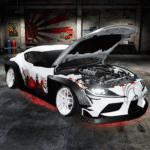
Players repaint the body, recolour the wheels and adjust the light lenses from the customization menu, and none of it costs performance. Appearance and speed stay separate systems.
The design tool goes further than a colour picker. Creating your own layout is what gives a build identity, and it is the thing other players actually see attached to your name in the rankings.
Cosmetic work also helps you keep track of a garage. Colour-coding a drift car differently from a drag car sounds trivial until you own four vehicles and keep loading the wrong one.
Body color and wheel paint
Body colour is the fastest change available and the most visible. Wheel colour is the one that separates a tidy build from a generic one, since contrast at the corners reads clearly even in motion.
Pick a scheme before buying parts. Consistency across the body, wheels and lenses looks deliberate, whereas mixing loud colours piecemeal rarely does. A darker body with a bright wheel tends to photograph best in the city’s night lighting.
Light lenses and glass
The lens option, listed in the menus under the goggles label, changes how the front end reads at night. Smoked lenses suit dark builds, while clear ones keep an older chassis looking honest.
Small details compound. Combined with the brighter city lighting added in a recent update, lens choices now show up far more than they used to on evening drives. It is a two-second change with an outsized effect.
Building a design people recognise online
Custom designs travel. When you enter mini multiplayer or climb the ranking, your paintwork is the only personality anyone else gets to see.
Keep it simple and repeatable. One strong colour, one accent, and a consistent wheel finish will read better at speed than a busy pattern. Similarly, reusing your scheme across every car in the garage makes your builds recognisable to regular opponents.
Multiplayer, World Ranking, and Daily Prizes
Mini multiplayer puts you into short races against friends, while the world ranking tracks standing across the whole player base. Both sit apart from the single-player economy, yet both feed it through rewards.
Daily missions and daily prizes arrive on a routine, and special events appear on top of them. A recent update added a carnival event and a seasonal event, alongside improvements to multiplayer delay.
Treat these as scheduled income. Logging in for the daily reward before a session costs almost nothing and steadily funds parts you would otherwise grind for.
Mini multiplayer races with friends
The multiplayer here is small in scale, built around racing people you know rather than filling large lobbies. Matches run short, which suits phone sessions.
Connection quality shapes the experience. Since the latest work on delay, races feel tighter than they once did, although a weak signal still shows in close finishes. Drag events are most sensitive, because a fraction of a second decides them.
Climbing the world ranking
The ranking is the game’s long-term scoreboard. Results accumulate rather than resetting after each session, so consistency beats one lucky win.
Specialise to climb. Players who pick two modes and build properly for them gain ground faster than players spreading effort across all four. Instead of chasing every event, repeat the ones your current car actually suits.
Daily missions, daily prizes, and special events
Daily missions give you a reason to drive something other than your favourite car. They often ask for a specific action, which quietly pushes you into modes you might otherwise skip.
Special events are where the bigger rewards live. Seasonal and carnival events rotate, so the smart approach is to bank spending until one arrives. A player who saves for a week can enter an event with the parts budget already in hand.
Common Money Mistakes New City Racers Make
The dealership sells ready-to-race cars at full price, which drains a beginner balance in a single purchase. That one decision causes more stalled accounts than any driving error.
Two further habits cost almost as much. Adding power before fixing the drivetrain wastes money on parts the car cannot use. Racing a damaged car for tiny stakes loses money on repairs faster than the payout replaces it.
None of these mistakes are obvious from the store description, and none of them are punished loudly by the game itself. Your balance just stops growing.
Spending the opening balance at the dealership
Buying clean feels efficient. In practice it leaves nothing for parts, fuel or repairs, so the shiny new car sits in a slot losing races it should win.
The salvage route survives mistakes better. A cheap chassis plus a healthy remaining balance gives you room to experiment. Consequently, most successful early accounts look poorer on paper and progress faster in reality.
Stacking boost before calibrating the transmission
Extra pressure is satisfying to buy and disappointing to drive on an uncalibrated car. Power arrives, traction does not, and lap times barely move.
Fix the order. Gear ratio and transmission calibration first, then tyres and grip, then pressure. A player following that sequence will beat an identical car built the other way around, and the difference shows clearly in a 0 to 100 km/h check.
Racing a damaged car for small stakes
Small events pay small money. Entering one in a car that already needs work means the repair bill can exceed the prize, which is a quiet way to lose an entire evening’s earnings.
Repair first, then race. If the balance will not cover repairs, take two jobs instead and come back. Although it feels slower, the account grows rather than shrinking.
Best Street Racing Mechanic Tips for New Drivers
Grip, launch timing and job income decide the first ten races far more than horsepower does. Every tip below rests on that order.
Specialisation beats versatility in this economy. Cars that do one thing properly earn more than cars that do four things adequately, and parking limits reward that discipline anyway.
Routine matters too. A short, repeatable loop of daily rewards, one job cycle and two races will outperform a long unplanned session almost every time.
Set the gear ratio per mode instead of one all-round setup
Changing ratio between events takes seconds and costs nothing. Long for dragster strips, shorter for tight point-to-point runs through the city, and mid-range for circuit laps.
Write down what works. Keeping a note of the ratio you used for each strong result turns guesswork into a repeatable setup sheet. Over a week, that habit is worth more than any single part purchase.
Treat daily prizes and events as your parts budget
Separate your money mentally. Race winnings cover repairs and fuel, while daily rewards and event payouts go toward parts only.
This stops the classic spiral where an upgrade eats the repair fund. Because event rewards arrive on a schedule, you can plan a purchase around them rather than buying the moment you can afford something.
Confirm every build on TrackTest before a friend match
Never take an untested setup into multiplayer. A friend match is the worst place to discover that new pressure setting causes wheelspin off the line.
Run the check first, compare against your last number, and only then queue up. One measured run costs a minute. Losing three close races to a setup you never verified costs far more.
Frequently Asked Questions About Street Racing Mechanic
Is Street Racing Mechanic free to play, and what devices run it?
Street Racing Mechanic is free on Google Play and the App Store, with optional in-app purchases. The Android build needs Android 5.1 or newer and takes about 112 MB of storage. Apple lists it as designed for iPad too, and the content rating is Everyone.
How long does it take to get a fast car?
The early hours are slow by design, since job money arrives in small amounts. Most races last one to three minutes, so progress comes in short sessions. In my runs, a competitive first build took roughly three to four hours of mixed jobs and racing.
Does the game get updates and is there a reason to keep playing?
Updates arrive often. A recent one added rain and brighter city lighting, plus a carnival event and a seasonal event on top of the daily prizes. Replay value sits in the garage rather than the story, because each new chassis needs its own gear ratio and boost setup.
Who This City Racer Suits Best
This game suits players who enjoy the workshop as much as the finish line. Car builders who like salvage projects and fuel choices will get more from it than arcade racers. My verdict after several evenings in the city is simple. The driving feels light, but the economy is honest. Turning a battered scrapyard shell into a drag winner paid me back better than any showroom car ever did. Install it for the build, and pass on it if you only want polished graphics.
Images


Download links
ℹ️ Download link not working? Please refresh the page and try again.
Related apps




What's new
Corridas Sprint
Tela de Entrada
Correção de Bugs
New Apps
Most Played Mobile Games


