
Little Nightmares APK (FULL GAME)

Description
Little Nightmares puts you inside The Maw — a vast, creaking vessel full of corrupted souls — as Six, a small girl with only a lighter and her wits to survive. This post is written for beginners picking up the mobile version for the first time and for returning players who want to find every Nome and Statue. Below, you will find a full breakdown of the stealth platformer mechanics, all five chapter areas, the collectibles system, hidden tips missed by most players, and answers to the most common questions.
What Is Little Nightmares Mobile?
Little Nightmares began life on PC and consoles in 2017, developed by Tarsier Studios and published by Bandai Namco Entertainment. Playdigious brought the full game to iOS and Android in December 2023. The mobile port includes a revamped interface, three control modes, MFi controller support, iCloud cloud saves, and Game Center achievements. It is a paid premium title — no ads, no in-app purchases — which makes the experience feel clean and uninterrupted.
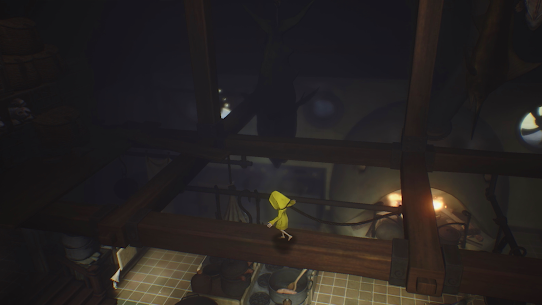
At its core, the game is a 2.5D puzzle-platformer with heavy stealth and horror elements. You play as Six, a small girl in a yellow raincoat. Six wakes up deep inside The Maw and must navigate five distinct areas to reach the surface and escape. There are no weapons and no combat. Every threat Six encounters requires either stealth or a well-timed sprint to survive.
How the Stealth Platformer Mechanic Works
The stealth mechanic is the spine of Little Nightmares. Six is tiny. Every enemy towers over her. The Janitor, the Twin Chefs, and the Guests all operate on their own patrol patterns and sensory rules. Some enemies, like the Janitor, rely on touch rather than sight. Others, like the eye creatures in The Prison, freeze Six if they spot her directly.
Because Six cannot fight back, every encounter asks the same question: can you avoid being detected long enough to move through? Players must read enemy positions, use shadows and furniture as cover, and time their movement around patrol windows. The tension comes from the scale. Six is small enough to crawl through vents, hide inside suitcases, and crouch beneath tables. That smallness is both her greatest vulnerability and her most useful tool.
The Setting, Tone, and Story of The Maw
The Maw is a massive underwater iron vessel that functions as a luxury dining destination for its monstrous Guests. Children are brought aboard as food. Six wakes at the bottom of the ship in The Prison and must climb upward through The Lair, The Kitchen, The Guest Area, and finally The Lady’s Quarters. Each area has its own theme, dominant enemy type, and unsettling visual identity.
The tone is dark and whimsical at once. The sound design — creaking metal, distant footsteps, and a subtle ambient score — does more atmospheric work than any jump scare could. The story reveals itself through visuals rather than dialogue. By the time Six reaches The Lady’s Quarters for the final confrontation, the game has communicated something genuinely disturbing about Six’s own nature without a single word of explanation.
How Little Nightmares Compares to Similar Mobile Horror Platformers
The closest mobile comparisons are Limbo and Choo-Choo Charles, both of which are available on Android and iOS. Limbo uses minimalist black-and-white visuals and an unnamed boy protagonist in an abstract world with no clear narrative anchor. Chpp Choo Charles, from Two Star Games LLC, adds a dystopian setting and more elaborate puzzle sequences. Both share the same atmosphere of vulnerability.
Little Nightmares separates itself through scale and colour. Enemies are enormous. The environments feel physically massive and oppressively detailed. Where Limbo is cold and monochrome, The Maw is warm and grotesque — full of rotting food, dim lanterns, and oversized furniture that makes Six look like a doll. Another strong mobile comparison is Fran Bow, available on Android and iOS, which offers a similar horror adventure tone with a chapter-based structure. However, Fran Bow leans into psychological horror and point-and-click elements rather than physical stealth.
How Stealth and Controls Work on Mobile
Playdigious specifically redesigned the controls for touchscreen play. This was not a straight port. The developer offered three distinct control modes so players can match the input style to their preference and device size. Understanding which mode fits your hands is one of the first decisions a new player should make before starting The Prison.
The mobile UI also adjusts the camera slightly for portrait and landscape play. Additionally, MFi controller support is available. Players who own a compatible Bluetooth controller can plug in and play with physical buttons, which some find more precise during the tighter stealth sections in The Kitchen. Both control approaches work well. Choosing between them is a matter of personal comfort rather than a mechanical advantage.
How Sneaking, Crouching, and Hiding Work in The Maw
Six moves at two speeds. Walking keeps her quieter and lower to the ground. Running covers distance faster but generates more noise and draws enemy attention in certain areas. Crouching lets Six move through low passages that enemies cannot follow her into. Many of the most effective escape routes in The Maw run through ventilation shafts, under tables, and inside cabinets.
Hiding inside an object — a suitcase or a wardrobe — removes Six from an enemy’s detection range entirely. However, the game does not always tell you where hiding spots are. Players who slow down and scan the environment carefully will spot them. Those who run forward in panic will not. The game rewards patience far more than speed.
How the Three Mobile Control Modes Differ
The first control mode uses virtual joystick input on the left side of the screen with action buttons on the right. This is the most familiar layout for players who regularly use touchscreen games. The second mode uses tap-to-move, where players tap a location and Six walks toward it. The third mode uses swipe gestures to direct movement and trigger actions.
Each mode has a different feel during tense chase sequences. The joystick mode gives the most direct control during sprints. The tap mode works well for slow, deliberate stealth sections but can lag slightly in panic moments. Most players settle on the joystick layout after a short trial period. However, beginners should try all three during the early sections of The Prison before committing.
What Happens When Six Completes a Puzzle or Escapes an Enemy
Puzzle completion in Little Nightmares does not produce a fanfare or visible reward notification. Instead, the environment changes — a door opens, a platform shifts, a mechanism activates — and Six can proceed. This quiet approach fits the tone. The Maw is not a game show. It is a survival situation.
Escaping an enemy successfully produces the same low-key result. Six reaches the next area. The atmosphere stays tense. There is no music sting or celebration. Therefore, players who expect clear completion signals sometimes feel uncertain about whether they solved a puzzle correctly. The rule is simple: if a new path is open, the puzzle is done.
All Five Chapter Areas of The Maw Explained
The five areas of The Maw each have a distinct function within the vessel and a distinct gameplay identity. Moving through them forms the entire structure of the game. Each area introduces a new dominant enemy and a new environmental hazard. However, the stealth platformer rules remain consistent throughout, so skills built in The Prison carry forward into every chapter that follows.
Progress through areas saves automatically at checkpoint lanterns and candles. Players do not need to reach the end of a chapter to save. Lighting a lantern mid-chapter counts as a save point. This is important to understand early because it reduces frustration during longer and more complex sequences.
The Prison and The Lair — First Two Areas
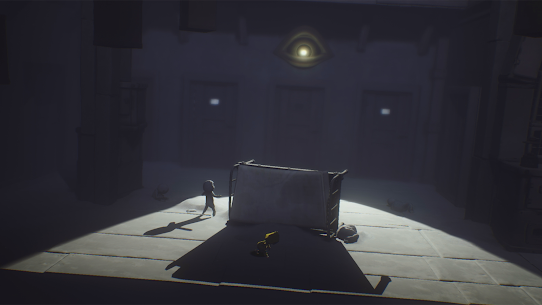
The Prison is the opening area. It occupies the lowest level of The Maw. The environment is dark, cage-filled, and full of ventilation shafts. The primary threats here are leechees — small creatures that swarm and attack — and eye creatures that turn Six to stone on direct contact. The Janitor also appears in The Prison as an early encounter. He is blind but his long arms have enormous reach.
The Lair is the second area and the most Janitor-heavy chapter. His patrols are longer and his detection range through touch is wide. Players must use shadow positions and furniture cover to move through his territory. The key insight in The Lair is that the Janitor cannot see you — but he can feel you if you are within arm’s reach. Distance and timing matter more than absolute silence here.
The Kitchen and The Guest Area — Mid-Game Threats
The Kitchen is where the Twin Chefs operate. They are enormous and move slowly, but they react to movement rather than sound. Moving in their line of sight — even slowly — alerts them. The counter-intuitive tactic is to freeze entirely when a Chef is facing you rather than retreating. Retreating creates movement, which draws their attention.
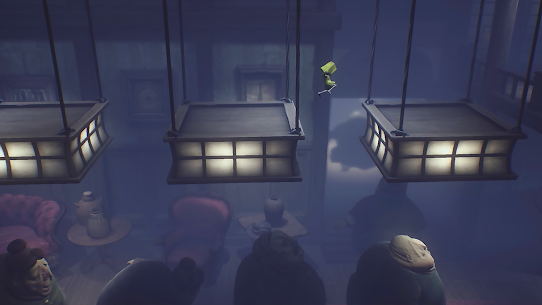
The Guest Area introduces the Guests — bloated, grabbing creatures who reach out for anything within range. They are faster than they look. The effective strategy is to stay above them on elevated surfaces wherever possible. The Guests struggle to climb. Using height as a buffer turns their aggressive forward movement into a manageable threat.
The Lady’s Quarters — Final Chapter and Boss
The Lady’s Quarters is the fifth and final area. The Lady herself uses mirror-based shadow magic to attack. She teleports around the room using mirrors. The strategy against her is to lure her beam toward a mirror and allow the reflection to strike her. This sequence repeats three times with increasing aggression each phase.
After the final confrontation, the game’s ending reveals the most disturbing detail about Six’s journey. The story does not explain it directly. Players who have paid attention to the hunger pangs scripted events throughout the game will understand the ending on their first viewing. Those who rushed through may need a second playthrough to connect the threads.
How the Lighter and Checkpoint System Works
Six carries a lighter throughout The Maw. It never runs out of fuel. Enemies in illuminated areas cannot detect the lighter’s flame — it does not draw aggression. This makes the lighter a safe tool for navigating dark sections without fear of alerting nearby threats.
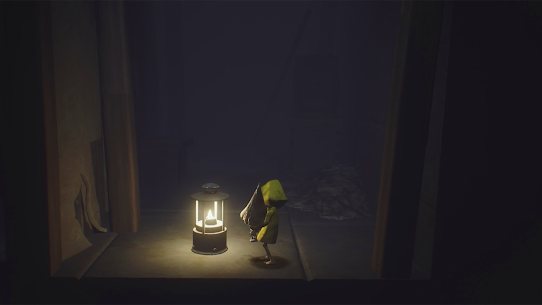
The lighter serves a second purpose beyond illumination. It activates the checkpoint system. Holding the lighter near a lantern or candle lights it. The game saves at that exact moment. Players who do not understand this often replay large sections unnecessarily after a death, simply because they never lit the lanterns they passed. The checkpoint lanterns are clearly visible as unlit wicks mounted on walls or sitting on surfaces.
How Six Uses the Lighter to Illuminate Dark Areas
Dark sections of The Maw occur regularly, particularly in The Prison and The Lair. Without the lighter, hazards, ledges, and enemies are difficult or impossible to see clearly. Holding the lighter raises it and projects a small radius of warm light. This is enough to reveal the immediate path and check for nearby threats.
Players should use the lighter actively rather than keeping it stored. The game never punishes you for using it. The only practical limitation is that six cannot simultaneously hold the lighter and sprint at full speed. So in chase situations, storing the lighter is the correct call to maintain maximum movement speed.
How Lanterns and Candles Save Your Progress
Every lantern and candle in The Maw is a potential save point. They are not marked on a map. Players find them by exploring naturally as they move through each area. When Six lights one, a soft visual effect confirms the save. The game does not display a save notification banner.
Because saves are tied to lanterns rather than automatic triggers, players who rush past lanterns without lighting them take on significant risk. A death after passing three unlit lanterns sends Six back to the last lantern she lit — not to the start of the chapter. Finding and lighting every lantern should be treated as a secondary priority throughout each area.
What the Hunger Pangs Mean and When They Appear
Hunger pangs are one of the most misunderstood moments in the game. At specific scripted locations, Six stops moving, kneels down, and clutches her stomach. New players consistently believe this is a bug or a health system. It is neither. The hunger pangs are a narrative device — scripted events that occur at fixed points in the story regardless of how quickly or slowly you reach them.
The hunger pangs are directly connected to the game’s ending. They signal Six’s growing need and hint at the nature of her survival instinct. Players who dismiss them as a mechanic will miss one of the game’s central storytelling tools. Returning players who understand the ending will recognise each hunger pang moment as foreshadowing.
How Progression, Nomes, and Statues Work
Progression through Little Nightmares is entirely linear. There are no branching paths, optional areas, or side routes that alter the main story. Six moves from The Prison upward through all five areas to the final confrontation with The Lady. Each area unlocks only after the previous area’s puzzles and threats are cleared.
The collectible layer sits alongside this linear structure. Nomes and Statues are the two types of collectibles. Both require players to look carefully rather than rush forward. Many are placed off the main path in dark corners, behind furniture, or inside hidden rooms that require a short detour to reach.
How Chapter Progression Advances Through The Maw
Each chapter area contains a series of environmental puzzles that open the path forward. These puzzles range from weight-based platform activation to object manipulation and timing challenges. No chapter uses the same puzzle type exclusively. The variety keeps each area feeling mechanically distinct even though the stealth rules stay consistent throughout.
There are no experience points, no skill trees, and no upgrades. Six does not become more powerful over time. Instead, the game increases difficulty by placing enemies in more complex patrol patterns and designing puzzles that require more precise timing. Progression is entirely earned through observation and patience.
What Nomes and Statues Are and Where to Find Them
Nomes are small, pale creatures that appear throughout The Maw. There are 13 Nomes in total. Finding a Nome is only the first step — players must then hug it to count the encounter. Hugging all 13 Nomes unlocks the “Alone Again” achievement. Nomes are easily missed because they run away when approached. Players need to spot them early and move slowly to avoid frightening them off before making contact.
Statues are static collectibles. They do not move. Six finds them in fixed locations throughout each area and smashes them to earn the corresponding achievement. Unlike Nomes, Statues do not require any special interaction beyond finding and breaking them.
What Collectibles Unlock and Why They Matter
Completing the full Nome and Statue collection does not change the main story or unlock a different ending. Little Nightmares has one ending. However, collectibles unlock Game Center achievements on iOS and the equivalent trophies on other platforms. For completionist players, the Nome and Statue hunt adds meaningful replayability to an otherwise linear story.
A second playthrough with collectibles as a primary focus takes roughly the same time as the first run — the game is approximately three to four hours long for most players. Because Six does not gain abilities between runs, returning to collect missed Nomes and Statues relies entirely on knowing where to look.
What Most Players Miss: Hidden Features and Common Mistakes
Most deaths in Little Nightmares result from one of three mistakes: rushing forward before observing enemy patterns, missing checkpoint lanterns without realising it, or panicking during chase sequences and making control errors. All three are avoidable. The game is fair. Every death has a logical cause. Understanding the three most common failure points prevents the majority of frustrating repetitions.
There are also two specific mechanics that the game never explicitly teaches but which experienced players rely on constantly. The first is jump-running. The second is the shadow cover system in The Kitchen. Both change how effective your movement is in the game’s most difficult sections.
Why Rushing Almost Always Ends in Death
The Janitor in The Lair is the clearest example of the cost of rushing. His patrol patterns are long and slow. Players who watch him for one full cycle before moving have a clear picture of his route. Players who run forward immediately after entering his area almost always walk directly into his outstretched arms.
Additionally, puzzle solutions in Little Nightmares require understanding the environment before acting. Pulling a lever, moving a box, or climbing a chain all produce specific results. Acting without first observing what those results do often causes Six to fall, alert an enemy, or reset a mechanism back to its starting position.
How Jump-Running Works and When to Use It
Jump-running is the fastest movement option Six has. When Six runs and jumps forward — then immediately runs again on landing — she maintains higher momentum than a flat sprint. This technique is essential in chase sequences where a flat run is not fast enough to stay ahead of a pursuing enemy.
However, Six cannot sustain this motion indefinitely. After three or four jump-run cycles, she needs a brief rest before peak speed returns. Therefore, saving the jump-run technique for the final stretch of a chase — rather than opening with it — gives players the best chance of reaching safety before Six’s stamina forces a slowdown.
Why Players Miss Checkpoint Lanterns and How to Stop
The most common checkpoint mistake is treating lanterns as decorative objects rather than interactive saves. Many players walk past lanterns while focused on an enemy threat ahead. After a death, they respawn at a position much earlier than expected. The solution is simple but requires habit formation.
Before entering any new area or approaching any known enemy patrol, scan the immediate space for unlit wicks. Light every lantern you pass. This habit takes less than three seconds per lantern and eliminates one of the most frustrating recurring problems in the game. Players who do this consistently never lose more than a few minutes to a single death.
Best Little Nightmares Tips and Tricks for Beginners
The most effective mindset shift for new players is treating The Maw as an observation puzzle rather than a survival sprint. Six has no health bar and no weapon. Every moment she survives is earned through reading the environment correctly, not through reflexes alone. The three specific tips below target the three mechanics most likely to cause a new player’s first hour of frustration.
Each tip below is specific to a named mechanic or enemy in this game. None applies to any other horror platformer without modification. The Janitor’s arm reach, The Kitchen’s shadow cover, and the hunger pangs scripted events are unique to Little Nightmares and cannot be prepared for by playing Limbo or Inside first.
How to Read the Janitor’s Arm Reach Before Moving
The Janitor’s arms extend far beyond what his body position suggests. Many new players estimate his detection range based on his torso and move too close. The correct approach is to treat his arms — not his body — as the boundary of danger. When the Janitor faces away, his arms still trail slightly to the side. A player who cuts the corner too sharply will catch one of those trailing arms.
Before crossing any room where the Janitor patrols, watch a full patrol cycle. Note where his arms hang at the turning points of his route. Those hanging positions define your safe corridor. Move only when his arms are facing fully away and you are outside that corridor width. This approach works consistently through every Janitor encounter in The Lair and its later appearances.
How to Use Shadow Cover in The Kitchen’s Chef Areas
The Twin Chefs react to movement, not sound. So the correct defensive behaviour when a Chef turns toward you is to stop completely — not to retreat. Retreating creates the motion that triggers their attention. Freezing in place, even in a partially lit area, often breaks their line of response if the player stopped quickly enough.
The most effective cover in The Kitchen area is the hanging pots and low tables. These create natural gaps in the Chefs’ sight lines. Moving between pieces of cover one section at a time — stopping at each — produces a safe passage through the kitchen even during the most patrolled sequences. Players who try to sprint the entire kitchen section in a single run will almost always fail.
How to Manage the Hunger Pangs Without Panicking
Hunger pangs occur at fixed scripted locations throughout The Maw. Six cannot prevent them and they do not indicate that the player made an error. The hunger pangs appear regardless of how well or poorly Six has performed up to that point.
When the animation triggers, wait. Six will return to full movement control in four to six seconds. The pang has no gameplay consequence beyond the brief pause. New players who recognise the hunger pangs as story beats rather than health warnings will spend far less time searching for a fix that does not exist and far more time progressing through The Maw confidently.
Frequently Asked Questions About Little Nightmares
H3: Is Little Nightmares available on Android and iOS?
Yes. Little Nightmares is available on both Android and iOS as a premium paid download. The mobile version was released in December 2023 by Playdigious in partnership with Bandai Namco Entertainment. The game requires Android 9 or above, or iOS 15 or above. It is priced at $8.99 and is not free-to-play. No ads or in-app purchases are included in the game.
How long does Little Nightmares take to finish?
Little Nightmares takes most players between three and four hours to finish on a first playthrough. The game contains five chapters set across The Maw. A second run focused on collecting all 13 Nomes and finding all Statues adds additional playtime. The game has a single linear ending. There are no alternate endings or branching story paths in the base mobile version.
Does Little Nightmares mobile have controller support?
Yes. Little Nightmares mobile supports MFi-compatible Bluetooth controllers on iOS. The mobile port from Playdigious also offers three built-in touchscreen control modes for players without a physical controller: virtual joystick, tap-to-move, and swipe input. Game Center achievements and iCloud cloud saves are also included. Android players can also use compatible Bluetooth controllers.
Why Little Nightmares Mobile Is Worth Playing in 2024
Little Nightmares is best suited for players who enjoy atmosphere-first horror experiences where tension comes from scale and observation rather than action. If you have patience for stealth, an appreciation for environmental storytelling, and the willingness to replay short sections after a death, this game delivers one of the most distinctive puzzle-platformer experiences available on mobile. The five-hour playtime is compact but carries real emotional weight. Having played through The Maw myself, the moment Six confronts The Lady — and what follows — stayed with me far longer than most games three times its length. The mobile port handles the material well. Playdigious did not strip anything out. For $8.99, this is one of the strongest premium games on Android and iOS right now.
Images

Download links
ℹ️ Download link not working? Please refresh the page and try again.
Developer's apps




Related apps


What's new
- Fixed bug with NPC navigation
New Apps
Most Played Mobile Games


