
Epic Ocean Survival MOD APK (Free Shopping)

Description
Epic Ocean Survival drops you onto a crumbling raft in the middle of a zombie-infested ocean — with a zombie shark already tracking your blood. This post is written for new players and returning survivors who want a clear, practical breakdown before they jump back in. Below, you will find a full look at the crafting system, the dynamic weather mechanic, island exploration, weapons, and the resource management strategies that most new players get wrong.
What Is Epic Ocean Survival and How Does It Work
Epic Ocean Survival is a mobile raft survival game developed by Drivora LTD. It puts players on a small raft in the middle of a vast ocean and challenges them to stay alive against hunger, thirst, dangerous weather, and a cast of increasingly threatening enemies. The game blends resource collection, raft construction, and combat into one continuous survival loop.
The game is available on both Android via Google Play and iOS via the App Store. It has been downloaded over 4.5 million times and holds a rating of 4.22 out of 5 stars. New content continues to arrive through regular updates, including new islands, elite enemies, dungeons, and a weapon repair mechanic added in recent patches.
How the crafting system and raft building work
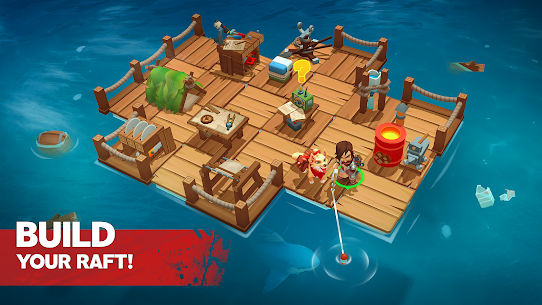
The crafting system is the engine of the entire game. Players collect debris floating in the ocean — wood, rope, bolts, scrap metal — and use those materials to build new raft sections and craft tools, weapons, and equipment. Each item requires a specific combination of resources, so managing your stockpile carefully is essential from the very first session.
As the raft grows, new crafting options become available. Players unlock the ability to build furnaces for cooking food, water collectors for clean drinking water, and workbenches for advanced equipment. The crafting progression feels natural, however it demands constant attention to your resource count or the system stalls entirely.
The post-apocalyptic ocean setting and story premise
Epic Ocean Survival takes place after a global apocalypse has overtaken the world. Zombies have spread across the ocean and its islands. The world is not completely dead, though — NPC survivors remain scattered across different islands, each holding pieces of the story about what happened and why zombies are everywhere.
The tone is tense but colourful. The game uses a vibrant art style that separates it visually from darker survival titles. That contrast between bright visuals and genuine danger gives the game a distinct feel. Players who interact with island characters gradually piece together an ongoing post-apocalyptic narrative.
How Epic Ocean Survival compares to similar mobile raft titles
The two closest competitors on mobile are Raft Survival Ocean Nomad and Ocean Is Home Survival Island. Both games share the same core loop of collecting ocean debris and building a raft. However, Epic Ocean Survival separates itself through its enemy variety and story layer. The zombie shark — a mutated version of the standard shark enemy — has no equivalent in either competing title.
Additionally, the dynamic weather system in this title actively changes how enemies behave in real time. Raft Survival Ocean Nomad relies more on static enemy patterns. The NPC trading system and island dungeon content also push Epic Ocean Survival further into RPG territory than its direct competitors.
How to Play Epic Ocean Survival from Day One
Starting out is the hardest part of the game. Many new players spend their first session fighting the shark without first securing water and food. Because of this, they lose health rapidly before they have any real gear to fight back. Therefore, the correct early priority is survival basics, not combat.
Water collection is the first task. Players cannot drink ocean water directly. Instead, they need to build a simple rain collector on the raft using basic materials. Once that is in place, food becomes the next challenge. Fishing with a crafted fishing rod or hook is the quickest early food source, as island exploration takes time and resources to reach safely.
How raft expansion and resource collection work together
The raft acts as the player’s base. It starts as a single platform and expands section by section using planks, nails, and rope collected from the ocean. Each new section costs materials, so players need to balance expansion against stockpiling enough supplies for weapon crafting and equipment upgrades.
The hook mechanic is central to early resource collection. Players throw a hook from the edge of the raft to grab floating debris. This debris includes wood, scrap metal, barrels, and occasional crafting components. Consequently, spending time watching the water and timing hook throws well is one of the highest-value activities in the first hours of play.
How water and food systems operate in the early game
Thirst depletes faster than hunger in most conditions. Because of that, building the rain collector first is always the right call. Once that is active, players gain a passive water source that refills during rain weather events. In clear weather, they need to manage their water supply more carefully.
Food requires more active effort. Players cook raw fish on a furnace built on the raft. Each fish requires fuel and a moment of standing still, which creates a vulnerability window. However, keeping hunger satisfied is necessary because low food levels reduce movement speed and fighting ability in combat.
What happens when you complete early tasks and unlock the world map
After completing the tutorial tasks, the world map becomes accessible. This map shows the open ocean and marks island locations that players can sail toward. Each island contains resources not available on the open water — specific crafting components, island-only recipes, and NPC survivors who provide trading opportunities.
The world map is the entry point into the game’s story content. Islands contain dungeons, locked laboratories, and boss enemies. Consequently, accessing the world map is a significant milestone. Players who skip the early survival steps and rush toward islands often arrive underprepared and get eliminated quickly.
How the Crafting System and Weapons Work
Weapons are built through the same crafting system as raft components, however they require rarer materials found primarily on islands. The game currently includes the harpoon, rifle, katana, throwing grenade, and additional items that unlock through recipe discovery. Each weapon suits a different combat situation.
The harpoon works best against sharks in open water. Its range lets players hit shark enemies before they can close in and damage raft sections. The rifle is effective against zombie enemies on islands. The katana excels in close-quarters combat against mutant crabs and elite enemies. Carrying multiple weapon types and switching between them is the correct approach in late-game encounters.
Crafting harpoons, rifles, katanas, and other combat weapons
Each weapon requires a unique material combination. The harpoon uses rope and metal. The rifle demands specific gears and bolts that players often run short of early in a run. The katana requires refined materials found on mid-tier islands. Recipes for advanced weapons are not available from the start — players find crafting blueprints on islands.
The throwing grenade, added in a recent update, gives players an area-effect option. It is particularly useful against groups of zombie enemies on island dungeons. Therefore, saving grenade materials for dungeon runs rather than using them on standard ocean enemies is the smarter long-term approach.
How crafting recipes found on islands unlock new equipment
Not every item is available through the default crafting menu. Several advanced weapons and equipment pieces require recipe scrolls that players find inside island structures or receive from NPC survivors as trading rewards. Without these recipes, the crafting queue stops expanding past the basic tier.
This mechanic rewards exploration directly. Players who spend time clearing island locations consistently unlock gear that ocean-only players never access. As a result, the crafting system has two distinct tiers — baseline survival gear available from the start, and advanced equipment gated behind exploration.
How weapon and clothing repair mechanics extend gear lifespan
A weapon and clothing repair mechanic was added in a major update. Before this feature existed, players had to craft replacement items from scratch each time a weapon broke. Now, players can repair existing gear using a smaller set of materials than full crafting requires.
This change significantly reduces the material pressure in longer sessions. However, players need to repair gear before it reaches zero durability — a fully broken weapon cannot be repaired and must be rebuilt. Checking weapon condition regularly after combat is therefore an important habit that beginners often miss.
How Weather, Enemies, and the Open World Connect
The dynamic weather system is one of the most underappreciated features of the game. Weather is not just a visual effect. Different weather types change how enemies move, how aggressive they become, and what survival resources refill on the raft. Ignoring the weather forecast often results in unexpected difficulty spikes.
Rain weather refills the water collector passively. However, storms reduce visibility and increase shark aggression. During storm conditions, multiple sharks can approach the raft simultaneously instead of the usual single-attacker pattern. Because of this, building basic barriers around raft edges before storms arrive reduces the damage players take substantially.
How weather types change what enemies do
In clear conditions, shark attacks follow a predictable circling pattern. A single shark makes passes and retreats. In storm weather, the timing between attacks shortens and a second shark can join. This is where players get caught off guard most often — the first storm of a new session frequently catches players without a working weapon.
Rain weather slows zombie enemies on islands slightly, making island clearing safer during rain. However, mutant crabs become more active in wet conditions. Therefore, choosing when to attempt an island raid based on current weather is a genuine strategic decision rather than a cosmetic one.
All enemy types from sharks to zombie sharks and mutant crabs
The game features several distinct enemy types. Standard sharks patrol the water around the raft. Zombie sharks are a mutated variant with higher health and more aggressive attack timing. Mutant crabs appear on islands and in shallow water near coastlines. Zombie enemies inhabit island structures. Elite enemies introduced in recent updates are upgraded versions of existing types with new attack patterns.
The zombie shark specifically is a standout threat. It continues pursuing the raft even after taking damage that would drive a standard shark away. New players frequently underestimate it because they assume all shark enemies behave identically. Using the harpoon early and stocking multiple shots before engaging a zombie shark is the safest approach.
How NPC survivors work and what the trading system offers
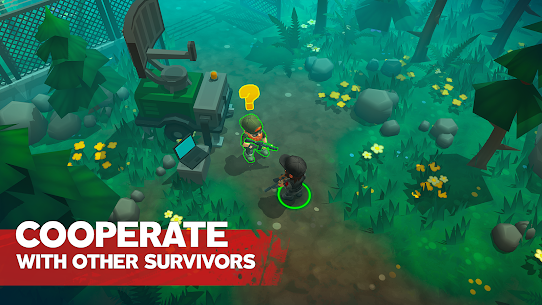
NPC survivors appear on islands throughout the ocean world. Interacting with them opens a trading interface where players exchange specific materials or items for equipment, recipes, or story clues. Some NPCs require multiple visits before they offer advanced trade options.
The trading system connects directly to the game’s story. Survivors provide context about the post-apocalyptic world and point players toward specific island locations with story content. Consequently, players who skip survivor interactions miss not only trading opportunities but also directional clues that make island progression significantly faster.
How Progression and Island Exploration Unlock New Content
Progression in this title works through accumulation rather than a traditional level system. Players expand their raft, build better equipment, and access new island regions as their gear improves. There is no single progression bar — instead, capability grows in parallel across crafting, combat, and exploration simultaneously.
Daily quests provide a consistent progression boost. Completing daily objectives earns quest points, which players redeem for item crates containing materials. This system gives players who log in regularly a steady supply of hard-to-find components. As a result, returning players progress noticeably faster than those who play in long single sessions with gaps in between.
How the world map expands as you explore
The world map unlocks after the tutorial sequence completes. Initially, only a small cluster of islands is visible. Sailing to new regions of the map reveals additional islands, each with its own resource profile and enemy population. Some islands are resource-focused. Others contain dungeon structures or boss encounters.
Navigation between islands requires the raft to be seaworthy enough to survive the open ocean sections between them. Players who expand their raft size and reinforce the hull before attempting long ocean crossings survive the trip far more consistently than those who attempt it on the starting platform.
What island resources, dungeons, and boss enemies reward
Islands provide materials not available in open ocean debris — specific metals, rare food types, and crafting components for advanced weapons. Dungeons go deeper. Players who clear a dungeon structure access locked rooms containing recipe scrolls, equipment chests, and boss enemy encounters. Boss enemies drop rare items on defeat.
The laboratory dungeon, introduced in a content update, is one of the most rewarding locations in the game. However, it contains elite enemies that require fully upgraded weapons to clear safely. Therefore, players should treat the laboratory as a late-progression target rather than an early exploration destination.
How daily quests and crate rewards fuel long-term progression
Daily quests refresh every 24 hours and require players to complete specific in-game actions — collecting a set number of resources, defeating a specific enemy type, or reaching a new island. Each completed quest awards points, and those points convert into reward crates containing a random assortment of materials.
The crate system is particularly valuable for obtaining bolts, gears, and rope in quantities that open-ocean collection cannot match. For players hitting a resource wall in their crafting queue, consistent daily quest completion is the most reliable fix. Treating daily quests as the first task each session is one of the strongest long-term habits in the game.
What Most Players Get Wrong — Hidden Mechanics and Common Mistakes
Most early failures in Epic Ocean Survival trace back to three specific errors — running out of key materials, ignoring weather changes until enemies become overwhelming, and treating NPC survivors as optional side content rather than core progression tools.
These are not obvious mistakes when starting out. The game does not heavily signal any of these systems in the opening minutes. However, each one has a direct impact on how quickly a run stalls. Addressing all three early changes the experience significantly.
Why resource scarcity kills early runs and how to prevent it
The most common resource bottleneck involves bolts, gears, rope, and duct tape. Players crafting freely in early sessions often hit a wall when the rifle or raft upgrade recipe requires bolts they have already spent. Rope runs out fast because it is needed for both raft expansion and weapon components simultaneously.
The solution is to set a floor for each scarce material before spending any of it on non-essential crafts. Keeping a minimum of ten bolts, ten rope units, and five gears at all times prevents the situation where every desired craft is blocked simultaneously. This constraint feels uncomfortable at first but avoids much larger frustration later.
How weather changes go unnoticed until enemies start behaving differently
Many players realise a storm has arrived only when a second shark attacks the raft at the same time as the first. At that point, there is no preparation left to do. The weather icon in the game UI changes before enemy behaviour shifts. Checking it regularly and reinforcing the raft edge with barriers before storm weather hits turns a dangerous situation into a manageable one.
Rain weather, by contrast, is generally positive for the raft. Water supplies refill, and zombie enemies on nearby islands slow slightly. Therefore, planning island raids during rain rather than during clear or storm weather is a consistent small advantage that compounds over longer sessions.
How skipping NPC interactions slows down island progression
NPC survivors appear as optional contacts to many players because interacting with them is never a forced story requirement. However, each survivor offers trade options that provide materials and recipes unavailable through normal exploration. Skipping these interactions means crafting walls arrive earlier and certain weapon blueprints remain permanently out of reach in that session.
Additionally, survivor conversations provide map clues that point toward specific island locations with high-value content. Players who skip these conversations navigate randomly and often bypass dungeon-containing islands entirely. As a result, treating every NPC interaction as a priority rather than an optional chat is one of the highest-value habit changes a new player can make.
Best Epic Ocean Survival Tips and Tricks for Beginners
Improving at this game comes down to three specific habits. Each one is tied directly to a mechanic unique to the way Epic Ocean Survival structures its crafting, combat, and exploration systems.
Managing bolts, gears, rope, and duct tape in the early crafting queue
Set material floors before opening the crafting menu each session. Specifically, keep bolts and gears reserved for weapon crafting rather than spending them on raft expansion. Raft sections can use wood and nails exclusively in the early game. Bolts and gears are more valuable in the harpoon and rifle queue. This single adjustment prevents the most common early-game crafting block in Epic Ocean Survival.
Duct tape is a repair material for weapons and clothing. Because it is also used in some crafting recipes, players who spend all their duct tape on crafting find they cannot repair gear mid-combat. Keeping three to five units in reserve for repair-only use is a straightforward fix to an avoidable problem.
When to prioritise raft upgrades over weapon crafting in resource-scarce sessions
In sessions where materials are limited, weapon crafting should come before raft expansion. A larger raft does not protect against sharks or zombie enemies. A working harpoon does. Therefore, when forced to choose between adding a new raft section and completing the harpoon, complete the harpoon first.
Raft expansion becomes the priority only after the player has at least one functional combat weapon, a rain collector, and a furnace. Once those three structures exist, every additional session resource can flow into raft growth. Before those three are in place, expansion materials are better spent on survival infrastructure.
How to read zombie shark attack patterns before they connect
The zombie shark circles the raft twice before closing in. Standard sharks break off after the first hit. The zombie shark does not. Instead, it continues pressing after taking harpoon damage. This pattern means players need to land two or three harpoon hits in the circling phase before the shark reaches biting range, not one hit and wait.
The visual tell is the attack angle. Before the zombie shark charges, it straightens its path toward a specific raft edge rather than continuing its curved circle. Recognising that straightening movement as the charge signal and releasing the harpoon at that moment — rather than reacting after the charge begins — is the difference between absorbing no damage and losing a section of raft per encounter.
Frequently Asked Questions About Epic Ocean Survival
Is Epic Ocean Survival available on iOS and Android?
Yes. Epic Ocean Survival is available on both platforms. Players find it on the Google Play Store for Android devices running version 7.0 or higher and on the Apple App Store for iOS. The game is free to download. Both versions are developed and published by Drivora LTD and receive the same content updates simultaneously.
How long does it take to progress through Epic Ocean Survival?
Epic Ocean Survival does not have a fixed endpoint. Progression expands continuously through island exploration, daily quests, dungeon clearing, and crafting upgrades. New players typically reach the world map within one to two hours. However, unlocking the laboratory dungeon and facing elite enemies requires considerably more time and gear investment beyond that point.
Does Epic Ocean Survival receive regular updates with new content?
Yes. Epic Ocean Survival has received consistent updates since its launch in July 2021. Recent updates have added new islands, elite enemies, the laboratory dungeon, a weapon and clothing repair mechanic, a throwing grenade weapon, daily quest systems, and dynamic events tied to the game’s post-apocalyptic story. The most recent version as of early 2026 is 2.8.11.
Why Epic Ocean Survival Deserves a Place on Your Mobile
Epic Ocean Survival is a strong choice for players who want a mobile survival game with real depth behind its simple opening minutes. The crafting system rewards patience. The weather mechanic adds genuine tactical weight. The enemy variety — from standard sharks through to the zombie shark and dungeon-guarding elite enemies — keeps combat from becoming routine. Players who enjoy building systems, managing limited resources, and uncovering a story through island exploration will find this game holds their attention across many sessions.
Having spent real time with the raft, the harpoon, and the zombie shark circling underneath, this game delivers more than most mobile survival titles promise. It earns that rating. New players who read the systems correctly from the start will have a far better experience than those who go in blind — and that is exactly what this post was built to give you.
Images



Download links
ℹ️ Download link not working? Please refresh the page and try again.



New Apps
Most Played Mobile Games


