
Do Not Feed The Monkeys (Unlocked FULL GAME)

Description
Do Not Feed The Monkeys hands you a stack of hidden camera feeds called cages and one rule you are told never to break. New Club members who keep getting evicted or expelled before their first rank review will find the order of priorities that keeps a run alive here. The single biggest win comes from timing part-time jobs around each cage’s active hours, because a shift away from the desk is a shift of clues you never see.
How to Play Do Not Feed The Monkeys on Android
To play Do Not Feed The Monkeys, you watch strangers through hidden surveillance cameras, note what they reveal, and buy new feeds to satisfy the Primate Observation Club. You also earn money, pay the landlady, and keep yourself fed and rested, or the run ends early.
The game comes from Fictiorama Studios, with Alawar handling the mobile release on Google Play and the App Store. It launched on PC in 2018, and the Android port followed in 2019. It works as a premium voyeur simulator with one upfront price, while a free Lite edition lets you try the opening days first.
My first night in the cramped apartment showed me the real hook. Every feed runs on its own clock, so a good Do Not Feed The Monkeys walkthrough is really about choosing what to miss.
How Cages and Surveillance Cameras Work
A cage is a single camera feed into one location, such as an office, a bedroom, or a lonely field with an antenna. Each one shows a small slice of life, and the people inside are the monkeys. They talk, eat, argue, and sleep on fixed schedules, so a cage can sit quiet for hours and then burst into action.
You switch between cages from your desk, and only one feed fills the screen at a time. However, events in different cages often overlap. That overlap is the core tension, because you cannot watch two key moments at once. In my runs, the worst clashes landed in the evening, when most monkeys come home.
The Primate Observation Club Premise and Mature Tone
You play a lonely tenant in a run-down apartment, recruited by a shadowy group that hides behind the name of a wildlife society. The Club calls its targets monkeys and their rooms cages. That polite zoo language makes the spying feel absurd and a little sick, which is exactly the point.
The game carries a Mature 17+ rating on Google Play, and it earns it. Some storylines are funny, while others turn dark fast, with crime, drugs, and quiet tragedy.
How It Compares to Beholder and Simulacra on Mobile
Beholder is the closest mobile cousin, since you also spy on tenants and decide whether to report them to a cruel state. However, Beholder gives you a building to run and direct orders, while this game gives you screens and silence. Simulacra, by contrast, puts you inside a found phone and asks you to dig through messages and apps.
The real difference is pressure, because your rent payment, food, and sleep all compete with the story. That survival layer turns watching into a budget problem, and neither rival asks you to juggle it.
Android Version vs PC and Console Versions
The game also exists on PC, Mac, Linux, Nintendo Switch, Xbox One, and PlayStation, so mobile players do have a choice. On Android, you tap objects to pick up keyword clues and swipe between feeds, which feels natural on a tablet. On a small phone, however, the pixel text and tiny props can be hard to hit.
The Steam version suits players who want a mouse and a big screen for long sessions. The mobile build usually costs less than the console editions and works well in short bursts. Because the free Lite edition on Google Play covers the opening days, you can test the touch controls on your own phone before paying.
How Keyword Clues and the In-Game Search Engine Work
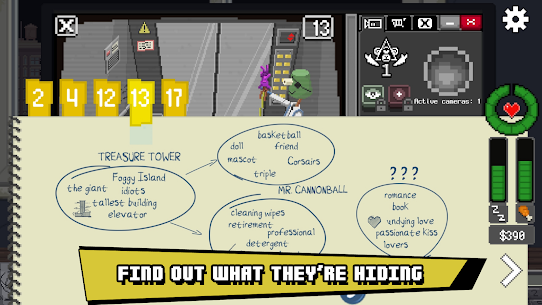
Keyword clues are highlighted words that appear when you tap objects or hear monkeys speak, and the game files them in a journal for each cage. You then type those words into a built-in search engine to unlock names, phone numbers, addresses, and new facts about each monkey.
This loop is the detective half of the game. Two words that mean nothing alone can combine into a full address or a hidden motive. For example, a license plate spotted in one cage can lead to an owner’s name and then a phone number.
Those findings feed the Club’s requests and every interference choice later in a run. The more complete your journal, the more cash and options you hold.
Tapping Objects and Dialogue for Highlighted Words
In any cage, tap slowly across posters, screens, labels, and odd props. A word glows and drops into the journal the moment the game counts it as useful. Dialogue works the same way, but only while the monkeys are actually talking, so an empty room gives you nothing.
Most cages have narrow active windows. In one early cage, a lonely monkey eats cold fried chicken around 17:00 and returns to his computer near 21:45. Missing that evening stretch means missing the dialogue that carries his best words.
Pairing Words in the In-Game Search Engine
The in-game search engine accepts one word or two together. Pairing terms is where the real breaks happen, since a crash plus a place name can surface a news story that neither word finds alone. In one cage, that pairing reveals a local militia and the woman who runs it. Her name then gives you a messenger contact.
Searches cost nothing but time, so test odd pairs freely. Names, plates, and street names give the best returns.
What Happens When You Complete an Observation Study
The Club sends Observation Study requests by email, asking for specific facts about a cage, such as a person’s job or a secret they hide. Fill in the answers from your journal and the Club pays you in cash. Those rewards can cover a rent payment or fund your next cage.
There is a darker edge, though. These requests often end badly for the monkeys you report on, and answering or ignoring them shapes which rank ending you reach. A finished study is money now and a moral cost later.
How to Unlock New Cages and Meet the Cage Quota
New cages unlock when you buy them from the Club with your own money, and the Club checks your total every few days. Fall short of the cage quota on a deadline and the Club expels you, which ends the run instantly.
This is the main progression pressure in the game. More cages mean more stories and more clues, but each purchase drains the same wallet that pays for food. Meanwhile, the target rises as you climb, so early savings matter.
Your apartment, your job, and your cages all pull on one budget. The cheapest path is rarely the best, since a dull cage with no story wastes a slot.
Buying Cages Before Each Club Deadline
Check the date of the next Club review the moment it appears, then work backward. Count the cages you still need, add the next rent payment, and add a few days of food. That number is your real savings target, not the price of one cage.
I fell into a common trap on my first attempt. I bought a cage early, felt clever, and then came up short when the landlady knocked.
Random Cage Pools and Why No Two Runs Match
The game draws your offered cages from a larger library, so two players rarely see the same lineup. Reviewers single this out as the reason a story-driven voyeur simulator still holds up on a second or third run. Your first playthrough might feel calm, while the next one swaps in rooms and storylines you never saw before.
This randomness changes strategy. Instead of copying someone else’s cage order, judge each cage by how often its monkeys talk and how many clues it gives early.
Starter Cages Like Old Hay and the Egyptian Bust
Community players rank a few cages as gentle starters. The field with an antenna, known as Old Hay, and the Egyptian Bust tied to Amenophis V both give clear clues with low risk. In my runs, they also asked for less late-night watching than most.
Even so, easy cages still hide twists. Treat them as practice for the search habits you will need in busier feeds.
How to Survive Rent, Hunger, Sleep, and Health
Five days is the longest you can stall the landlady before eviction ends your run, so survival starts with rent. To survive, work part-time jobs for cash, order food when hunger drops, sleep before exhaustion hits, and never let health or hunger reach zero.
These survival rules sit on top of the spying, and they never pause. Sleep lowers tiredness but raises hunger, while food costs money that could buy a cage. That tug of war is the sim side of the game, and reviewers often call it the hardest part.
My early runs died here, not in the story. Once I treated hunger, sleep, and cash as one shared schedule, the deadlines stopped feeling random.
Part-Time Jobs and the Cost of Leaving Your Desk
Part-time jobs are the only steady income, and they range from small gigs to long shifts. Some jobs ask for earlier work experience, so your options widen as you keep working. A single shift can run eight hours, which can swallow the active window of a whole cage.
Pick shifts during dead hours. If two key cages go dark around 1:00, the stretch until morning is ideal for work, because you lose almost nothing on screen.
Paying the Landlady Before Day Five
Rent comes due on a regular cycle, and you get four days of grace once the bill lands. Miss the fifth day and you face eviction, which counts as a failure ending. If you are out working when she knocks, she comes back later, so a job never makes you miss the visit itself.
Keep rent cash mentally locked the moment you get paid. Neighbors also knock with favors and small dramas, but those visits should never cost you rent money.
Keeping the Hunger Meter and Health Above Zero
The hunger meter drops over time and falls faster after sleep, while health sinks when you skip rest or meals for too long. If either one hits zero, you end up in hospital and the run is over. Ordering food fixes hunger quickly, but every delivery costs money.
A steady sleep schedule, with a cheap meal just before bed, softens the hunger spike that rest causes. That habit alone kept me from collapsing in the middle of a busy week.
How to Feed the Monkeys: Calling, Helping, or Extorting
Feeding the monkeys means breaking the Club’s one rule by contacting a subject, usually by phone after you find their number through searches. You can use that contact to help them, expose them, or extort them, and each choice changes their story and your standing.
The rule exists in name only. Nothing stops you from dialing, and the store blurb jokes that most members fail to obey it. In practice, the game quietly expects you to try at least once.
Interference is also where the best payoffs hide. A well-timed call can earn cash, save a life, or wreck one, and the Club notices when you cross the line.
Finding Phone Numbers Through Keyword Clues
Phone numbers almost never appear on screen. Instead, you chain searches until a name returns a contact, and the monkey only picks up in the right place at the right time. For example, one office worker answers only while he sits at his desk and is not already on a call.
That timing rule turns a call into a small puzzle. Watch the cage first, wait for the quiet moment, then ring.
Help, Expose, or Extort: How Interference Plays Out
Each interference option bends a storyline in a different direction. Helping a struggling monkey can rescue a dream, while exposing them can ruin a life in one call. Extortion pays well, but it often drags you into a deeper mess than the cash is worth.
Some choices also carry hard stops. Selling a stash of cocaine that turns up in one storyline triggers a failure ending, although simply keeping it is safe.
Neighbors, Favors, and Other Knocks at the Door
Your apartment is not sealed off from the world. Neighbors knock with requests and favors at awkward hours. Answering can cost time you meant to spend on a live cage.
Treat these visits as side content. Some are funny, but none of them outrank a rent deadline or a Club review.
All Monkey Rank Endings and How to Reach Them
Three rank endings close a full run of Do Not Feed The Monkeys: Mediocre Monkey, Obedient Monkey, and Enlightened Monkey. You reach them by climbing the monkey ranks through cage reviews, and the ending you get depends on how many Club study requests you answered along the way.
Rank is the backbone of progression. Each passed review moves you up, and the climb points toward a mythical top level the Club calls the Big Primate Cage. Missing a review, by contrast, drops you out entirely.
Beyond those three, a handful of failure endings can stop a run early. Together, these multiple endings make the game a short loop built for repeat runs.
How Monkey Ranks Rise With Each Review
Each cage quota check doubles as a rank milestone, so progression and spending are the same system. Rising a rank raises the next target, and the reward is deeper access to the Club’s secrets.
The climb also brings more Club contact and stranger requests. By the later ranks, you juggle more feeds at once, and the pressure on your sleep schedule grows with every level.
Mediocre, Obedient, and Enlightened Monkey Endings
Players who ignore every Observation Study while still climbing reach the Mediocre Monkey ending. Fulfilling every study while climbing leads to the Obedient Monkey ending instead. The Enlightened Monkey ending sits at the top, and community testers still debate its exact trigger.
My best guess, after several runs, is that how often you meddled tips the final result. Fans broadly agree that the ending reflects both how much data you gathered and how much you interfered.
Failure Endings That Stop a Run Early
Five early exits exist outside the rank endings. Uninstalling the Monkey Vision app ends the game on the spot, and so does failing a rank review. Eviction for unpaid rent, a hunger or health meter at zero, and selling the cocaine all close the run as well.
These endings are not wasted time. Each one shows a different side of the Club, and a few are worth seeing on purpose once you finish a clean run.
Common Mistakes That Get You Expelled From the Club
Expulsion from the Primate Observation Club is the most common way new players lose, and it almost always traces back to a budget or timing error. Players who lose early rarely run out of story. They run out of money or energy a day before a review.
The day-restart save is the safety net most players forget. Once a save exists, you can jump back to the start of any earlier day, which turns a fatal error into a second chance.
The game gives no warning when a budget goes bad, so you have to spot danger days ahead. A review feels far away until it suddenly is, and a single rent payment at the wrong moment can sink it.
Chasing One Cage While Others Go Live
Gripping storylines pull you into staying on one feed far too long. Meanwhile, two other cages may be playing their only scene of the day. I once watched an argument end and then switched over to find another monkey already asleep, with his key dialogue gone.
Rotate on a rhythm instead. Glance at each live cage every in-game hour, then settle on the one where people are talking.
Forgetting the Day-Restart Save
The save system lets you reload the start of any previous day. Few players use it on purpose, yet it is the cleanest fix for a missed deadline or a feed you shut down by accident.
It also works as a scouting tool. Play a day once to note when each cage wakes up, then reload and plan your job shifts around those times. That small loop saves whole runs, and almost no one mentions it.
Spending Rent Money on New Cages Too Early
Buying a cage feels like progress, which makes it the most tempting mistake in the game. If that purchase leaves you short when rent comes due, the whole run ends anyway. Eviction wipes out every cage you own in one moment.
A safe rule: never buy a cage until the next rent payment is already covered. The review deadline usually leaves enough slack for one more work shift.
Best Do Not Feed The Monkeys Tips and Tricks for Beginners
Beginners gain the most by planning around the single in-game clock that drives every cage, job, and bill. Quick reflexes do not matter here. A notebook and a little patience matter far more.
The opening days are the cheapest time to build good habits, because the cage quota is still small and errors cost less. Later ranks give far less room to recover.
Patience also pays in the story. In my runs, some monkeys circled back to the same topics on later days, so a missed clue sometimes returned if I watched the same window again.
Log Each Cage’s Active Hours in Your Journal
Write down when each monkey wakes, eats, talks, and sleeps during your first day with a new cage. Real times work best, such as 18:55 for a return home or 22:00 for a late snack. After two days, you will have a clear timetable.
That timetable tells you exactly when to work and when to stay home. It also shows which cages overlap, so you know in advance what you must give up.
Bank Observation Study Rewards for the Next Review
Treat every study payout as cage money, not grocery money. Food is cheap and can come from job wages, while cages are the expensive line that decides your rank. Splitting cash this way keeps the review date from turning into a crisis.
If you plan to skip studies for the Mediocre Monkey ending, you lose that income stream. In that case, budget for at least one extra work shift before each review.
Fix Your Sleep Schedule Before Long Job Shifts
Exhaustion is the quiet killer in this game. Taking a long shift while already tired can push health toward zero before you get home. Sleep first, eat, and only then head to work.
A fixed routine also lines up with the monkeys, since most cages go dark after 1:00. Sleeping through those dead hours costs you almost no story.
Frequently Asked Questions About Do Not Feed The Monkeys
Is Do Not Feed The Monkeys Available on Android and iPhone?
Yes. Do Not Feed The Monkeys sells as a one-time purchase on Google Play and the App Store, where the iPhone version lists at $5.99. The Android build needs Android 5.1 or newer, and Alawar’s free Lite edition, released in August 2019, covers the opening before you pay.
How Long Does It Take to Beat the Game?
A single run takes roughly four hours for most players who reach a rank ending. Failure endings can arrive much sooner, sometimes within the first few in-game days. Seeing every rank ending and the major storylines takes several runs, since each one deals a different set of cages.
Is There a Sequel to Do Not Feed The Monkeys?
Yes. Fictiorama Studios released a follow-up subtitled 2099 on May 25, 2023, published by Joystick Ventures for PC, Mac, and Nintendo Switch. It keeps the cage formula, moves the story to the year 2099, and uses a search engine called BeeScout. At launch, it had no Android version.
Who Should Join the Primate Observation Club
Do Not Feed The Monkeys suits patient players who enjoy detective work, dark humor, and tight budgets more than action. Mobile fans of Beholder or Simulacra should buy it, while anyone who hates juggling meters should start with the free Lite edition. After several runs, my honest verdict is that the survival chores annoyed me at first, but they are exactly what made every phone call feel risky and earned. Plan your shifts around the cages, protect your rent money, and the Club’s secrets open one rank at a time. Few mobile games make simply watching feel this tense.
Images



Download links
ℹ️ Download link not working? Please refresh the page and try again.





New Apps
Most Played Mobile Games


