
Choice of Life: Middle Ages 2 APK (Unlocked FULL GAME)

Description
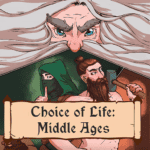
Choice of Life Middle Ages 2 packs over 1,000 unique events and 99 distinct ways to die into a card-based medieval RPG that reacts to every single choice you make. This post is written for first-time players and returning players who want to earn more titles, find hidden endings, and survive longer on each run. Below, this post covers the core card mechanics, the Title and Alignment systems, the best beginner strategies, and how to reach multiple endings.
What Is Choice of Life Middle Ages 2 and How It Works
Choice of Life Middle Ages 2 is a card-based RPG developed and published by Blazing Planet Studio. It sits in the interactive fiction genre, combining narrative depth with a choice-driven card mechanic. Players start as an ordinary character at the bottom of medieval society and rise — or fall — based entirely on the decisions they make.
The game launched on Android and iOS and later arrived on Steam, Nintendo Switch, and PlayStation. It carries a very positive reception, with over 94% positive reviews on Steam from more than 900 players. That approval rating reflects a game that rewards patience and curiosity in equal measure.
How the Card-Based Decision System Works
At every narrative moment, the game presents decision cards. Each card represents a possible action, response, or path. Players tap a card to commit to it. The scene then advances based on that choice, sometimes immediately and sometimes after a chain of follow-up decisions.
No two choices carry equal weight. Some cards lead to new locations on the world map. Others add a title, change your alignment score, or trigger an immediate death. Because the consequences stay hidden until the card plays out, each tap carries genuine tension. That tension is the core loop that makes this title so replayable.
The Medieval Setting, Tone, and Story Premise
The story drops players into a stylised medieval kingdom full of knights, alchemists, cunning merchants, and political scheming. The tone blends dark humor with real narrative stakes. One moment the writing is absurd; the next it asks a genuinely difficult moral question.
Players begin as a common peasant, a nobody with no power and no allies. Through successive choices, that character can become a brave knight, a respected monk, a traitorous advisor, or something far stranger. The world reacts to every decision. Kindness shown early can return as an unexpected lifeline hours later.
How This Game Compares to Reigns and Sorcery! on Mobile
Reigns, by Nerial and available on Android and iOS, pioneered the card-swipe decision format. However, Choice of Life Middle Ages 2 expands well beyond that formula. Reigns focuses on balancing four kingdom meters through left-right swipes. This game replaces meter management with a richer narrative system — titles, alignment, and branching story events that remember your past.
Sorcery! by Inkle Studios is another strong mobile comparison. Sorcery! offers open-world exploration through text choices. By contrast, this title uses a world map with flagged points of interest and a more structured card-event format. Both games reward replaying, but the dark humor and death-scene variety here feel more immediate and punchy.
How to Play Choice of Life Middle Ages 2 — Core Controls
The control scheme is deliberately minimal. Players tap cards to make decisions. There are no action buttons, no timers, and no stress mechanics pushing faster choices. The entire experience centers on reading, thinking, and selecting.
Because the interface stays simple, the game puts all of its complexity into narrative structure. Players encounter hundreds of cards across a single run. However, many of those cards only appear under specific conditions — based on titles held, alignment built, or previous choices made.
How Decision Cards Are Presented and Selected
Cards appear at the bottom of the screen after each scene resolves. The player reads the scene description, considers what the cards represent, and taps one. The scene then plays out accordingly. Some decisions show two cards; others show three or four options.
Each card shows its label but not its full consequence. That deliberate opacity is a design choice. Players cannot always predict an outcome, so the first playthrough becomes a process of mapping the event space rather than optimizing a known route.
How the World Map and Points of Interest Work
After completing scenes at a location, players return to the world map. This map displays the medieval kingdom from its snowy northern forests to its open southern fields. New locations become available as the story progresses. Each newly available location shows a small flag icon on the map, signalling that content is ready.
Players choose which flagged location to visit next. That choice itself shapes the run. Some locations only appear after earning a specific title. Others unlock after completing an earlier location in a particular way. The map therefore becomes a record of past choices as much as a navigation tool.
What Happens When You Die and How Respawning Works
Death in this game is frequent by design. The game contains 99 distinct ways to die, and most players encounter several on their first run. When a death scene triggers, the game presents a written death outcome — often darkly funny and specific to the choices that led there.
After death, the game returns players to the most recent save point. The auto-save system preserves progress at key checkpoints between locations. Players then continue from that point, trying different card selections to find a path forward. Death therefore functions as information — it reveals which choices are dangerous, and that knowledge carries into future runs.
How the Non-Linear Storytelling System Shapes Your Run
The non-linear structure is the deepest feature this game offers. Unlike many interactive games that present the illusion of choice while following a fixed track, this title genuinely branches. A choice made in the opening scenes can determine which characters appear, which locations unlock, and which endings become reachable.
No single run shows all the content. This is intentional. Because each decision card closes some paths while opening others, players consistently encounter scenes they have never seen before on subsequent runs. That design creates sustained replayability without requiring new content updates.
How Branching Paths Change Depending on Your Choices
The branching system works on two levels. First, individual scenes branch based on the card chosen. Second, the cumulative effect of choices across a full run shapes which late-game events become available. For example, a player who consistently shows kindness to NPCs accumulates alignment shifts that eventually open the Paladin storyline.
Additionally, some paths lock permanently during a run. A location chosen in Chapter 1 may replace a different location that another player visits. Both paths contain unique events, titles, and story content. Players who replay the game along a different early path therefore encounter a substantially different experience.
How Multiple Roles Work — Blacksmith, Knight, Monk, and More
The game allows players to inhabit radically different roles across runs. In one run, a player might rise to become a respected knight, earning combat-related titles and military storylines. In another, choosing the path of a monk or scholar opens entirely separate knowledge-based events and philosophical dialogue branches.
Each role comes with distinct events, companion interactions, and late-game opportunities. Becoming a blacksmith gives access to crafting-adjacent storylines. Choosing the heretic path opens dark and dangerous narrative branches. None of these roles is presented as superior — each reveals a different facet of the medieval world.
How Replay Value Is Built Into the Card Event System
The game contains over 1,000 unique events. A standard run to one ending takes approximately three hours. However, reaching all 45 titles and multiple endings requires many more runs. Each run surfaces a different cross-section of those 1,000 events, so the experience stays fresh.
The dark humor embedded in the death scenes also adds to replayability. Many players deliberately try to trigger new death outcomes after completing a successful run. Because death scenes are often the most entertaining writing in the game, failing intentionally carries its own reward.
How the Title System Works and What Titles Actually Do
The Title system is one of the features most commonly underexplained in competing articles. Titles are not just cosmetic achievements. They function as equippable skills that subtly alter dialogue options, NPC reactions, and available story branches throughout the rest of that run.
There are 45 unique titles to collect across all content. Earning all 45 titles triggers the Legend of the Kingdom achievement. Each title reflects a specific set of choices — you cannot earn the title Gallant by accident. You earn it by making consistently courteous decisions in particular scenes.
How the Title System Works and What Titles Change
Each title carries a behavioral label — Rude, Gallant, Kind, Liar, Experimenter, Gardener, Paladin, and many others. Only one title can be equipped at a time. The equipped title subtly shifts how certain characters respond to the player and unlocks card options that would not appear without it.
For example, equipping the Paladin title during military scenes opens dialogue choices unavailable to players without it. Equipping Liar unlocks deceptive card options in negotiation scenes. Therefore, choosing which title to equip before entering a new location is itself a strategic decision, not just a cosmetic one.
How to Earn Specific Titles Through Targeted Choices
Most titles require a specific sequence of decisions within a named scene or location. The title Gardener, for instance, requires answering a series of questions correctly about plant care during a specific garden scene. The title Experimenter requires ordering a specific drink and then pretending to drink it during a tavern encounter.
Players who want to collect all titles benefit from keeping multiple save slots active. The auto-save fills slot 1, so manual saves in slots 2 through 5 allow players to branch at key decision points without replaying from the beginning. Saving just before entering a new location is the most efficient strategy.
How Titles Like Paladin and Rude Alter Your Storyline
The Paladin title represents one of the deepest title-driven storyline shifts in the game. Earning it requires making consistently honorable choices across multiple scenes, then completing the Paladin’s Helmet event at the tavern. Once equipped, it unlocks the Paladin path in later military encounters — a distinct story branch with unique outcomes.
The Rude title operates differently. It unlocks through selfish or dismissive choices early in the game. However, Rude is not a dead-end path. Some NPC interactions only trigger when a player has Rude equipped, because certain characters respect bluntness. The system therefore rewards building a coherent character rather than chasing only positive titles.
How Alignment Tracking Determines Your Available Endings
Most players notice the card choices. Fewer notice the alignment system working quietly in the background. Every decision in the game nudges an internal alignment score toward either the honorable or the selfish end of the spectrum. That accumulated score determines which late-game paths and endings become available.
The alignment system is not a simple good/evil meter. Certain choices are neutral. Others carry strong alignment weight. A player can make many selfish decisions early and then attempt to correct course — but the system retains memory of that history. Reversals are possible, but they require sustained consistent effort in the right direction.
How Good Deeds and Selfish Acts Build Your Alignment Score
Good deeds include helping NPCs without expecting reward, choosing honest dialogue options in negotiation scenes, and protecting weaker characters when the game offers an exploitative alternative. Each of these shifts the alignment score slightly toward the honorable path.
Selfish acts — demanding payment before helping, lying to gain advantage, abandoning companions — shift alignment toward the Underworld path. Neither direction is wrong. Both open distinct content. However, players who split their choices unevenly risk reaching a late-game inflection point without enough alignment weight to access either endpoint path.
How the Paladin Path and Underworld Path Unlock
The Paladin path requires a strong honorable alignment score alongside the Paladin title equipped at the correct moment. When both conditions are met, a specific late-game event sequence becomes available that closes with a distinct heroic ending. This path also grants access to the Sword of the Three Kingdoms item and the Battle King achievement.
The Underworld path opens under a strongly selfish alignment and specific dark-choice sequences. It leads to a different set of late-game events and endings that no honorable-path player will encounter. Players who want to see both paths must complete two separate runs with deliberately contrasting decision patterns.
What Completing the Alignment Path Unlocks
Completing the Paladin path unlocks the Diplomat achievement alongside the named ending. Completing the Underworld path unlocks dark-faction endings and associated achievements. Both paths also surface unique death scenes and NPC interactions unavailable to players who end a run in the neutral middle.
The most complete achievement, Legend of the Kingdom, requires collecting all 45 titles across multiple runs. Neither path alone delivers all titles. Players who pursue 100% completion must therefore play through several runs, deliberately steering alignment and title acquisition on each one.
How the 99 Ways to Die System Works as a Feature
The 99 ways to die is one of the game’s most distinctive design choices. Other narrative card games treat death as a reset — an interruption that sends the player back. This game treats death as content. Each of the 99 death outcomes is a written scene, specific to the choices that led there.
That distinction matters for how players should approach the game. Rather than trying to avoid all death, experienced players treat failed runs as reconnaissance. A death scene reveals which choice was dangerous, what the consequence looked like, and what the game considers a wrong turn in that specific context.
Why Death Is Designed as a Replayability Loop, Not a Penalty
The dark humor embedded in death scenes is deliberate. Many outcomes are written with wit rather than frustration. Dying by trusting the wrong merchant, or by asking one too many questions of a suspicious alchemist, produces a death scene that is genuinely entertaining. Players therefore do not resist death — they engage with it.
This design choice also reduces frustration for newcomers. Instead of a blank game-over screen, the death scene delivers a story conclusion. That conclusion feels like a complete arc rather than a failure. Consequently, first-time players who die repeatedly stay engaged because each death adds to their knowledge of the world.
How Specific Death Scenes Reveal Hidden Story Branches
Some death scenes contain dialogue and context not found anywhere else in the game. Certain NPC characters appear only in specific death outcomes. Therefore, a player who avoids all death on their first run actually misses a portion of the total story content.
Players hunting for 100% content completion benefit from deliberately triggering death sequences they have not yet seen. The most efficient way to do this is to save manually before entering a high-risk location, play through it until a death triggers, read the scene fully, and then reload to continue toward a successful ending.
How to Use Failed Runs to Map the Event Tree
Experienced players treat each run as a mapping exercise. The goal is not just to survive but to build a personal record of which choices lead where. After each run, a player knows more about the event tree than before — which locations connect, which title requirements unlock which scenes, and which alignment-heavy moments appear in which chapter.
Because the game contains over 1,000 events, no single player maps the full tree quickly. However, three to five runs with different starting strategies produce a clear picture of the major branches. That map then allows targeted runs aimed at specific titles, specific endings, or specific content clusters.
Best Choice of Life Middle Ages 2 Tips and Tricks for Beginners
New players often make the same set of mistakes on their first run. They tap cards quickly without reading the full scene text. They ignore the title they have equipped when entering a new location. And they treat each death as a setback rather than as useful data.
Slowing down fixes most of these problems. The game has no timer. There is no advantage to tapping fast. Every second spent reading the scene before choosing a card reduces the chance of a hidden-consequence death and improves the quality of the decision.
How to Read Decision Cards Before You Tap
The scene text always contains contextual signals about what each card represents. A scene describing a suspicious character offering an unsolicited gift typically has a high-risk card alongside a cautious one. Players who read the full scene text before looking at the card options make better-informed choices without needing prior knowledge of the event tree.
Additionally, players should note which title they have equipped before each new scene. Some cards only appear because a specific title is active. Tapping a card without recognising that it is title-gated can lead to consequences that seem random but are actually tied to that equipped title’s storyline.
How to Use the Title System to Steer Your Alignment Early
The most effective beginner strategy involves choosing a consistent behavioral direction from the first scene and sustaining it. A player who commits to honorable choices from the game’s opening moments builds alignment weight efficiently toward the Paladin path.
Equally, a player who consistently picks selfish options builds early alignment toward the Underworld path. Both directions open more content than a neutral scattered approach. Players who mix randomly without intention often find themselves short of alignment weight at key late-game inflection points, locking them out of both major ending paths.
The Most Common Early-Game Death Traps and How to Avoid Them
Several early-game deaths occur because new players underestimate the consequences of confronting powerful characters without preparation. The game signals danger through scene descriptions — language describing an armed, intimidating, or politically connected NPC almost always indicates a high-risk confrontation.
Avoid committing to adult-character confrontations in early scenes before acquiring an ally or item. Similarly, never give a direct negative answer to a royal or noble character without first building some alignment weight or a relevant title. These two patterns eliminate the majority of avoidable early deaths without requiring knowledge of the specific event tree.
Frequently Asked Questions About Choice of Life Middle Ages 2
Is Choice of Life Middle Ages 2 available on Android and iOS?
Yes. Choice of Life Middle Ages 2 is available on Android via the Google Play Store and on iOS via the App Store. It also appears on Nintendo Switch, PlayStation, and Steam. The iOS version is a paid app priced at approximately $1.99 to $2.99 depending on region, and the Android version is similarly priced as a premium title with no in-app purchases.
How long does it take to finish Choice of Life Middle Ages 2?
A single run to one ending takes most players approximately two to three hours. However, because the game contains multiple endings, 45 collectable titles, and over 1,000 unique events, full completion across all content requires significantly longer. Players pursuing all titles and the Legend of the Kingdom achievement typically invest ten or more hours across multiple runs.
How many endings does Choice of Life Middle Ages 2 have?
Choice of Life Middle Ages 2 has multiple distinct endings shaped by the cumulative weight of player decisions across an entire run. The Paladin path and the Underworld path represent two major endpoint storylines, each with unique final scenes. Additional variation within those paths and neutral-alignment runs produce further outcome differences, making precise ending-count figures dependent on how narrowly each outcome variant is counted.
Best Players to Try Choice of Life Middle Ages 2 — Final Verdict
Choice of Life Middle Ages 2 works best for players who enjoy narrative-driven games, are comfortable reading substantial amounts of text, and find genuine pleasure in replaying content to see alternate outcomes. It is not a reflex game or a resource-management game. It is a story machine powered by consequences.
The Title and Alignment systems elevate it well above a simple choose-your-own-adventure format. Those systems give each run a strategic layer that rewards intentional play over random tapping. The 99 ways to die ensures that even failure delivers something worth reading.
After playing through multiple runs across both the Paladin and Underworld paths, this game delivers more narrative variety per hour than almost any comparable mobile title at this price point. The dark humor consistently lands, the world map structure gives runs a satisfying sense of scope, and the title-collection mechanic creates a compelling long-term goal. Players who want a rich, consequence-driven medieval story on mobile will find this one of the strongest options currently available on Android and iOS.
Images


Download links
ℹ️ Download link not working? Please refresh the page and try again.
Developer's apps





New Apps
Most Played Mobile Games


