
Wild Tamer MOD APK (Free Shopping)

Description
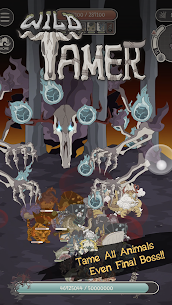
Wild Tamer drops players into a corrupted prehistoric world where a druid must weaken, recruit, and command up to 60 different animals across biomes that stretch from Wildland all the way to Mermaid Island. This post is written for new players and returning tamers who want a clear breakdown of how the beast taming system works, how map progression unfolds, and how to build a squad that actually wins fights. Here you will find sections covering the cobweb tame mechanic, the four beast type categories, the Hero animal levelling system, equipment crafting, and the best beginner approaches for each stage of the game.
What Is Wild Tamer and How Does It Play
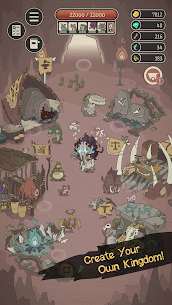
Wild Tamer is a free mobile RPG developed by 111% and available on both Android and iOS. Players take the role of a druid living in a cave who must fight back a wave of evil by recruiting the local wildlife as allies. The core loop is simple: venture into a biome, weaken wild creatures, and decide whether to tame them or harvest them for materials.
How the druid role and corrupted creature premise set up gameplay
The game frames every animal as a corrupted creature. Because of this, every fight is also a potential recruitment. Druids do not simply kill enemies — they subdue them. After lowering a creature’s health, players choose whether to bring it into their squad or break it down for crafting resources.
The druid’s stats grow through the blacksmith crafting system back at the cave. Weapons, armor, boots, and masks all raise attack and defense. This means progress happens in two parallel tracks: building a stronger animal squad on the map and upgrading the druid’s own equipment at home.
What the game’s tone, setting, and biome variety feel like
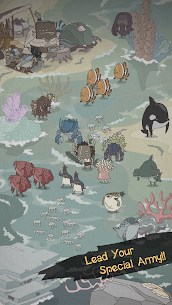
The tone is prehistoric and slightly dark. The art style is stylized and pixel-adjacent, with each biome carrying its own visual identity. Wildland opens the game with familiar forest creatures. Necro Cave shifts the atmosphere toward darker, stranger enemies. Mermaid Island brings aquatic monsters. The Draco zone introduces draconic and mythical creatures, including the dragon tamer path.
Each zone demands a different squad composition. Therefore, players who learn early which beast types dominate each biome will progress faster. The game rewards patience and deliberate squad planning over rushing to the next map.
How Wild Tamer stacks up against Coromon and EvoCreo on Android
Coromon is a top-down pixel RPG with a structured story, turn-based battles, and a large roster of named creatures. EvoCreo also features turn-based combat and a dedicated narrative campaign. By contrast, Wild Tamer is an action-based single-player game where combat is real-time and automatic once the squad is deployed.
Wild Tamer’s taming loop is faster and more casual than either competitor. However, the depth of the Hero animal levelling system and the equipment crafting layer give it more long-term progression than its casual presentation suggests. Players who want a story-driven experience may prefer Coromon, but those who enjoy incremental army-building will find Wild Tamer’s real-time approach more satisfying.
How the Beast Taming System Actually Works
The taming system is what separates Wild Tamer from standard mobile RPGs. Players do not catch creatures with items or random encounters. Instead, each taming attempt is a deliberate, two-stage process. First, the player weakens the creature. Then, a decision appears.
How to weaken a creature and trigger the cobweb tame option
Only animals marked with a cobweb symbol above their head can be tamed. Animals without this symbol simply drop gold when defeated. So before engaging any creature, players should check for the cobweb mark.
After reducing a marked creature’s health to zero, two icons appear: the cobweb icon for taming and a material icon for harvesting resources like bones, feathers, or fangs. Tapping the cobweb icon recruits the creature into the squad with full health restored. This distinction matters because players often need both tamed allies and raw materials, so choosing wisely at each encounter is a core skill.
What the difference is between taming and collecting materials
Taming recruits the creature permanently into the player’s animal roster. Collecting materials breaks the creature down into crafting resources used at the blacksmith. Players cannot do both at once — the choice is final each time.
Early in the game, taming is generally the better choice. Materials become more important later when upgrading equipment costs increase sharply. Consequently, experienced players learn to tame creatures they need for the squad and collect materials from duplicates they already own at a higher level.
What happens after a creature joins your animal squad
Once tamed, a creature appears in the animal roster accessible from the lobby. Players can equip up to five animals at once. Additionally, creatures can be levelled up, sold for gold, or held in reserve. Selling duplicate lower-level animals is one of the best early-game gold sources — a point many new players miss.
Hero versions of each animal are far stronger than standard versions. However, they require three kills of the wild version before becoming available to recruit. After recruiting a Hero, continued kills of the same wild creature are what drive its level upward.
What Are the Four Beast Types in Wild Tamer
Every creature in the game belongs to one of four beast type categories. Each type carries a distinct symbol. Understanding these categories is essential for building a balanced party and for knowing which biomes to focus on when hunting specific creatures.
How the Bone, Claw, Wing, and Scale symbols identify each creature class
The Bone symbol marks mammals. The Claw symbol marks reptiles and amphibians. The Wing symbol covers insects. The Scale symbol covers fish and aquatic sea-life. Each wild creature displays its category symbol clearly during encounters.
This classification system is not just cosmetic. Players who build squads made entirely of one beast type can become vulnerable in biomes where that type is weak. For example, a squad built around Wing insects may struggle in aquatic zones where Scale creatures dominate.
Why beast type matters when choosing which animals to tame first
The first few taming decisions shape how easily early biomes clear. Bone mammals like wolves are available from the start and offer strong frontline damage. However, Wing insects often appear in swarms and provide a different tactical advantage through numbers.
Players who tame at least one creature from each category within the first two biomes give themselves more flexibility. Therefore, rather than focusing on the strongest single animal available, spreading early taming decisions across beast types pays off significantly by Map 3.
How to balance beast types for stronger squad battles
A balanced party typically holds two Bone mammals for sustained frontline presence, one Claw reptile for durability, and two Wing or Scale creatures depending on the current biome. This spread ensures the squad is not hard-countered by any single enemy type.
As a result, players should avoid selling all their lower-tier animals from underrepresented categories. Even a level 5 Wing insect holds squad value in Necro Cave where insect-type enemies appear frequently. Balance is more valuable than stacking the highest raw attack animals from a single category.
How the Hero Animal System Works in Wild Tamer
The Hero animal system is Wild Tamer’s deepest long-term progression layer. Most casual players overlook it. However, understanding how Hero levelling works is what separates players who stall on later maps from those who push through.
How kill counts unlock a creature as a Hero animal
Each animal has a Hero version that is significantly stronger than its standard wild form. To unlock a Hero, players must defeat three wild versions of that specific creature. After the third kill, the Hero version becomes recruitable from the animal menu.
Hero animals carry the same beast type classification as their wild counterparts but with substantially higher base stats. Consequently, players should prioritize killing the same wild creature repeatedly rather than switching targets, especially early in a new biome.
How Hero animal levelling works from level one to the level 20 cap
After recruiting a Hero, every additional kill of that creature’s wild version advances the Hero’s level. The level cap is 20. To reach it from level one, a player needs exactly 12,478 kills of the same wild creature in total.
This number sounds overwhelming. However, because players farm the same biome repeatedly to collect materials and gold, kills accumulate naturally over time. The key insight is that players should never abandon a biome entirely once they have a Hero they want to max — consistent farming in the same zone is far more efficient than switching maps constantly.
Which creatures take the most kills to unlock as Heroes
Boss and elite creatures require the most kills to unlock and level up their Hero versions. Standard mammals and insects from Wildland are the easiest to max because they appear in high density. Aquatic creatures from Mermaid Island and draconic creatures from Draco require the most patience.
Players who want a powerful squad for endgame content should begin Hero levelling on Wildland mammals immediately. The Wildland map’s creature density makes it the most efficient farming ground in the early and mid game.
How Map Progression and Area Unlocking Work
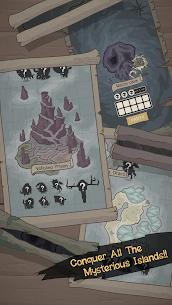
Wild Tamer uses a linear map unlock structure. Players cannot skip zones. Each biome must be cleared before the next one opens. This forces players to build a squad capable of defeating each area’s boss before advancing.
How clearing Wildland opens Necro Cave and the maps beyond
Wildland is the starting biome and the area where the druid’s core skills, equipment, and first animal squad take shape. Clearing Wildland means defeating the zone’s boss creature. After that, Necro Cave becomes available.
Necro Cave introduces darker enemy types and harder elite encounters. Many players stall here because they arrive with an unbalanced squad that performed fine in Wildland but lacks the diversity to handle Necro Cave’s creature mix. Building a multi-type squad before leaving Wildland is therefore the single most important preparation step.
What each biome — Wildland, Necro Cave, Mermaid Island, Draco — offers
Wildland provides the widest variety of Bone mammals and is the best early farming ground. Necro Cave emphasises Claw reptiles and underground creatures. Mermaid Island introduces Scale aquatic monsters and special timed events tied to the Oceanhorn sound mechanic.
Draco is the final main zone and introduces draconic and mythical creature types, including the dragon tamer path. Draco creatures are the hardest to tame and the rarest to find. However, the artifacts and equipment materials available in Draco are the strongest in the game.
What aquatic monsters and special events appear in later zones
Mermaid Island triggers special aquatic monster encounters when the Oceanhorn event sounds. These events are time-limited. Players who are online during an Oceanhorn event can access rare Scale creatures not available during standard exploration.
Additionally, Mermaid Island is the only zone where hidden aquatic bosses spawn. These bosses drop rare materials used to craft the most powerful late-game weapons. Because event timing is unpredictable, players who farm Mermaid Island regularly are more likely to encounter these opportunities.
What Artifacts, Weapons, and Equipment Do in Wild Tamer
The druid is not a passive commander. Personal equipment directly affects combat performance. Players who ignore the blacksmith crafting system will find later bosses increasingly difficult regardless of squad quality.
How the blacksmith crafting system produces weapons and armor
The blacksmith sits inside the cave base. Players bring materials harvested from defeated creatures and exchange them for weapons, armor, boots, and masks. Each equipment slot raises specific combat stats. Weapons raise attack. Armor raises defense. The Miner’s Mask is widely considered the most impactful piece because it improves diamond resource recovery during exploration.
Upgrading equipment becomes significantly more expensive from Map 4 onward. Therefore, players should begin consistent material collection from the first biome rather than relying solely on taming. A steady supply of crafting materials keeps equipment upgrades from bottlenecking progression.
What artifacts are available and how they shape battle style
Artifacts in Wild Tamer function as secondary equipment slots that give the druid passive bonuses during battle. Different artifacts suit different playstyles — some enhance the druid’s direct damage output, others accelerate creature recovery speed, and some boost squad attack across all five animal slots simultaneously.
Players who prefer large swarm squads benefit most from squad-wide artifacts. Players who rely on two or three powerful Hero animals gain more from individual attack amplifiers. Consequently, artifact selection should mirror the squad composition the player has invested in most.
How equipment stats affect the druid’s attack and defense
The spiritual rock inside the cave provides temporary stat boosts to both attack speed and movement speed. These buffs last for a set duration. Players who activate the spiritual rock before entering a difficult biome will notice a measurable difference in how quickly the druid and the squad clear encounters.
Defense stats matter more than many beginners expect. Because Wild Tamer is a real-time action game, the druid takes direct damage from elite and boss creatures. Armor investment prevents early runs from ending abruptly on map bosses.
Best Wild Tamer Tips and Tricks for Beginners
How to prioritise cobweb-marked animals over gold-drop animals early
New players often attack every creature on screen. However, creatures without a cobweb mark only drop gold when defeated. Gold is useful, but it is far less valuable early on than building out the animal roster. Therefore, beginners should scan every creature before engaging and prioritize those with the cobweb mark.
This approach also saves time. Attacking non-tameable creatures delays farming runs without adding squad depth. By the time players reach Necro Cave, a roster gap in any of the four beast types will become a real problem. Prioritising cobweb marks from the first session prevents this.
How to balance beast types for stronger squad battles in each biome
Each biome skews toward specific beast type enemies. Players who carry only Bone mammals into Necro Cave will struggle because Claw reptiles counter them there. Before entering a new zone, check the current roster and ensure at least one representative from the types the new biome favors.
A practical starting target is two Bone mammals, one Claw reptile, and two Wing insects by the end of Wildland. This spread handles Necro Cave’s early sections well and gives enough diversity to survive until better Scale animals are available on Mermaid Island.
How to avoid stalling in the gold grind on Map 4 and beyond
Map 4 is where many players hit a hard wall. Equipment upgrade costs jump sharply. Players who spent all their gold in earlier maps on unnecessary purchases find themselves unable to afford the upgrades needed to survive boss encounters.
The fix is simple: sell duplicate low-level tamed animals consistently. Each sold creature returns a chunk of gold. Moreover, farming the same biome repeatedly for materials — rather than rushing to the next zone — keeps both gold and crafting resources at sustainable levels. Players who treat Map 3 as a farming ground rather than a zone to immediately exit will arrive at Map 4 far better prepared.
Frequently Asked Questions About Wild Tamer
Is Wild Tamer free to play on Android and iOS?
Wild Tamer is completely free to download on both Android and iOS. The Android version requires Android 5.0 or above, while the iOS version requires iOS 10.0 or above. The game includes optional in-app purchases for diamonds and premium items, but the core taming and progression systems are fully accessible without spending money.
How many animals can you have in your party in Wild Tamer?
Wild Tamer allows up to five animals in an active party at any time. Players build their roster from the lobby’s animal menu, where tamed creatures can be equipped, swapped, levelled up, or sold for gold. Keeping a balanced party of five animals across different beast types is the recommended approach for clearing each new biome.
Does Wild Tamer have an offline mode?
Wild Tamer supports offline single-player play. The game is categorized as a single-player offline title on app stores, meaning the core gameplay — including taming, farming, crafting, and map progression — does not require an internet connection. Leaderboard features and some event content may require connectivity, but the main game runs fully offline.
Why Wild Tamer Is Worth Your Time as a Beast Tamer
Wild Tamer is best suited for players who enjoy incremental army-building, creature collection, and action RPG combat in a compact mobile format. It rewards patience — specifically, players who farm deliberately, build balanced squads early, and invest in the Hero animal levelling system before rushing to the next biome. For anyone who has bounced off gacha-heavy mobile titles and wants a creature tamer with real strategic depth beneath a casual surface, this game delivers more than its minimalist presentation suggests. After spending time in Wildland and Necro Cave, the progression system genuinely hooks — the moment a maxed Hero wolf starts one-hitting elites that once felt impossible is concrete proof that the grind pays off.
Images

Download links
ℹ️ Download link not working? Please refresh the page and try again.
About Game
- There is a free purchase feature in the game, just click on the price buttons of diamonds, features or animals sold for real money, they will be active when you close and reopen the market. (It has no connection with real purchases)
Related apps




What's new
Security updates and improved app stability.
New Apps
Most Played Mobile Games


