
Very Little Nightmares APK (FULL GAME)
BANDAI NAMCO Entertainment Europe
Oct 30, 2025
510 MB
1.2.6
12

Description
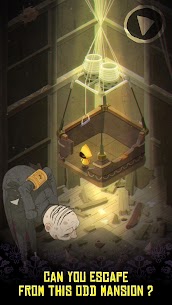
The Girl in the Yellow Raincoat crash-lands inside the Nest, a maze-like mansion ruled by the Pretender, where every single room is a deadly puzzle with no safe ground. This post is written for new iOS and Android players who want to get through all 18 levels without frustration. It covers the tap navigation system, jack-in-the-box collectibles, enemy patrol patterns, and the hardest puzzle types in the game.
What Is Very Little Nightmares and How Does It Play
Alike Studio built this game for Bandai Namco Entertainment, releasing it on iOS and Android in May 2019. It functions as a prequel to the original Little Nightmares console series. The game sits entirely in the palm of your hand. However, its tension matches anything on a larger screen.
The tone is creepy and unsettling throughout. The visual style stays deliberately soft. That contrast — cute character designs against a genuinely hostile environment — makes the Nest feel so effective. Every room introduces new danger but also new tools to work with.
The game has 18 levels in total. Each one is a self-contained room inside the Nest. Players progress by solving the puzzle in each room before moving forward. There are no open-world areas and no backtracking across levels.
What the top-down grid tap system is and how it controls the Girl
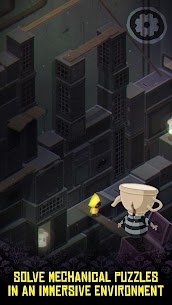
The core mechanic is a top-down grid-based tap system. Players tap the screen to direct the Girl in the Yellow Raincoat to walk, run, or interact with objects. This differs significantly from side-scrolling platformers. There is no joystick and no button layout. Every action flows through a single tap input.
Tapping close to the Girl sends her walking. Tapping farther away makes her run. And tapping directly on an object — a lever, a box, a door — triggers an interaction. Because all three actions share the same input method, precision matters. Hasty tapping often sends the Girl into danger instead of away from it.
The Nest, the Pretender, and the story setup behind the escape
The Nest is the game’s only setting. It is a vast, crumbling mansion filled with traps, hostile residents, and hidden passages. The Girl crash-lands here when her hot-air balloon pierces the mansion’s roof. She then navigates every room on foot to find an escape route.
The Pretender is the main antagonist. She is a spoiled child who controls the Nest and has turned kidnapped children into dolls. The Girl repeatedly encounters other characters — Nomes, the Kid with the Red Scarf, and Six — as she works through the building. The story unfolds without dialogue. Environmental detail and visual storytelling carry the entire narrative.
How Very Little Nightmares compares to Fran Bow and Limbo on mobile
The closest mobile comparisons are Fran Bow and Limbo, both available on Android and iOS. Limbo uses a side-scrolling 2D format with silhouette visuals. This game uses a top-down perspective with colour and character detail. Additionally, Limbo gives players direct movement control through a virtual stick. The tap-to-move input here replaces that entirely.
Fran Bow is a point-and-click horror adventure with heavy dialogue and item inventory mechanics. Very Little Nightmares has no inventory system and no spoken story. The puzzles in the Nest rely on environmental logic rather than item combination. Players who prefer shorter, tighter horror sessions tend to find this title more immediately accessible than Fran Bow.
How the Tap Navigation System Works
Understanding the tap navigation system is the most important skill in this game. However, what trips up experienced players is not the basic input — it is what happens when the path is blocked or the grid has multiple route options. The Girl does not reroute automatically around obstacles. She stops at the first blocked point and waits for a new tap.
This means players must plan routes in segments, not as single long-distance taps. Tapping across a crowded room in one input almost always sends the Girl into a hazard mid-path. Instead, tapping to the nearest safe position first — then reassessing — is the correct movement discipline throughout the game.
There is also a processing delay between tap input and the Girl’s arrival at the destination. She walks or runs toward the tapped point rather than teleporting. Because of this, players who tap the next position before the Girl reaches the current one often create conflicting inputs. Waiting for each movement to complete before tapping again prevents most navigation errors.
How tapping moves the Girl through each grid room
The game calculates the shortest available path from the Girl’s current position to the tapped point. However, if an obstacle lies between those two points, she stops rather than rerouting around it. Players must then tap a new intermediate point to navigate around the block.
Short taps close to the Girl produce slow, careful movement. Long taps across the room trigger running. Running is necessary for chase sequences. However, it generates noise. Some enemies react to movement noise. Because of this, the tap distance the player chooses directly affects how enemies respond.
How running, hiding, and interacting with objects all use the same tap input
All actions share one unified tap system. There are no separate action buttons anywhere on screen. Tapping a hiding spot — a wardrobe, a large container, furniture — triggers the hide animation directly. Players must identify hiding spots visually before a threat appears, not during it.
Interacting with objects works the same way. Tapping a lever activates it. Tapping a crate pushes it. And tapping a door opens it. The consistency of this input method means players never need to switch between control modes. However, it also means tapping the wrong object under pressure has immediate consequences.
What happens after the Girl reaches the exit of each room
Each level ends when the Girl reaches the room’s exit point. The exit is not always a door. Some levels use a vent, a hole in the wall, or an outdoor path as the exit trigger. Reaching the exit automatically loads the next level.
There is no checkpoint within a level. If the Girl is caught or killed, the entire current level restarts. This restart mechanic reinforces careful play over rushed movement. Additionally, any jack-in-the-box found in a secret room during that attempt counts as collected even if the player subsequently dies before reaching the exit.
How the Room Puzzle System Works in the Nest
Each of the 18 rooms presents a unique puzzle. No two rooms share the same solution method. Some require moving objects in a specific order. Others require timing movement around environmental hazards. A few involve near-darkness or reading visual information before touching anything.
The puzzle design rewards observation. Players who scan the full room before tapping anything solve levels faster than those who move immediately. Most rooms contain all the information needed to solve the puzzle within the visible frame. However, some critical clues sit just off-screen and require moving the Girl to a specific position before the full solution becomes visible.
The game provides no hints and no help button. This is exactly how Alike Studio designed it. The Nest’s puzzles feel isolating on purpose. However, this also means a single missed environmental cue can stall progress for several attempts.
How the Nest’s cause-and-effect room chain works in Very Little Nightmares
Every level operates as a closed cause-and-effect chain. The objects, hazards, and interactive elements in a room all exist specifically for that room’s puzzle. Nothing carries over to the next level. This makes each room a fresh problem.
The logic follows simple chains. Moving a barrel opens a path. Pulling a lever drops a platform. Turning a crank positions a hook. When players feel stuck, the solution is almost always the one object they have not yet interacted with. The room will not progress until every link in its chain activates in order.
What environmental objects the Girl uses to solve each room
The Nest’s rooms contain crates, barrels, levers, cranks, hooks, and movable furniture. Each type behaves consistently across all 18 levels. Crates stack. Levers toggle. Cranks rotate. Players who internalize these rules quickly recognize what each new object does without testing it under pressure.
Some rooms introduce one-off elements — spider-silk passages, landfill garbage, swinging chandeliers. These appear in specific levels only. However, the Girl interacts with all of them through the same tap input. So the control method stays constant even when the object type changes.
How the fuse puzzle and searchlight puzzle types differ from standard rooms
Two puzzle types in the Nest differ from the standard cause-and-effect rooms. The fuse puzzle requires tracing wires on a wall to identify which switch connects to which terminal. The correct sequence must activate in the right order. Tapping the wrong switch resets all previous inputs. The key is following each wire from its switch label to its terminal before touching anything.
The searchlight puzzle type requires timing instead of object logic. Security eyes and moving searchlights patrol fixed routes. Players must move the Girl through gaps between sweeps. Because these puzzles penalise movement rather than wrong object use, they demand watching patrol rhythm rather than scanning for interactive objects.
How Enemies Behave and When to Run
The Nest contains multiple enemy types. Each follows a distinct patrol pattern. Understanding that pattern — rather than reacting to it — is how the Girl survives. Every enemy follows a fixed routine. None of them randomise. Because of this, players who observe before moving always find a safe window.
The most dangerous mistake in enemy encounters is tapping too early. Players who tap the moment an enemy turns away often send the Girl directly into the enemy’s return path. Waiting for the full turn — until the enemy’s back is completely facing the Girl — before tapping is the correct timing in almost every encounter.
Additionally, sound matters throughout the Nest. The Girl’s running footsteps attract attention from audio-sensitive enemies. Therefore, players moving through audio-sensitive rooms should use short, close-range taps to keep the Girl walking rather than running.
How the Pretender’s patrol pattern works and when to move
The Pretender appears in multiple levels and in the final boss sequence. Her patrol pattern in indoor rooms follows a predictable left-right sweep. She moves, pauses, then turns back. The safe movement window is the pause phase — not the turn. Players who tap during her mid-turn send the Girl into her detection zone as the sight line finishes rotating.
In the final cliff sequence, the Pretender pursues the Girl headfirst down a slope. This sequence requires waiting for a specific event — another character dropping a boulder — before acting. The boulder event happens automatically. However, players who sprint immediately will be caught before it triggers. Waiting for the boulder is the only action that opens the escape window.
How the garbage-burrower level forces timed movement decisions
One level places the Girl in the Nest’s landfill, where an unseen garbage-burrower moves beneath the surface. Players cannot see it directly. Its position shows through movement disturbances in the garbage pile. Reading those visual signals before tapping is the only way to navigate this level safely.
The level requires a specific movement chain: open the dumpster lid, sprint to the box, then use the crank. Each step has a time window before the burrower closes in. Acting immediately after each step — rather than pausing to reorient — is what makes this level manageable. Memorising the two-step chain beforehand removes most of the pressure.
How the Butler and other Nest residents move during room sequences
The Butler appears in later indoor levels, including the dining room sequence. He moves slowly but covers a wide detection radius. He will not detect the Girl through walls. However, he investigates any noise near his position. In the dining room, players must time movement between the Butler’s slow turns while using chairs and table structures as cover.
Other Nest residents — including the transformed child dolls — occupy fixed positions or short patrol routes. They function as obstacles rather than active chasers. Players navigate around them using the same pause-and-observe method that works against every enemy in the game. Consequently, no enemy type in the Nest requires fast reflexes — only patient observation.
How the Jack-in-the-Box Collectibles and Progression Work
The jack-in-the-box system is the game’s primary collectible mechanic. There are exactly 18 boxes hidden throughout the 18 levels. Each box sits inside a secret room behind a crack or hole in a wall. Most secret rooms also contain one or two Nomes.
Collecting all 18 boxes unlocks a final secret room on Level 3 — behind the first security eye — that players cannot access any other way. That hidden room contains a television, additional story context, and an exclusive achievement. Players who want full completion must find every box on their first pass through each level.
Each box is a permanent unlock once players open it. The achievement screen records every named box collected. So players track their progress without replaying completed levels unnecessarily.
How the jack-in-the-box system tracks progress across all 18 levels
The achievement screen lists all 18 slots and fills them as players find and open each box. Each box releases a small puppet themed after characters from the wider Little Nightmares universe. The designs vary in colour and character across all 18 levels.
Players cannot see remaining uncollected boxes on the main game screen. Because of this, keeping a mental note of which levels produced a box is useful during a first playthrough. Most boxes sit in secret rooms accessed through a crack or hole between the main puzzle path and a side wall.
What secret rooms hidden in wall cracks contain and how Nomes signal them
Every secret room contains one jack-in-the-box and usually one or two Nomes. The rooms sit behind wall cracks — small openings the Girl crawls through. Most cracks are subtle. They do not glow or highlight on screen. Players must visually scan walls for uneven edges or recessed openings.
The most reliable method for finding secret rooms is following the Nomes. When a Nome runs off-screen, it almost always enters the wall crack leading to the hidden room. This mechanic is built into the level design deliberately. Watching which direction Nomes move before they disappear reveals the crack location in nearly every level.
What the full collection of 18 boxes unlocks in the achievement system
Collecting all 18 jack-in-the-boxes completes the game’s achievement tier at the Collector and Obsessive Completist level. Additionally, the full set unlocks the secret room on Level 3 with its television and story-relevant detail. The achievement system also tracks death counts and story completion separately.
One hidden achievement — tied to a hatched egg in an air vent on Level 3 — requires a specific action outside the main puzzle path. Players must crawl through a vent near the beginning of Level 3 to find a secret room and hatch the egg. Completing the full achievement set therefore requires a dedicated second pass through Level 3 specifically.
What Common Mistakes Slow Players Down in Every Level
Most player deaths in the Nest come from three repeated errors. First, tapping too quickly after an enemy turns. Second, ignoring Nomes entirely and missing wall cracks. Third, entering the Pretender’s final sequence without understanding that waiting — not running — is the correct response. However, each of these errors is avoidable with the right prior knowledge.
The game provides no tutorial. Players learn by dying. But the deaths feel fair because the room resets completely each time. Each restart gives a full view of the room layout again. Paying attention to what caused the previous death — rather than immediately replicating the last movement — shortens the time to solving each level significantly.
Additionally, many players overlook the fuse room clue. The wiring diagram sits on the wall behind the door in the dark room. Players who open the door immediately lose sight of it. Reading the wall before opening the door makes this puzzle solvable in a single attempt.
Why rushing tap inputs causes the Girl to miss hidden exits and secret rooms
The grid system creates a timing gap between tap input and character arrival. Players who tap rapidly through a room often move the Girl past wall cracks without entering them. She will not automatically enter a crack when she passes near it. Players must tap directly on the crack opening to trigger the transition.
Because of this, slowing down during the environmental scan phase — before any enemies appear — is not wasted time. It is when jack-in-the-boxes get found and alternate exits get identified. Rushing through open sections of a room is the single most common reason players finish 18 levels with only 10 or 12 boxes collected.
Why players miss the wall crack entrances on early levels by ignoring Nomes
Nomes appear frequently in early levels. Many players tap past them without observing where they go. In the level design, Nomes consistently run toward wall cracks. Their movement is a deliberate visual cue Alike Studio built into every level they appear in.
On Level 2, the Nome runs directly toward the crack that leads to the second box. On Level 5, standing on cracked ground near freed Nomes drops the Girl to the lower level where the hidden room sits. These events look coincidental on first observation. However, they are intentional design signals. Players who follow Nomes find boxes. Players who ignore them miss them.
Why the Pretender’s final cliff sequence ends in failure without pausing first
The Pretender’s final cliff sequence is the most frequently failed moment in the game. The Girl stands at the top of a slope with the Pretender chasing. Most players immediately tap downward and sprint. This leads to capture because the escape window has not yet opened.
The escape requires a second character to drop a boulder onto the Pretender. That event triggers automatically at a fixed moment. However, it will not happen unless the Girl is in the correct position and the player has not already committed to a premature sprint. Pausing briefly at the top of the cliff allows the boulder event to trigger. After that, the final sprint to safety becomes straightforward.
Best Very Little Nightmares Tips and Tricks for Beginners
Starting well in this game is mostly about resisting the instinct to tap fast. The top-down grid system rewards deliberate, observational play over reflexes. Players who spend two to three seconds scanning a new room before touching the screen will finish levels faster than players who move immediately after loading.
The game does not penalise pausing. Nothing in the Nest activates until the Girl moves. Therefore, using the loading moment of each new level to read the space is always safe. Additionally, treating each death as information is the correct mindset. Every death teaches something specific about the room’s mechanics or enemy timing. Players who ask what went wrong — rather than simply trying the same approach again — progress much faster.
How to use tap timing to stay one step ahead of the Pretender’s patrol cycle
The Pretender follows a consistent left-right patrol in every indoor room she appears in. Her cycle has three phases: move, pause, and turn. The only safe movement window is during the pause phase — not during the turn. Players who tap while she is still mid-turn will send the Girl into her detection zone as the sight line finishes rotating.
The correct method is to wait for the full pause — when the Pretender stands completely still — before tapping. Then tap to the next cover point only. One position at a time. This tap timing applies in every room where she appears. Using it consistently prevents almost all Pretender captures outside of the final cliff sequence.
How to spot wall cracks that lead to secret jack-in-the-box rooms by following Nomes
The fastest way to find every jack-in-the-box is watching the Nomes. When a Nome is present in a room, observe its movement direction before tapping elsewhere. Nomes run toward the wall crack that leads to the nearest secret room. Following their path immediately — before starting the main puzzle — locates the hidden room without any guesswork.
On levels where no Nome is visible, scan horizontal walls for small indentations or asymmetric edges. The cracks are narrow but consistent in visual style. They look like a gap in the wall panelling or a low rectangular recess. Tapping directly on that recessed edge sends the Girl through to the secret room behind it.
How to approach the fuse puzzle room by reading the wire diagram before touching anything
The fuse puzzle room includes a wiring diagram mounted on the wall behind the door. This diagram maps each switch to its terminal. Players who open the door immediately lose sight of the diagram. Therefore, the correct approach is reading the diagram before opening the door or touching any switch.
Stand the Girl in the starting position and look at the back wall first. Follow each wire from its switch label to its connected terminal. Note the correct sequence. Only then interact with the switches in that order. Activating a switch out of sequence resets all previous inputs. Reading the diagram first makes this puzzle solvable in a single attempt every time.
What Players Ask Most About Very Little Nightmares
Is Very Little Nightmares available on Android and iOS?
Yes. Alike Studio developed Very Little Nightmares and Bandai Namco Entertainment published it on both Android and iOS in May 2019. A premium version called Very Little Nightmares+ is also available on Apple Arcade. The standard version on Google Play and the App Store is a paid download priced at $6.99, not a free-to-play title.
How long does it take to finish Very Little Nightmares?
Very Little Nightmares contains 18 levels and most players complete the main story in roughly two to three hours. Players focused on finding all 18 jack-in-the-box collectibles will extend that to three to four hours. The game is deliberately compact, prioritising atmosphere and puzzle quality over length, which suits the mobile format well.
Does Very Little Nightmares have replay value after completing the story?
Yes. Very Little Nightmares offers replay value through its 18 jack-in-the-box collectibles, its hidden achievement system, and the secret room on Level 3 that unlocks only after full box collection. Players who finish the story without all boxes have a clear reason to replay specific levels. Additionally, the bittersweet ending gains additional meaning on a second pass.
What Type of Player Will Get the Most From This Game
Very Little Nightmares suits players who enjoy atmospheric puzzle games and value a short, focused mobile experience. It is not for anyone expecting open-world content or extended play sessions. However, for players who value tight level design, environmental storytelling, and collectible hunts with real payoff, the Nest delivers all three in a format that works exceptionally well on a phone screen.
Having played through all 18 levels, the moment that stayed with me longest was following a Nome down a narrow wall crack and finding the first jack-in-the-box in a room full of detail Alike Studio did not have to include. That attention to hidden craft separates this title from most mobile puzzle games in the same price range. If you enjoy horror atmosphere and careful puzzle logic, this game is worth every cent.
Images



Download links
ℹ️ Download link not working? Please refresh the page and try again.
Developer's apps

Related apps





What's new
General bug fixes and improvements.
New Apps
Most Played Mobile Games


