
The Walking Dead: Season One APK (Episodes Unlocked)

Description
The Walking Dead Season One places you in rural Georgia at the start of a zombie outbreak, handing you control of a convicted criminal who becomes a scared girl’s only protector. This walkthrough is written for beginners who just downloaded the game and returning players who want a refresher on the choice system. It covers the core timed dialogue mechanic, how progression and achievements work, the real monetization structure, and the mistakes that trip up new players most often.
The Walking Dead Season One Game Overview
Telltale built this title as a five-episode story campaign, not a traditional level-based game. There is no health bar to manage or skill tree to fill out. Instead, everything you do funnels into one continuous narrative that remembers your choices from the first minute to the last credits roll.
What the Timed Dialogue System Is and How It Works
Every important conversation in the game gives you only a few seconds to respond. A countdown bar appears on screen, and if it runs out, your character stays silent, which the game treats as its own kind of answer. This pressure is deliberate. It pushes you toward gut reactions instead of the safest, most calculated line.
The system does not brand these responses right or wrong. Instead, it logs them as determinants, quiet flags that shift how other characters treat you later. A harsh word to Kenny in Episode 1 can echo in a tense scene three episodes later, even if you never notice the connection at the time.
The Setting, Tone, and Story Premise
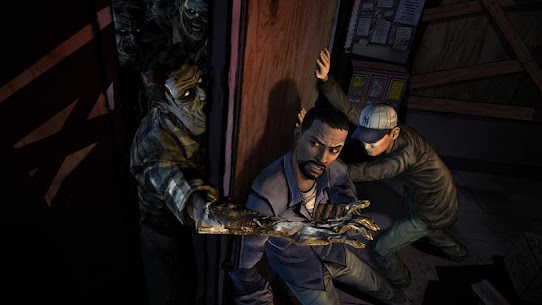
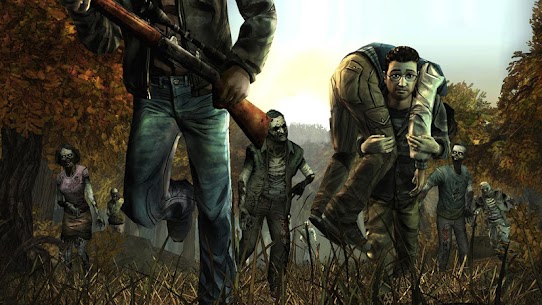
Lee Everett wakes up in a police car headed to prison just as the outbreak begins, and within minutes he crosses paths with Clementine, a young girl hiding alone in her family’s home. Their bond becomes the emotional spine of the entire season. Betrayal, food shortages, and hard moral calls surround the pair as they try to survive rural Georgia alongside a shifting group of other survivors.
The tone stays grounded and personal rather than action-heavy. Most of the horror comes from what desperate people do to each other, not from the walkers themselves. Because the cast is largely original to the game rather than pulled from Robert Kirkman’s comics, the story runs as its own self-contained arc, occasionally crossing paths with the wider mythology through nods to Deputy Sheriff Rick Grimes.
How This Game Compares to Similar Mobile Titles
Life is Strange is the closest mobile comparison in terms of structure, since it also uses episodic choices that ripple forward through later chapters. However, Life is Strange leans on a time-rewind mechanic that lets you undo mistakes, while The Walking Dead Season One never lets you take a choice back once the timer runs out.
The Wolf Among Us, also made by Telltale, shares nearly identical controls and pacing but trades the zombie outbreak for a noir mystery in the Fables universe. If you finish this season and want more of the same timed-choice format, The Wolf Among Us is the more mechanically similar next download on Android.
Gameplay Mechanics and Controls
Three systems carry the entire experience: timed dialogue, point-and-click exploration, and short combat prompts. None of them require reflexes as sharp as a shooter, but each one shapes the story in a way that stacks up over five episodes.
How Timed Dialogue Choices Shape Determinants
When a countdown appears, tap the response that matches how Lee should actually feel in that moment rather than the answer you think a character “should” give. The game is quietly building a profile of Lee’s personality from these picks, and companions like Kenny and Clementine respond to that pattern in later scenes.
Because determinants adjust reactions rather than branching into separate storylines, you will still reach the same major story beats no matter what you choose. What changes is tone: whether characters trust you, resent you, or lean on you when things fall apart.
Point-and-Click Exploration and Item Examination
Outside of dialogue, you walk Lee through each scene and tap on objects, doors, and people to interact with them. Examining items often reveals small story details or unlocks new topics of conversation with nearby characters. This exploration never blocks progress with a puzzle you cannot solve, since the game keeps pacing tight and story-first.
Take a moment in each new location before moving on, since some of the best character writing sits in optional examine prompts rather than the main plot thread. Skipping them will not break anything, but it does leave story texture on the table.
Quick-Time Combat During Walker Encounters
Combat arrives in short bursts when a walker gets close, and you respond with on-screen prompts like swipes or taps rather than a full combat system. These sequences move fast, so you need to watch the screen rather than the dialogue text during a walker attack.
Missing a prompt does not always mean instant failure, though a few key encounters do carry real story consequences if you fumble them. Treat every walker sequence as a moment to stay fully focused rather than a background action beat.
Lee and Clementine’s Story Across Five Episodes
The season unfolds as one continuous arc split into five chapters, each ending on a cliffhanger that carries straight into the next. Save data automatically pulls forward your major and minor decisions, so nothing resets between episodes.
Episode Structure From A New Day to No Time Left
Episode 1 opens with Lee’s arrest and his first meeting with Clementine, setting up the guardian relationship that drives everything after it. Each following episode raises the stakes further, introducing new locations, new threats, and harder calls about who to trust within the survivor group.
By the final episode, the choices made across the earlier four chapters converge into a heavy, emotional finish. Because determinants have been quietly accumulating the entire time, two players can reach the same ending scene with very different relationships to the characters standing beside Lee.
The Role of the Survivor Group and Kenny
Kenny stands out as the season’s most reactive companion, since his trust in Lee shifts noticeably based on determinants set early in the story. The wider survivor group functions less like a static cast and more like a pressure test, with scarcity and fear constantly threatening to fracture the alliance.
Your standing with this group is never shown as a number or meter. Instead, it surfaces through dialogue options, body language in cutscenes, and who backs you up during a crisis.
The Choice-Comparison Stats System
At the close of every episode, the game shows you a summary screen comparing your specific decisions against the wider global player base. This is the closest thing the game offers to a meta-progression layer, and it exists purely to add context rather than to reward or punish you.
How the End-of-Episode Summary Screen Works
The screen lists your major choices from that episode alongside a percentage showing how many other players picked the same option. It never labels a choice as popular or rare in a judgmental way. Instead it simply reports the numbers so you can see where you land compared to everyone else.
Why Determinants Change Character Reactions, Not the Ending
It is worth repeating that this system never splits the story into separate paths. The major plot beats stay fixed regardless of your percentages on the summary screen. What shifts is the emotional texture around those beats, since companions remember specific things Lee said or did earlier in the season.
Replaying Episodes to See Different Determinant Outcomes
Because determinants are subtle, a second playthrough with opposite choices reveals dialogue and small character beats you likely missed the first time. This replay value is one of the season’s strongest features, since the choice-comparison stats give you a concrete reason to go back and test a different approach with Lee.
Progression and the Achievement System
There are no experience points, currencies, or gear tiers anywhere in this game. Progress is measured entirely by how far you have moved through the story campaign, episode by episode.
How Story Progress Replaces Traditional Leveling
Completing an episode is the only form of advancement that matters here, and the game maintains a single difficulty level throughout so mechanical skill never gates your progress. Story is the entire scoreboard, and every save file simply marks how far Lee’s journey has gone.
What Achievements and Trophies Exist and Where They Unlock
On console and Steam versions, Achievements and Trophies unlock for reaching key story beats, surviving specific encounters, and making particular determinant choices rather than for collecting objects. There is no shop or unlockable-cosmetics system tied to these, so hunting them is purely about experiencing more of the story’s branches.
What Finishing All Five Episodes Plus 400 Days Unlocks
Completing the full season, including the non-linear 400 Days chapter, rounds out the complete achievement list on supported platforms and sets up the emotional groundwork for The Walking Dead: Season Two. The 400 Days stories can be tackled in any order, and each one plants small threads that Season Two later picks back up.
Monetization and In-App Purchases
Telltale built the mobile release around a simple structure: try before you buy, one episode at a time. There is no premium currency shop and nothing to grind toward, so the entire spending decision happens up front.
What Episodes 2 Through 5 and 400 Days Unlock
Episode 1, “A New Day,” downloads for free and gives you the full opening chapter of the story. Episodes 2 through 5 and the 400 Days bonus chapter are each sold individually as in-app purchases, or bundled together at a discount through the Season Pass, which grants immediate access to all remaining content in one purchase.
Whether the Game Is Pay-to-Win, Free-to-Progress, or Cosmetic-Only
Based on its confirmed Demo+Paid monetization type, this is neither pay-to-win nor cosmetic-only. Nothing you buy grants a mechanical advantage, since the game has no combat stats to boost in the first place. Payment simply unlocks additional story content, functioning closer to buying the next chapter of a book than purchasing power in a competitive game.
Whether Ads Are Present During Episodes
No advertising interrupts gameplay in the free episode or any purchased episode. The free-to-download first chapter exists purely to let you sample the writing and controls before committing money to the rest of the season.
Common Mistakes New Players Make With Timed Choices
New players often approach the countdown timer like a quiz with a correct answer, and that mindset causes some avoidable stumbles early on.
Freezing During the Countdown Timer
Overthinking a timed choice is the single most common mistake, since hesitation often burns the whole countdown and forces a default silent response. Silence carries its own weight in this game, so an accidental non-answer can land very differently than an intended one.
Ignoring How Silence Counts as a Choice
Some players assume that saying nothing is a neutral, safe option. In reality, staying silent is logged as a determinant just like any spoken line, and characters can read it as coldness or hesitation. Treat the timer running out as a real decision, not a pause button.
Missing Quick-Time Prompts During Walker Attacks
Because combat prompts appear briefly and without much warning, players who are still reading earlier dialogue text sometimes miss the first cue entirely. Staying visually alert the moment a walker enters a scene prevents most of these missed inputs.
Best The Walking Dead Season One Tips and Tricks for Beginners
These tips focus on the parts of the experience that are unique to this game’s timed-choice format rather than generic adventure-game advice.
Reading the Room Before Every Timed Choice
Pay attention to who is standing nearby before a countdown starts, since determinants are often character-specific rather than global. A line that reassures Clementine might simultaneously worry Kenny, so weigh the immediate audience, not just the words themselves.
Tracking Determinants Across the Survivor Group
Keep a loose mental note of harsh or kind moments toward specific characters across episodes, since the payoff for these choices often arrives several chapters later. This is especially true for your relationship with Kenny, whose trust shifts noticeably based on early determinants.
Preparing for Quick-Time Events Before They Start
Whenever a scene ramps up tension with a walker nearby, expect a prompt within seconds and keep your attention on the character models rather than any remaining dialogue box. This single habit prevents most missed quick-time inputs during the season’s tensest moments.
Frequently Asked Questions About The Walking Dead Season One
Is The Walking Dead Season One available on mobile devices?
Yes. It runs on both iOS and Android, with the Android build currently at version 1.23. Minimum requirements include a dual-core 1GHz CPU, 1GB of RAM, and an Adreno 200, Mali-400, PowerVR SGX540, or Tegra 3-class GPU, and the mobile release has passed 10,000,000 installs on Android alone.
How long does it take to finish The Walking Dead Season One?
Each of the five episodes typically runs between one and two and a half hours, so a full playthrough with the 400 Days chapter generally lands somewhere around eight to ten hours. Exact length varies since some players linger on optional dialogue and examine prompts while others move through scenes quickly.
Does 400 Days connect to The Walking Dead Season Two?
Yes. This non-linear bonus chapter tells five interwoven short stories that bridge Season One and Season Two, planting characters and threads that resurface once Season Two begins. It can be played in any order and works as a short between-seasons chapter rather than a required prerequisite.
Who Should Play The Walking Dead Season One
This season fits players who want a story-first experience over a mechanically demanding one, especially anyone new to narrative adventure games looking for an accessible entry point. Fans of shows like the source comics will appreciate the foreshadowing toward Rick Grimes without needing prior knowledge of the wider universe to follow along. Returning players chasing different determinant outcomes will find real replay value in a second pass with opposite choices. Having played through the full season myself, Lee and Clementine’s relationship is what stays with you long after the credits roll, and the timed-choice format still holds up as one of the more honest ways a game has handled moral pressure. Anyone drawn to character-driven stories over combat systems should install this one.
Images



Download links
ℹ️ Download link not working? Please refresh the page and try again.
Developer's apps


Related apps




New Apps
Most Played Mobile Games


