
Sonic Mania Plus APK (FULL GAME)

Description
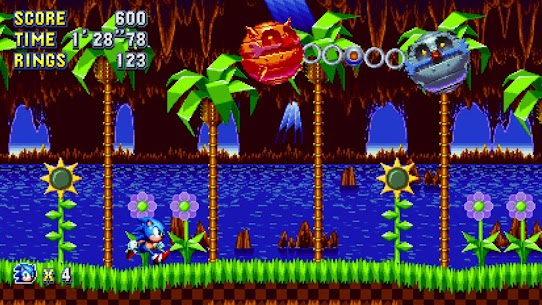
Sonic Mania Plus drops five playable characters into thirteen zones of pixel art platforming, and every one of them handles differently. New players who keep dying to Badniks in Chemical Plant Zone will find the ring habit that fixes it here. Rings work as a health bar, so a run carrying forty rings survives mistakes that end a run carrying zero.
How to Play Sonic Mania Plus on Android
Sonic Mania Plus is a side-scrolling platformer where players run, jump and spin through thirteen zones as Sonic, Tails, Knuckles, Mighty or Ray. Each act ends at a boss fight against Dr. Eggman or one of his Hard-Boiled Heavies, and carried gold rings absorb one hit before a character dies.
The mobile release arrived through Netflix Games in May 2024. A Netflix membership opens it on Android 8.0 or later, with no ads and no in-app purchases anywhere in the package. Single player is the only option here, so the old couch co-op sits this one out.
Momentum drives everything else. Slopes build speed, and speed opens the upper routes where the game hides its best rewards. Because eight of the thirteen zones revisit earlier SEGA titles, returning fans recognise half the map set instantly.
What the Ring Damage System Does in Each Act
Rings serve two jobs at once. They count toward your score, and they stand between a character and death. Take a hit while holding even one ring, and the character survives while the rings scatter across the ground.
That scatter window is short. Players get roughly a second to sweep up part of the pile before the loose rings blink out. However, a hit taken at zero rings kills instantly, which is why experienced players treat their ring count as a fuel gauge rather than a score.
Angel Island, the Phantom Ruby and Eggman’s Robot Army
The story starts on Angel Island, where Dr. Eggman’s elite Badnik squad digs up a strange gem called the Phantom Ruby. That artifact warps Sonic, Tails and Knuckles across a mix of familiar and brand new zones. Eggman’s henchmen, the Hard-Boiled Heavies, then chase the trio through every one of them.
Tone matters as much as plot here. Bright pixel art, chunky sprites and a soundtrack built on Genesis-era instruments carry the 1990s feel. For example, animal capsules still sit at the end of most acts, waiting for one final jump.
Sonic CD Classic and Sonic the Hedgehog 2 Classic Compared
Two mobile titles sit closest to this one. Sonic the Hedgehog 2 Classic offers the original 1992 layouts with Tails and Knuckles bolted on, while Sonic CD Classic adds time travel across past and future versions of each stage. Both run free on Android, though both carry ads.
The difference comes down to design ambition. Sonic CD Classic reuses a 1993 level set, and Sonic the Hedgehog 2 Classic reuses a 1992 one. By contrast, this title builds five entirely new zones and rewrites the eight returning ones with fresh gimmicks and boss patterns.
Android Version vs the Switch and Steam Versions
The console and PC releases historically sold for 19.99, with the Encore content as a separate 4.99 add-on. On mobile, the same package costs nothing extra beyond a Netflix membership, and the Encore content ships included from the first launch.
Controls separate the two experiences more than price does. A Switch or Steam player gets a d-pad and real face buttons, while the Android player gets a floating virtual stick. Bluetooth controller support closes that gap for anyone who owns a pad. Performance holds steady on most modern phones, although a few users report frame dips on older hardware.
Gameplay Mechanics, Drop Dash and Touch Controls
Touch controls place a floating virtual stick under the left thumb and a single action button under the right. That button handles jumping, and a second tap in midair triggers whichever special move the current character owns.
Movement rewards patience more than speed at first. Holding down while stationary charges a Spin Dash, and releasing fires the character forward through Badniks and up steep walls. Sonic adds the Drop Dash, a midair charge that converts a landing straight into a roll.
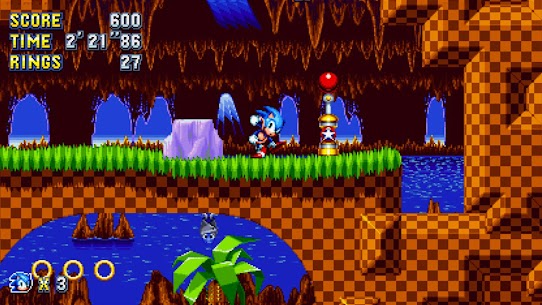
Star posts break each act into checkpoints. Reach one, and a death sends the character back there instead of to the act start. Bluetooth controllers pair through system settings and remove the virtual stick entirely.
Spin Dash, Drop Dash and Momentum on a Virtual Stick
The Spin Dash solves most vertical problems in this platformer. Charge it at the base of a slope, release, and the roll carries the character over gaps that a standing jump cannot clear. Rolling also keeps a character low, so overhead Badniks pass by untouched.
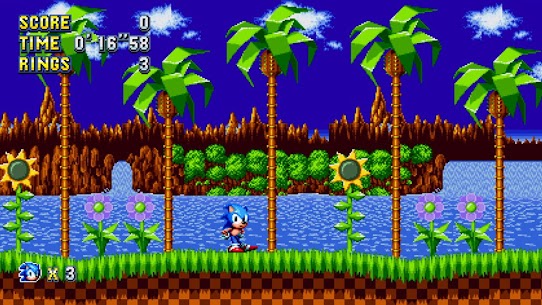
Drop Dash behaves differently on a phone. Because the input asks for a held button during a fall, thumb position matters more than timing. Players who slide their thumb rather than lifting it get cleaner results. Practice this move in Green Hill Zone first, since the wide slopes there forgive a botched landing.
Character Abilities for Tails, Knuckles, Mighty and Ray
Five characters, five movement rules. Tails flies for a few seconds and swims freely. Knuckles glides sideways and climbs sheer walls, though he jumps noticeably lower than Sonic. Mighty resists spike damage and slams the ground from midair.
Ray covers the longest horizontal distance of anyone. His glide gains height when a player pumps the stick correctly, which turns dead ends into shortcuts. As a result, character choice quietly sets the difficulty of an entire run before the first act even starts.
Star Posts, Act Clear Screens and Boss Transitions
Every act ends the same way. A boss appears, the music shifts, and the arena locks until either the boss or the character falls. Act 1 bosses tend to guard rings nearby, but Act 2 bosses rarely do.
The act clear screen tallies remaining time and leftover rings into a bonus score. Finishing under a minute pays noticeably more, which matters for anyone chasing high scores. Afterwards the animal capsule pops, the critters scatter, and the next zone loads without a menu in between.
How to Get All Seven Chaos Emeralds and Super Forms
Seven Chaos Emeralds sit inside the Special Stages, and players reach those stages by finding a giant gold ring hidden somewhere in an act. Each Special Stage sends a character chasing a UFO across a curved track, where blue spheres add time and loose rings raise top speed.
Missing one attempt costs nothing permanent. The giant ring stays available on a replay of that act, so a failed chase simply means another run through familiar ground. Most acts hide at least one, and a few hide two.
Speed is the whole puzzle. A slow character never catches the UFO, no matter how clean the driving line looks. Therefore ring pickups matter more than perfect steering during the first half of each chase.
Where Giant Gold Rings Hide Inside Each Act
Giant gold rings almost never sit on the main path. They hide behind waterfalls, above spring chains, and inside side rooms that only open from an upper route. Climbing characters find them fastest, since Knuckles reaches walls that block everyone else.
Watch for suspicious empty space. A wide, decorated area with no Badniks and no rings usually hides something above or below it. Similarly, a spring pointing at a ceiling rather than a platform is a strong signal worth chasing.
How the UFO Chase Special Stages Work
The chase runs on two meters. A timer drains constantly, and blue spheres scattered along the track top it back up. Meanwhile, rings collected during the chase push the character into higher speed tiers.
Steering feels heavier than normal platforming, so wide arcs beat sharp corrections. First, sweep the outer ring lines to hit the next speed tier. Then cut inward toward the UFO once the character moves fast enough to close the gap. Blue sphere clusters near mines deserve caution, because a mine hit drops a speed tier instantly.
What Seven Chaos Emeralds Unlock at the Ending
Collecting all seven Chaos Emeralds unlocks Super transformations for every playable character. Standing at 50 rings and double tapping jump triggers the change, which trades a draining ring supply for near invincibility and huge speed.
The full set also changes how the campaign ends. Players who reach the final zone with all seven Emeralds continue into Egg Reverie Zone, a true final battle that stays locked otherwise. Anyone finishing without them sees the shorter ending instead.
How to Unlock Encore Mode and Angel Island Zone
Finishing Mania Mode once opens Encore Mode, a remixed second campaign that begins on Angel Island Zone. Encore Mode swaps the life counter for a stock of up to five characters, and losing one simply hands control to the next in line.
Angel Island Zone exists only in this second campaign. That opening stage is where Sonic frees Mighty the Armadillo and Ray the Flying Squirrel, which is how both join the roster.
Familiar zones return with different paint. Colour palettes shift, layouts change, and enemy placement moves. Consequently a player who memorised Mania Mode routes has to rebuild that map knowledge from scratch.
Finishing Mania Mode Once to Open the Second Campaign
There is no shortcut around the requirement. A player must reach the end of the first campaign with any character before the second unlocks. Save data tracks this automatically, so no menu toggle exists.
Speed runners often clear the first campaign with Sonic, since his Drop Dash suits the original layouts best. Afterward the second campaign becomes the natural home for the two new characters. For example, Mighty’s spike resistance turns several old hazard rooms into simple walkthroughs.
Angel Island Zone and the Character Stock System
The character stock is the single biggest change, and most articles undersell it. Instead of lives, the game holds a queue of characters. Take a fatal hit, and that character leaves the queue while the next one takes over mid-level.
Losing every character in the queue ends the run outright. Item boxes drop replacement characters and swap options, so a smart player treats each box as a resource rather than a curiosity. Because the queue never refills on its own, a stock of two characters deep in a hard zone should push a player toward caution instead of speed.
Pinball Bonus Stages and Remixed Zone Layouts
The second campaign replaces the sphere collecting bonus stage with a pinball table. Flippers launch the character upward through ring lanes, and the goal is capturing extra characters for the stock queue rather than earning medallions.
Remixed layouts also change enemy logic. Badniks appear in spots that were safe before, and several routes that once led up now lead down. As a result, the remix plays like a genuine second campaign rather than a difficulty toggle.
How Medallions, Zones and Extras Unlocks Work
Progress in this platformer tracks two separate things: how far a player pushes through the zones, and how many medallions they hold. Blue Sphere bonus stages award silver medallions for clearing every sphere on the board, and gold medallions for taking every ring as well.
There are 32 medallions in total. Entry comes from star posts, so checkpoint rings matter far beyond simple respawning.
Medallions feed the Extras menu instead of the main campaign. Twenty one of them unlock the Mean Bean puzzle game, and the full set of 32 unlocks a standalone Blue Spheres option with randomly generated boards. Neither unlock affects zone difficulty, so completionists chase these purely for content.
Silver and Gold Medallions in Blue Sphere Stages
Entry works on a ring threshold. Touch a star post while holding 25 rings or more, then jump into the ring circle that appears above it. That warp drops the character onto a rotating checkerboard grid built from blue spheres and red bumpers.
The rules are simple and punishing. Touching a red sphere ends the run instantly, while surrounding a block of blue spheres converts the whole ring into bonus rings. Silver arrives for clearing the board, but gold demands every single ring on it too. Most players need several passes at a board before the gold version lands.
Mean Bean and Blue Spheres in the Extras Menu
Mean Bean unlocks at 21 medallions. It is a falling block puzzle game against a computer opponent across five difficulty levels, and it has nothing to do with running or jumping at all.
The standalone Blue Spheres option arrives at the full 32. That mode generates fresh boards endlessly in two styles, one matching the classic rules and one adding new sphere types with different effects. Both live in Extras and stay available permanently.
Time Attack Ranks and Route Practice
Time Attack strips the game down to a single act and a clock. Players pick any unlocked act, choose a character, and run it repeatedly for the best time. Restarting takes one button, which makes it the fastest practice tool in the package.
Serious route practice belongs here rather than in the campaign. Because a failed attempt costs nothing, this mode is where players test whether a Spin Dash line beats a spring chain. Practising the tricky sections of Titanic Monarch Zone here saves real lives later.
Ring Loss Mistakes, Badnik Traps and Shield Tricks
Players lose every carried ring the moment a Badnik or a spike lands a hit. That single rule explains most beginner deaths, since a second hit taken during the scatter animation kills outright.
Spikes cause more damage than enemies do in practice. They sit in blind landing spots, they line the walls of narrow shafts, and they punish careless Spin Dash charges. Water adds a separate clock, because submerged characters start a drowning countdown that only air bubbles reset.
Shields change the maths entirely. Each type absorbs one hit without dropping rings, and each grants a movement ability on top of that protection. Learning which shield suits which zone is one of the quiet skills that separates a clean run from a messy one.
Spike Contact and the Drowning Countdown
Spike hits ignore momentum. A character rolling at full speed takes the same damage as one standing still, and the knockback usually pushes the body toward a second hazard. Rolling through a spike corridor is therefore a gamble rather than a technique, unless Mighty is the active character.
Underwater sections run a hidden timer. After roughly thirty seconds without air, a countdown begins and the music changes to warn the player. Bubbles rise from vents at fixed points, so noting vent positions on the way in beats panicking on the way out.
Fire, Water and Lightning Shield Uses
Three elemental shields cover three different problems. The fire shield blocks flames and adds a horizontal dash, the water shield allows unlimited breathing and a downward bounce, and the lightning shield attracts nearby rings and grants a double jump.
Zone context decides which one to keep. Hydrocity Zone and Oil Ocean Zone both reward the water shield heavily, while the lightning shield pays best in ring dense areas before a boss. However, elemental shields die instantly to their opposing element, so a lightning shield vanishes on contact with water.
Boss Fights Where Ring Stock Matters Most
Boss arenas usually contain no rings at all. Entering one at zero rings means a single mistake ends the attempt, which is why the ring count on the act clear approach matters so much. Grabbing a stray twenty rings before the arena door is worth the detour.
The Hard-Boiled Heavies hit harder than standard Eggman machines. Several of them attack across the whole arena floor, so vertical positioning beats aggression. Wait for the recovery window after each attack pattern instead of trading hits, and the fight becomes far more predictable.
What Netflix Access Means for Cloud Saves
Every exit from the game triggers an automatic Cloud Saving backup tied to the Netflix profile in use. That backup needs an internet connection, so the same save file follows a player onto a second phone or tablet after a fresh sign in on the same profile.
No manual save button exists anywhere in the menus. Progress writes itself when the app closes properly, which means force closing the app mid act can cost the current run.
Account access sits underneath all of it. The game verifies a Netflix membership on launch, and the profile choice determines which save file loads. Players who share a household account should stay on one profile, otherwise two separate save states appear.
How Cloud Saving Backs Up Zone Progress
The backup covers what matters most: zone progress, unlocked characters, medallion totals and Extras unlocks. Switching devices restores all of it, provided the same profile signs in.
Connection quality affects timing rather than safety. A backup on weak mobile data may lag behind by a session, so finishing a long stretch on a poor connection deserves a quick app close before travelling. For example, clearing three zones offline then reinstalling immediately is the one sequence that risks losing ground.
What a Lapsed Netflix Membership Changes
Access ends when the membership does. The game stops launching without an active subscription, which is the single biggest difference between this release and a bought copy on Switch or Steam.
Save data does not vanish with the payment though. Because the file lives with the Netflix profile rather than the device, resubscribing on the same profile restores the same zone progress and medallion count. Deleting the profile itself is the action that genuinely wipes progress, so nobody should remove a profile casually.
Playing After the First Account Sign In
The first launch requires sign in through the Netflix app. After that verification, ordinary platforming sessions run comfortably on a phone with a weak signal, since the acts themselves stream nothing.
Cloud backups still want a connection. Playing a long flight session works, but reconnecting afterwards lets the save catch up before switching devices. Anyone who plays across a phone and a tablet should reconnect before swapping.
Best Sonic Mania Plus Tips and Tricks for Beginners
Knuckles jumps lower than Sonic in this platformer, so his climbing and gliding replace raw jump height as the route upward. That one difference reshapes how a beginner should approach an entire run.
Three habits fix most early problems. Carry rings into fights, treat checkpoints as bonus stage entrances, and match the character to the zone shape rather than personal preference.
Speed comes last, not first. New players who slow down and take upper routes finish acts with more rings and better clear bonuses than players who rush the bottom path. That trade pays off inside the first two zones.
Holding a Ring Buffer Before Each Hard-Boiled Heavy
Set a personal floor of twenty rings before any arena. Reaching that number costs a few seconds, and it converts one guaranteed death into one survivable mistake.
Ring boxes near the end of an act exist for this purpose. Break them on the approach rather than early, since rings taken and lost halfway through the act help nobody. Ray players benefit most here, because his glide reaches ring boxes tucked above the main path.
Farming Medallions Early Instead of Rushing Zones
Bank the 25 rings before touching a checkpoint, every time. Early zones hand out rings generously, so the first few acts are the cheapest place to build a medallion count.
Boards from early star posts also run smaller and simpler than later ones. Clearing those first builds the pattern reading skill that harder boards demand. Consequently a player who farms medallions in the opening zones reaches the Mean Bean unlock long before the campaign gets difficult.
Picking Ray or Tails for Tall Vertical Sections
Vertical rooms punish Sonic and Knuckles. Tails solves them directly with flight, and Ray solves them by gliding upward through pumped stick inputs. Both turn a nasty climb into a short detour.
Pick per zone rather than per campaign. Press Garden Zone and Titanic Monarch Zone reward flight heavily, while flat speed zones favour Sonic. Because the second campaign allows swapping mid stage, that choice becomes a live decision rather than a menu commitment.
Frequently Asked Questions About Sonic Mania Plus
Is Sonic Mania Plus free on Android?
Sonic Mania Plus carries no separate price, though it requires an active Netflix membership on an Android 8.0 device or newer. Sign in happens through the Netflix app first.
The install runs a few hundred megabytes and includes no advertising and no purchase prompts. Nothing inside the package sells anything.
How long does it take to beat the game?
Netflix support puts completion at 6 to 10 hours, depending on familiarity with the series and how much side content a player chases. Emerald hunting pushes that figure toward the upper end.
Individual acts run roughly two to four minutes for a comfortable player. That short act length makes it a strong fit for commutes and bus rides.
Does the game support controllers?
Any Bluetooth capable controller pairs with the game and replaces the on-screen input entirely. Pairing happens in device settings rather than inside a menu.
Time Attack adds a small extra for pad users, since it saves replays of completed attempts as files on the device. Storage space is the only limit on how many a player keeps.
Who Should Play This Retro Platformer on Mobile
This one belongs to anyone who grew up with a Genesis controller, and to newcomers who want a platformer with real depth instead of an endless runner. Existing Netflix members lose nothing by installing it tonight. I finished my first campaign with Knuckles, and the moment his climb opened a route I had walked past four times is when this title genuinely won me over. Pick up a Bluetooth pad if you own one, since the touch input struggles in bonus boards. Thirteen zones, five characters and 32 medallions make this the most complete Sonic package on Android.
Images
Download links
ℹ️ Download link not working? Please refresh the page and try again.
Developer's apps







New Apps
Most Played Mobile Games


