
President Simulator MOD APK (Free Shopping)

Description
Imagine holding the nuclear codes. Consider the weight of a national economy in your hands. President Simulator delivers that power fantasy. It is a deep geopolitical strategy game where players become the leader of a modern nation. Every decision shapes history. The goal is simple on paper. Build a superpower and leave a legacy. The execution is wonderfully complex.
This is not a simple tap-and-wait game. It is a detailed simulation of global politics. Players manage everything from spy agencies to steel mills. They navigate diplomatic crises and domestic protests. The experience feels surprisingly authentic for a mobile title. The depth of systems creates a compelling loop of strategy and reaction.
Establishing Your Global Presence in President Simulator
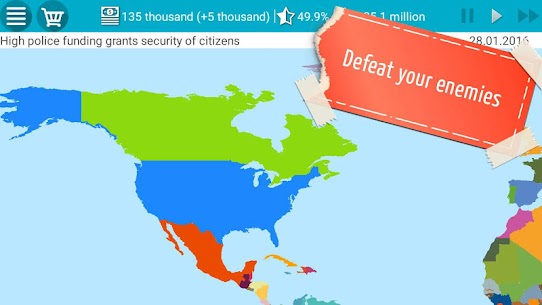
A new president starts with a blank slate and big ambitions. The first task is understanding the lay of the land. The global map is the primary interface. It shows every nation’s status and relations. A player’s influence starts small, perhaps with a single trade deal. Then it can grow to a network of alliances and client states.
Global presence is about more than military might. It involves economic ties and cultural exports. Sending aid after a foreign disaster builds goodwill. Imposing sanctions can cripple a rival’s economy. Players learn that soft power is often as crucial as hard power. The world stage becomes a chessboard where every move matters.
Choosing Between 163 Modern States and Superpowers
The game offers a staggering choice of nations. Players can lead giants like the United States or China. They can also guide smaller states like Iceland or Singapore. This choice is the first major strategic decision. Each country has unique starting conditions, challenges, and potential.
A superpower begins with strong military and industrial bases. Its challenge is managing global hegemony and complex internal policies. A smaller nation starts with limited resources. Its path involves clever diplomacy and specialized economic growth. There is no single best choice. The fun lies in mastering the different scenarios each country presents.
Defining Your Nation’s Ideology and State Religion
This is where role-playing meets strategy. Players choose their nation’s guiding philosophy. Options include democracy, communism, monarchy, or dictatorship. Each ideology unlocks different policies and buildings. It also affects relations with other countries. Democratic nations may naturally ally, for instance.
Selecting a state religion adds another layer. It can unite the population or create internal divisions. It also impacts international relations with secular or theocratic states. These choices are not just cosmetic. They directly shape the tools available for governance and the nation’s identity on the world stage.
Joining International Organizations to Secure Global Influence
No nation is an island in the modern world. President Simulator features major groups like the United Nations and NATO. Applying to join these organizations is a key mid-game goal. Membership provides concrete benefits. These can include mutual defense pacts, trade bonuses, and increased prestige.
However, membership often comes with strings attached. A military alliance may require contributing troops. An economic union might demand certain tax policies. Players must weigh the benefits against the loss of sovereignty. Navigating these memberships is a core part of advanced diplomacy and global strategy.
Optimizing Over 50 Unique Industrial Plants and Factories
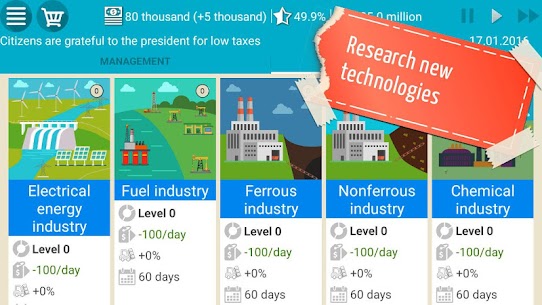
The economy is the engine of national power. The game features a detailed industrial system. Players build and manage over fifty types of facilities. These range from basic farms and oil rigs to advanced semiconductor plants and aerospace factories. Each plant has inputs, outputs, and required workforce.
Optimization is key. Building a car factory is pointless without steel mills and electronics plants to supply it. Players must create efficient industrial clusters. They must also balance production for domestic use versus export. This industrial management provides a satisfying puzzle. A strong industrial base funds everything else, from schools to aircraft carriers.
Navigating the 20+ Ministries to Streamline Governance
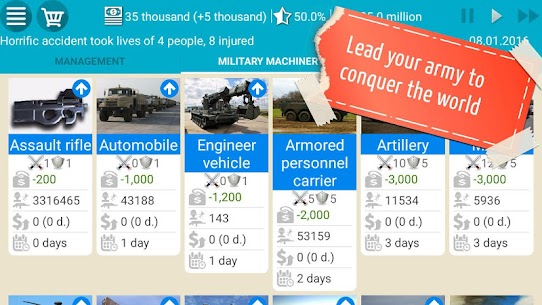
Running a country requires a capable cabinet. The game features numerous ministries like Defense, Finance, and Interior. Each ministry oversees a specific aspect of the nation. The Defense Ministry handles military recruitment and deployment. The Finance Ministry controls taxation and budget allocation.
Players appoint ministers and fund their departments. A well-funded ministry operates more efficiently. Cutting funds might save money but cause long-term problems. The ministry system acts as a high-level management interface. It allows players to delegate focus while maintaining overall strategic control.
Balancing Taxation and Crime Fighting for Civil Stability
Tax policy is a constant tightrope walk. High taxes fill the state treasury quickly. They also anger the population and can stifle business growth. Low taxes please citizens but lead to budget shortfalls. Finding the right balance for the nation’s current goals is a recurring challenge.
Crime is a related issue. A poor, unhappy population sees crime rates rise. Players must fund police forces and intelligence agencies to combat this. Over-policing can also backfire, seen as oppressive. The feedback loop between economics, happiness, and crime is one of the game’s most realistic systems.
Negotiating Defense Agreements and Commercial Treaties
Diplomacy is conducted through formal agreements. Defense pacts promise mutual military aid if either nation is attacked. They deter aggression but can drag a player into distant wars. Commercial treaties reduce tariffs and boost trade income with a partner. These are often easier to secure than military alliances.
Skilled players use treaties to build spheres of influence. They might surround a rival with their allied nations. They can create a powerful economic bloc that dominates world trade. Every treaty is a strategic commitment. The diplomatic menu becomes a web of obligations and opportunities.
Managing National Debt through Strategic IMF Financing
Even nations run out of cash. Major projects or wars can drain the treasury. This is where the International Monetary Fund comes in. Players can apply for loans to cover deficits or fund development. This cash injection can save a struggling economy or fuel rapid expansion.
Debt must be managed carefully. Loans come with interest and repayment schedules. Defaulting on a loan destroys creditworthiness and triggers economic chaos. Wise presidents use debt as a strategic tool, not a crutch. They invest borrowed money into projects that grow the economy faster than the debt accumulates.
Building Embassies to Expand Your Foreign Policy Reach
Embassies are the frontline of diplomacy. Players can build them in other nations’ capitals. An embassy increases influence and improves relations with that country. It also provides valuable intelligence on their domestic situation. More embassies mean a wider and more effective foreign policy network.
There is a cost to maintain each embassy. Therefore, players must be selective. Prioritizing embassies in rival nations or key strategic partners is essential. An embassy can also be expelled if relations sour, a serious diplomatic insult. This simple mechanic captures the importance of permanent diplomatic missions.
Using Espionage and Research to Outmaneuver Rivals
Not all conflicts are fought with tanks. The game features an espionage system. Players can direct their intelligence agency to conduct missions. These include stealing technology, sabotaging factories, or spreading propaganda in a rival nation. Successful spycraft can cripple an enemy without firing a shot.
Research is the constructive counterpart. Investing in technology unlocks new buildings, military units, and policies. Falling behind in research makes a nation vulnerable. The interplay between stealing secrets and developing your own creates a compelling shadow war alongside the main geopolitical struggle.
Defending Against Invasions and Suppressing Internal Rebels
War is often inevitable. When invasion comes, players must direct their military. They deploy armies to borders, launch airstrikes, and command naval blockades. The war interface is tactical, requiring attention to terrain and unit composition. A smaller force can win with better positioning and technology.
Internal threats are just as dangerous. Low approval can spark rebel uprisings. Players must use a mix of military force and policy reform to quell them. Sending tanks against rebels may work, but addressing their grievances through social programs is a more stable long-term solution. This internal-external threat balance keeps presidents constantly vigilant.
Managing Conquered Lands or Granting Strategic Independence
Victory in war presents new problems. Occupied territories are often unhappy and costly to police. Players can choose to annex them fully, adding their population and resources to the nation. This can lead to long-term assimilation challenges. Alternatively, they can install a puppet government, which is cheaper but less direct.
Another option is granting independence to a friendly state. This creates a grateful ally without the management burden. The choice depends on the player’s goals. An imperialist strategy focuses on annexation. A diplomatic hegemony strategy prefers puppet states. Each approach changes the map and the nation’s long-term trajectory.
Stopping Strikes and Civil Unrest Before They Escalate
Discontent simmers below the surface. High unemployment or low wages lead to strikes in key industries. These strikes halt production and hurt the economy. Players receive alerts about growing unrest. They must act quickly to address the core issues.
Solutions are not simple. They can raise wages, which costs money. They can enact social welfare policies. Or they can use force to break the strike, which angers the population further. This system forces players to listen to their virtual citizens. Ignoring social problems leads to revolution, not just lower approval numbers.
Developing Response Plans for Natural Disasters and Epidemics
The presidency is not just about human conflicts. Random events like earthquakes, floods, or pandemics will strike. These events test the state’s infrastructure and the player’s crisis management. A quick, effective response saves lives and boosts approval. A slow, botched response leads to disaster and public outrage.
Players must allocate emergency funds, deploy disaster relief agencies, and sometimes request international aid. Managing a crisis well provides a huge popularity boost. It shows the government is competent and caring. These unpredictable events break up the strategic gameplay with tense, reactive scenarios.
Monitoring Global News to Anticipate International Threats
A ticker at the top of the screen provides global news alerts. This is a crucial intelligence tool. It might report that a rival nation is massing troops on a border. It could note a financial crisis in a major economy. Smart players read these alerts closely.
The news allows for proactive strategy. If a trade partner is falling into recession, a player can seek new markets. If a rival is distracted by a rebellion, it might be a time for diplomatic pressure. The news feed makes the game world feel alive and dynamic. Other nations are not static. They have their own successes and failures.
Key Performance Indicators for a High Approval Rating
A president’s success is quantified. The approval rating is the ultimate score. It is affected by dozens of factors. A strong economy with low unemployment raises it. Winning a war or successfully hosting an international summit provides a big boost. High crime, pollution, or inflation cause it to plummet.
Other key indicators include GDP growth, military strength, and international prestige. Players must monitor these metrics like a real-world leader. They provide clear feedback on policy effectiveness. Chasing a high approval rating is the game’s core loop. It represents the happiness and prosperity of the virtual nation.
Unlocking Premium States and Removing Ad Constraints
The free version of the game includes advertisements and limits access to some countries. Players can unlock premium features through purchase. This grants access to all 163 states permanently. It also removes advertisement pop-ups, allowing for uninterrupted gameplay.
This premium model is common for mobile titles. It offers a complete experience for dedicated fans. The core game is fully functional without purchase. But removing ads and accessing every nation provides the ultimate sandbox experience for serious strategy enthusiasts.
Offline Playability: Managing Your Country Without Internet
A major feature is full offline playability. Players can run their nation anywhere, without a data connection. Progress saves locally on the device. This makes the game perfect for long commutes or travel. The complex simulation runs entirely on the smartphone.
This offline capability is a significant technical achievement. Many mobile strategy games require constant online checks. President Simulator trusts the player’s device. It ensures the deep, engaging gameplay is always available, not tied to Wi-Fi or cellular signal strength.
How Do I Increase My Country’s Economic Power Quickly?
New players often ask this. The fastest path is focused industrial investment. Identify a resource your nation has in abundance. Then build the factories that turn that resource into high-value goods. For example, an oil-rich nation should build refineries and chemical plants. Export the finished products, not the raw materials.
Secondly, keep taxes moderate for businesses and citizens. High growth comes from a happy, productive population. Use early loans from the IMF strategically to build this industrial base quickly. Avoid expensive wars early on. This focus on economic infrastructure creates a powerful revenue engine for later ambitions.
What Happens if My President Rating Drops Too Low?
This is a critical failure state. If approval falls to zero, the game ends. The president is overthrown. Typically, this culminates in a massive rebellion the military cannot suppress. The screen fades to black, signaling a disastrous term in office.
Before that point, many systems break down. Strikes become constant. Ministries refuse to follow orders. Foreign nations may impose sanctions, seeing weakness. The game actively punishes poor management. Climbing back from very low ratings is extremely difficult. It is better to address problems early before this death spiral begins.
Take the Oath of Office and Build Your Superpower Today
President Simulator offers a uniquely comprehensive mobile strategy experience. It blends economic management, deep diplomacy, and military tactics. The sheer number of systems interacting creates endless stories. Will you be a benevolent democratic leader or an expansionist dictator?
The game respects the player’s intelligence. It presents complex real-world concepts in an accessible format. Every session teaches something about geopolitics and resource management. The thrill of guiding a nation from obscurity to global dominance is powerful. The virtual world awaits your leadership. The oath of office is just the beginning.
Images


Download links
Note: If the link gives an error, refresh the page and press the link again.
- Visit Oyunclubnet and explore the collection.
- Please tap on the APK you want and save it to your phone.
- Open your File Manager and tap the APK file.
- Allow installation from unknown sources in your settings.
- Tap the Install button and wait for it to finish.
Developer's apps




Related apps




What's new
Thank you for playing the "President Simulator". Enjoy one of the most exciting strategies.
We are constantly updating our game: release new functions, and also increase its productivity and reliability.
Added:
- Fixed bugs
-
Latest Apps
-
 Auto Parts Store Simulator MOD APK (Unlimited Money)1.11 Birdy Dog Studio
 -
 Kingdom Two Crowns APK (DLC Unlocked)2.4.0 Raw Fury
 -
 Terraria MOD APK (Unlimited Everything)1.4.5.6.4 505 Games Srl
 -
 Thronefall MOD APK (Unlimited Money, Gold)2.12.21 Doghowl Games Ltd
 -
 Minecraft APK: Beta / Final1.26.13.1 Mojang
-
Trending Apps
-
Minecraft APK: Beta / Final1.26.13.1 Mojang
-
 Manok Na Pula MOD APK (Unlimited Money, Eye, Max Level)8.2 TATAY GAMES
 -
 Off The Road MOD APK (Unlimited Money, VIP, Cars Unlock)1.18.0 DogByte Games
 -
 Car Parking Multiplayer MOD APK (Unlimited Money, Gold, Unlocked All)4.9.4 olzhass
 -
 Offroad Outlaws MOD APK (Free Shopping)7.2.86 Battle Creek Games LLC
-