
Pizza Tower APK (FULL GAME)

Description
Peppino Spaghetti looks like the last person who should be sprinting through a collapsing tower — clumsy, wide, and running a struggling pizza restaurant. But once this Italian chef hits full speed, he becomes one of the most kinetic characters in modern platforming. Pizza Tower channels the chaotic energy of 90s cartoon games into something that feels genuinely fresh and relentlessly surprising. This post covers Peppino’s movement system, level strategy, characters, soundtrack, art design, and the advanced techniques that separate casual clears from real mastery.
What Is Pizza Tower and What Makes It Stand Out?
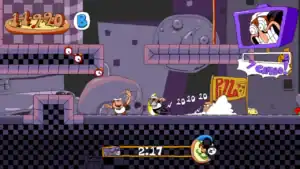
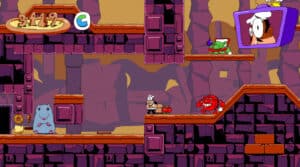
Pizza Tower is a 2D platformer built around speed, momentum, and visual chaos. Peppino Spaghetti — a fat, bald Italian chef whose restaurant faces destruction at the hands of the mysterious Pizza Tower — must infiltrate the tower and destroy it from within. The premise is absurd and the execution leans fully into that absurdity. Every level is a burst of color, movement, and cartoon violence that never lets up.
Tour De Pizza built something that sits in a rare category: a modern game that genuinely recaptures the feel of classic 90s platformers without simply copying them. The movement system, the animation style, and the soundtrack combine into an experience that feels nostalgic and completely original at the same time. That combination is what keeps players talking about it long after their first clear.
The Story Behind Peppino and the Pizza Tower Threat
Peppino’s motivation is purely defensive — the Pizza Tower is threatening his restaurant, and he has to take it down before his whole business collapses. That premise sets up a character defined by panic and desperate speed rather than heroic confidence. Peppino does not look cool running through the tower. He looks terrified and barely in control. That visual comedy is baked into every animation and every design decision in the game.
The dark force inside the tower driving the threat gives the game’s later sections a tone shift that contrasts sharply with the chaotic cartoon energy of the early levels. The story never takes itself seriously, but it earns its moments of genuine tension through that contrast. Peppino’s journey from nervous wreck to reluctant destroyer of a cursed pizza establishment is one of gaming’s more unexpectedly compelling arcs.
How Pizza Tower Draws from 90s Platformer Classics
The influence of Wario Land — specifically Wario Land 4 — is immediately visible in Pizza Tower’s structure and momentum philosophy. Both games reward aggressive movement, punish passive play, and build levels around a two-phase structure of exploration followed by a timed escape. Pizza Tower takes that template and pushes every element to a more extreme, faster, and more chaotic place.
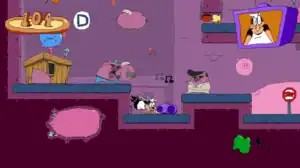
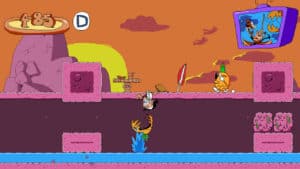
Beyond Wario Land, the game pulls from the wider universe of 90s cartoon aesthetics — early Nickelodeon and Cartoon Network energy, exaggerated character designs, and animation that prioritizes expressiveness over smoothness. Players who grew up with that era of television and games will recognize the visual language immediately.
What Makes the Animation Style Unique?
The animation in Pizza Tower is described accurately as liquid and exaggerated. Peppino’s frames bend, stretch, and distort in ways that communicate speed and impact more effectively than realistic animation ever could. When Peppino hits a wall at full speed, his body compresses and rebounds in a way that feels physical and funny simultaneously.
This is not just aesthetic — the animation communicates gameplay information. The stretch on a jump tells you how much airtime you have. The compression on a landing tells you the impact weight. Reading these exaggerated visual cues becomes second nature quickly, and that reading skill translates directly into better movement decisions in fast sections where there is no time to think analytically.
How to Play Pizza Tower: Movement and Core Mechanics
Movement is the entire game. Pizza Tower’s platforming is built around a momentum system where speed is your primary resource and losing it is your primary failure state. Understanding how Peppino accelerates, how that speed compounds, and how to protect it through obstacles and enemies is the foundation every other skill in the game builds on.
New players who approach it like a standard platformer — careful, measured, one jump at a time — will find it frustrating. The game actively rewards commitment to speed and punishes hesitation. Lean into the momentum early and the mechanics start to feel intuitive.
How Fast Can Peppino Actually Get?
Peppino’s top speed is genuinely surprising the first time you hit it. Starting from a walk, the acceleration curve climbs through a run into a full sprint that warps the screen and turns obstacles into a blur. At peak velocity, Peppino is not navigating levels carefully — he is bulldozing through them, using enemies and walls as launch pads rather than threats to avoid.
That speed ceiling is not just a fun visual — it changes the geometry of levels entirely. Platforms that seem far apart at walking speed become trivial at a sprint. Enemies that look dangerous when approached slowly become combo pieces at full momentum. The game is designed around the assumption that you will eventually be moving fast enough to hit these situations constantly.
Understanding Momentum and Why It Changes Everything
Momentum in Pizza Tower is directional and compounding. Every action that maintains your current direction builds speed. Every action that interrupts it — stopping, turning sharply, getting hit — costs you momentum that takes time to rebuild. This means route planning matters as much as reaction speed. A longer path that keeps you moving in one direction is often faster than a direct path full of direction changes.
Wall runs, enemy bounces, and slides all feed into the momentum system as speed-maintaining tools rather than just traversal options. Learning which interactions preserve your speed and which break it is the deepest mechanical layer in the game. Players who understand this movement at a physical level — in their hands rather than just conceptually — play at a noticeably different level than those who do not.
How the Level Infiltration Structure Works
Each level in Pizza Tower follows a two-phase structure. The first phase involves moving through the level, completing tasks, finding secrets, and building toward the level’s climax. The second phase triggers the escape sequence — a timed sprint back through the level to exit before everything collapses. That second phase plays completely differently from the first because you now know the level layout and the game is actively falling apart around you.
This structure rewards players who pay attention during their initial run through a level. The escape route needs to be fast and clean, which means the time you spend learning obstacle positions and momentum lines in the first phase directly pays off in the second. Players who rush the first phase without absorbing the layout will have slower, messier escapes.
Best Strategy for Clearing Pizza Tower Levels
Clearing levels cleanly requires a different mindset than simply finishing them. Pizza Tower scores and grades runs, which means your approach to each level — how much speed you maintain, how many tasks you complete, how cleanly you execute the escape — determines whether you get a basic clear or a meaningful result.
First-time clears should prioritize learning the level structure over chasing tasks or maintaining perfect momentum. Once you know where you are going, subsequent runs apply that knowledge toward cleaner execution.
How to Approach Each Level Without Losing Momentum
Map your intended path before committing to speed. Knowing where the next platform is, which enemies can be bounced off, and where the level transitions happen lets you maintain momentum through sections that would otherwise force you to slow and read the environment.
Use the walls. Pizza Tower levels are designed with wall runs and wall bounces in mind. Surfaces that look like obstacles are often momentum tools. A wall at the end of a sprint is not a dead end — it is a redirection point that can maintain your speed into a new direction if you engage it correctly rather than stopping against it.
Task Completion and What Assigned Missions Require
Assigned tasks give each level a checklist of objectives beyond simple completion. These tasks push you into parts of the level you might skip, force specific interactions with enemies or environmental objects, and reward players who engage with the full level design rather than routing directly to the exit.
Approach task completion systematically on your second or third run of a level rather than your first. Trying to complete every task while also learning the layout and maintaining momentum on a first run splits your attention too many ways. Know the level first. Then layer task completion onto runs where navigation is already automatic.
When to Slow Down and When to Go Full Speed
Full speed is not always correct. Some sections — particularly those with complex geometry, specific enemy timing, or tight platforming requirements — punish blind speed with immediate momentum loss or damage. Reading when a section demands precision over speed is a judgment call that develops with experience.
The general rule is this: go fast through open sections and areas you know well, and reduce speed through tight sections or new territory. As familiarity with a level grows, more and more of it transitions from the second category to the first. Eventually, sections that once required caution become full-speed corridors because you know exactly what is coming.
All Characters and Enemies in Pizza Tower
Pizza Tower’s cast is as expressive and chaotic as its movement system. Every character — from Peppino himself to the tower’s bizarre inhabitants — communicates personality through animation alone. The idiosyncratic design philosophy means no two enemy types look or behave remotely similarly, which keeps each new encounter feeling distinct.
Peppino Spaghetti — Abilities and Expressions Explained
Peppino’s moveset is wider than it first appears. Beyond running and jumping, he can grab and throw enemies, perform a charged dash, wall run, and enter a super-speed transformation state that makes him temporarily unstoppable. Each ability has specific situations where it is the correct tool, and learning those situations is central to developing real mechanical fluency.
The character expression system lets you adjust Peppino’s facial expressions according to your preference. This is primarily a customization feature rather than a gameplay mechanic, but it contributes to the game’s overall philosophy of letting players shape their personal experience of Peppino’s panicked journey through the tower.
The Dark Force Inside the Tower — What You Are Fighting
The antagonistic presence inside Pizza Tower escalates as Peppino climbs higher. Early floors feel chaotic but manageable. Later floors reveal the nature of what is generating the tower’s threat — a presence that turns familiar platformer conventions into something stranger and more hostile. The game uses its boss encounters to communicate this escalation most directly.
Each boss fight in Pizza Tower is a mechanical statement about what the game expects from you at that point in your skill development. Early bosses test basic movement and pattern recognition. Later ones demand the full momentum toolkit you have built across the preceding levels.
Idiosyncratic Enemy Types and How They Behave
Enemy variety in Pizza Tower is one of its consistent strengths. No enemy archetype is generic — each one has a specific behavior, a specific visual design that communicates that behavior, and a specific role in the momentum ecosystem of its level. Some enemies are best avoided. Others are best used as bouncing platforms. A few are best grabbed and thrown at other enemies to chain momentum through a section.
Learning each enemy type’s behavior on first encounter and then categorizing them as speed tools, threats, or obstacles shapes how you read new levels. Sections that look crowded with enemies often reveal themselves as momentum corridors once you understand which enemies you can bounce through and which ones you need to route around.
Pizza Tower Soundtrack and How It Drives Gameplay
The Pizza Tower soundtrack is not background music — it is an active gameplay element. The fast-paced, dynamic score changes pace and energy to match what is happening on screen, and learning to read those audio cues gives you information about the level state that visual information alone does not provide as quickly.
composer Mr. Sauceman delivered a soundtrack that stands as one of the most distinctive in recent platformer history. Each track is immediately recognizable, tonally specific to its level, and engineered to keep player energy high through sections that would feel grinding with a lesser score.
How Fast-Paced Music Affects Your Play Style
Fast music raises your physical tempo unconsciously. Players who are tuned into the soundtrack move faster, input more aggressively, and maintain momentum more naturally than those playing with audio off. The music is calibrated to the intended speed of each section — when the beat accelerates, the game is signaling that you should too.
This is particularly obvious during escape sequences. The music shifts dramatically when the escape timer begins, and that shift triggers a physical urgency that is not entirely conscious. Players who have internalized the soundtrack feel the escape cue in their hands before they process it visually — which gives them a fraction of a second head start that compounds over the length of the sequence.
Distinct Tracks Per Level and What to Expect
Every level in Pizza Tower has its own completely distinct musical identity. No two levels share a track, and each track reflects the visual and gameplay tone of its level. A chaotic, dense level gets a chaotic, dense track. A level built around a specific enemy type gets music that mirrors that enemy’s behavioral rhythm.
This variety keeps extended play sessions from becoming aurally fatiguing. Players who return to a level multiple times for task completion or better grades are never listening to the same emotional texture they heard in a previous level. Each return feels fresh because the musical context makes it feel like a distinct experience.
How Sound Design Signals Danger and Progress
Beyond the main tracks, Pizza Tower’s sound design uses audio cues to communicate gameplay information. Specific sounds signal enemy proximity, incoming attacks, and successful momentum chains. The escape sequence has its own distinct audio language that communicates urgency without needing any on-screen prompt.
Train yourself to respond to audio cues rather than waiting for visual confirmation. In fast sections, sound often arrives before the visual information that prompted it. Reacting to audio gives you more response time in tight situations — and in a game running at Pizza Tower’s speed, even a fraction of a second of extra response time matters significantly.
Animation and Art Style — Why It Matters for Play
Pizza Tower’s animation and art style are not separable from its gameplay. The visual language the game uses — exaggerated character animation, expressive designs, 90s cartoon energy — communicates mechanical information as directly as any HUD element. Players who read the visuals well play better than those who focus only on platform positions and enemy locations.
Reading Liquid Exaggerated Animations as Gameplay Cues
Liquid exaggerated animation means every character frame communicates intent. An enemy winding up for an attack stretches in the direction of that attack before the hitbox activates. Peppino’s body distorts to show speed, impact weight, and aerial momentum. These visual exaggerations are not just stylistic — they are the game’s primary method of communicating mechanical state without cluttering the screen with indicators.
New players who learn to read animation before reacting will make fewer mistakes than those who react to hitbox positions alone. The animation is always one frame ahead of the mechanical consequence it represents, which means it functions as a visual warning system if you know how to read it.
How 90s Cartoon Vibes Shape the Level Design Language
The 90s cartoon aesthetic is not just visual nostalgia — it shapes how levels communicate their logic. Cartoon visual language uses exaggeration, color contrast, and silhouette clarity to make interactive elements immediately readable. In Pizza Tower, interactive surfaces look interactable. Dangerous things look dangerous. Speed corridors look open and fast.
This visual clarity is a design achievement that many modern games sacrifice in pursuit of realistic aesthetics. Pizza Tower’s stylistic commitment produces levels that are easier to read at high speed than photorealistic environments would be, which is essential for a game demanding the split-second navigation its momentum system requires.
Character Expression System and What It Does
The character expression system lets you modify Peppino’s facial expressions independently of gameplay. It is a customization layer that lets you shape how Peppino looks as he tears through the tower — whether he appears terrified, determined, unhinged, or something in between. The range of expressions available reflects the game’s commitment to Peppino as a deeply expressive character rather than a silent protagonist.
Expressions do not affect gameplay mechanics but they affect how your personal experience of the game feels. Peppino running at full speed with an expression of pure panic reads differently than the same sprint with an expression of manic confidence. The system lets you author that emotional tone for yourself.
Advanced Techniques Most Players Skip
Pizza Tower has a mechanical ceiling that most casual players never approach. The difference between finishing levels and genuinely mastering them involves techniques that the game never explicitly teaches but rewards deeply when applied consistently.
How to Chain Moves for Maximum Speed
Move chaining is the technique of sequencing actions so that each one feeds momentum into the next without interruption. A wall run that transitions directly into a dash that bounces off an enemy into a slide maintains — and builds — speed through what would otherwise be three separate interactions that each cost momentum individually.
Finding these chains requires experimentation with the full moveset across familiar level terrain. Once you know a level well enough to navigate it automatically, use subsequent runs to identify points where your current route breaks momentum and experiment with alternative action sequences through those points. Most momentum breaks have a chain solution that eliminates them.
What Are the Hardest Sections in Pizza Tower?
The hardest sections concentrate in the tower’s upper floors, where level design assumes full mechanical fluency and the margin for error compresses significantly. These sections combine fast enemy placement, tight platform geometry, and time pressure in ways that punish the movement habits new players develop on earlier floors.
Approach difficult sections in isolation before attempting them within a full level run. Dying at a hard section repeatedly in the context of a full run wastes the momentum — literal and psychological — you built through the preceding level. Practice the hard section until it feels manageable, then reintegrate it into a complete run.
How Do You Build Toward a Perfect Run?
A perfect run requires task completion, momentum maintenance, and a clean escape — all in a single pass through the level. Building toward one starts by separating those three requirements and mastering each individually before combining them. Know every task location. Know every momentum line. And to know the fastest escape route. Then run all three simultaneously.
Timing matters as much as execution. A perfect run is not just about technical skill — it is about managing your mental load so that task completion decisions, momentum choices, and escape navigation all happen automatically without conscious deliberation slowing you down. That level of automation only comes through repetition of each element in isolation first.
Frequently Asked Questions About Pizza Tower
Is Pizza Tower inspired by Wario Land?
Yes — the influence of Wario Land, particularly Wario Land 4, is clearly present in Pizza Tower’s momentum philosophy and two-phase level structure. Tour De Pizza has acknowledged the inspiration directly. Pizza Tower takes those foundations and builds something faster, more chaotic, and visually distinct enough that it stands completely on its own rather than feeling derivative of its influences.
How long does it take to finish Pizza Tower?
A first playthrough without pursuing high grades or full task completion typically runs six to ten hours depending on player skill with platformers. Players who pursue P-ranks and full completion on every level will spend considerably longer — the gap between finishing the game and genuinely completing it is one of the wider ones in modern platformers. The mechanical ceiling is high enough that completion play can extend well past thirty hours for dedicated players.
What makes Pizza Tower different from other platformers?
The momentum system combined with the two-phase level structure and the animation-as-gameplay-information philosophy produces a combination no other current platformer replicates. Most platformers treat speed as a reward for skill. Pizza Tower treats speed as the baseline expectation and builds its difficulty around maintaining that speed through increasingly complex environments. That inversion of the typical platformer challenge structure is what makes it feel genuinely different rather than just visually distinctive.
Final Thoughts on Pizza Tower
Pizza Tower is one of the most confident platformers released in years. It knows exactly what it is — a chaotic, fast, visually unhinged love letter to 90s cartoon gaming — and executes that vision without compromise or concession to broader accessibility. The momentum system rewards genuine mastery. The animation communicates mechanical information beautifully. The soundtrack makes every session feel urgent and alive.
New players should expect a steep initial curve and commit to it anyway. The first hour of Pizza Tower feels overwhelming. The second hour feels manageable. By the third, Peppino’s panicked sprint through the tower starts to feel like exactly the right speed for everything. That progression from chaos to fluency is the game’s best feature — and it is available to any player willing to push through the opening difficulty.
Images
Download links
ℹ️ Download link not working? Please refresh the page and try again.




New Apps
Most Played Mobile Games


