
New Star Soccer MOD APK (Free Shopping)

Description
New Star Soccer drops you into a career as a fragile 16 year old on a one buck wage. New players who empty the energy bar in three matches usually need a better spending order, not more skill points. The Stables and one cheap race horse repay their cost faster than any boots, and that order shapes two seasons.
How to Play New Star Soccer as a 16 Year Old Rookie
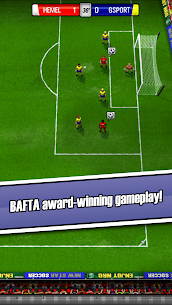
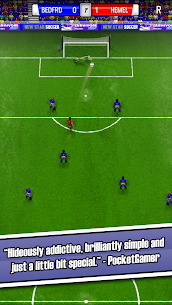
New Star Soccer is a football career RPG where you control one player from age 16 through key match moments only. You aim by dragging back from the ball, then choosing a contact point that adds spin, lift or raw power.
The rest of each fixture runs without you. Because of that, a match takes two or three minutes rather than twenty. Between fixtures you train, spend money, and keep five people on your side.
New Star Games built this sports RPG in the United Kingdom, and New Star Publishing Ltd. handles the store side from Ossett. It won a BAFTA for Best Sports/Fitness Game after the mobile launch in March 2012. Since then the Play listing has passed 10 million downloads with a 4.6 star average across roughly 2.3 million reviews.
What the Drag Back Shot Control Actually Does
Every touch starts the same way. You drag your finger backwards from the ball, and the direction of that drag sets the opposite direction of travel. Pull further and the strike carries more force, so distance and power sit on one gesture.
A second tap then picks the contact point on the ball itself. Strike low and the shot lifts. Strike high and it stays flat and fast. For example, a low outside contact produces the curling cross that beats a keeper at the near post.
From Non League Trials to International Call Ups
Your career opens at the bottom of whichever country you pick, on a wage of one buck per match with one buck per goal. Over 80 leagues sit in the database, so the starting country genuinely changes the difficulty of promotion and relegation.
Clubs move up and down. Cups and continental competition arrive as your side improves, and a recent update reworked how European group fixtures get scheduled during busy weeks. International call-ups follow reputation rather than league position, so a strong season in a smaller country still gets noticed.
How This Sports RPG Compares to Other Android Career Games
Score! Hero gives you set-piece puzzles with a fixed solution, and Football Superstar 2 leans on text simulation with no live shooting at all. This title sits between them. You get live aiming, but you also get a bank balance, a partner and a coach who benches you.
Dream League Soccer takes the opposite route with full team control and squad building. By contrast, here you never pick a formation unless you hold the captaincy. New Star Manager, from the same studio, hands you the whole squad instead of one player, which suits people who want tactics rather than a personal career.
Android Version vs the Windows Version of the Career
The store page lists this football RPG on Android and on Windows through Google Play Games, alongside the long-running iOS release. The career content matches across those releases, so nothing gets cut on the smaller screen.
Controls are the real difference. On a phone your finger covers part of the ball, whereas a mouse drag on Windows gives a cleaner view of the aiming line. Tablet players get the same advantage, which is why free kick accuracy tends to climb on a larger display.
Gameplay Mechanics: Shooting, Passing and Work Rate
The match engine only hands you the ball at decision points such as a through ball, a shooting chance, a tackle, a header, a free kick or a penalty. Everything between those moments resolves on its own.
Your job is accuracy under pressure. Each moment gives you a few seconds, so hesitation costs you the chance. Skill training raises the ceiling, but the touch itself is yours.
Ratings arrive after the whistle and feed straight into your relationships. A greedy shot from a bad angle drags the Team meter down even when the scoreboard looks fine. Passing into space, by contrast, lifts both the Team and the Boss. Assists count for more than most newcomers expect, and captaincy later lets you nudge team-mates into better positions before you release the ball.
How Contact Point Adds Spin and Lift to the Ball
Contact point is the half of the control scheme that beginners ignore. After setting direction and power, you choose where boot meets ball, and that single choice decides whether the strike dips, rises or bends.
Keepers move on one axis, left and right, so height beats them more often than pace does. A flat drive into the middle of the goal works surprisingly well, because the keeper commits to one side. Similarly, a lifted finish clears a keeper who rushes out early.
Choosing Work Rate Before Kick Off
Work rate sets how often the engine gives you the ball. A high setting produces more chances, more assists and a happier crowd, but it drains the energy bar faster.
Low work rate is not the trap it sounds like. Provided you pass well, score your chances and avoid wild efforts, the Boss stays content even on a quiet afternoon. Fans, however, respond most to a high work rate combined with a win, so save the aggressive setting for matches you expect to take.
Match Ratings, Interviews and the Weekly Review
Each performance produces a rating out of ten, and players regularly complain that one stray pass can pull a winning goal down to a 5.8. Treat the number as feedback on decisions rather than on the result.
Interviews and newspaper stories follow. An interview can hand out mixed rewards such as a small Fans gain against a Boss and Team loss, so a deliberately poor answer that zeroes the whole reward is sometimes the better outcome. The weekly review then totals your earnings, your relationship shifts and any incident that made the papers.
How Energy, NRG Drinks and Skill Training Work
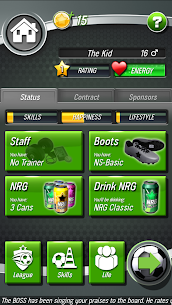
Every match, training session and off-pitch event draws from a single energy bar, and that bar refills slowly on its own. NRG drinks refill it instantly, with a basic NRG Classic costing 2 coins at Star Rating 1 and 5 coins once you reach Star Rating 2.
Skill training runs on timers. Each of the five attributes becomes trainable again after its own cooldown, so the schedule matters as much as the effort.
Trainers advise which attribute to work on, and following that advice pays better than random sessions. Properties speed up recovery between fixtures, which is one reason the property list matters more than the shiny items. Events also take a bite of around 25 percent, so a full bar in the morning is not a full bar by kick off.
Pace, Power, Technique, Vision and Free Kicks Explained
Five attributes carry the whole career. Pace controls how often you break clear, Power decides shot strength, Technique tightens your touch, Vision widens the passing options the engine offers, and Free Kicks governs dead ball chances.
A recent update replaced the old intercept challenge in Pace training with a dribbling exercise, which makes that session more useful for attacking players. Vision deserves early attention because extra passing options directly raise assist counts, and assists carry both money and Team goodwill.
When to Drink an NRG Classic for Best Value
Timing turns a cheap drink into a good one. Waiting until the substitution warning appears while you still hold 45 to 60 percent energy wastes part of the refill, so spend that surplus on a skill session first.
Drink immediately after the session and the refill lands on a near-empty bar. That single habit stretches a stack of drinks across far more fixtures. Moreover, buying drinks while still on Star Rating 1 prices means the same stack costs less than half what it will next season.
How Trainer Advice and Skill Timers Work
Trainers cost money and level up, and a higher level trainer improves the gains from each session. Failing a training minigame is annoying but not fatal, because a failed attempt leaves the skill timer untouched and you can try again.
Skill NRG drinks behave differently. Using one on a specific attribute resets that attribute’s timer straight away, which lets you repeat a session on the same day the trainer recommends it. Those drinks cost more, so most players save them for the seasons when horse racing income covers the bill.
Why Events and Dilemmas Cost Energy You Need
Events arrive between fixtures. Someone asks for a photo shoot, an autograph session, a public appearance or a house move, and accepting costs roughly a quarter of your energy in exchange for goodwill.
Dilemmas force a choice instead. Going out with team-mates lifts the Team meter while the Boss slips, and some options carry hidden consequences that can knock a level off a hard-earned attribute. Because of that, treat an event before a cup fixture as a straight trade of readiness for relationships.
How to Get More Bucks Without Spending Star Bux
Bucks are the coin currency you earn from wages, goal bonuses, assist bonuses and prize money, while Star Bux are the premium currency sold in packs. A free career never needs the paid pack, provided you buy income before you buy luxuries.
Early wages are tiny. One buck per match with one buck per goal is normal at the start, so passive income matters far more than salary.
Race horses supply that income. The Stables cost 700 bucks and a horse starts around 100, which puts the full setup near 800 bucks. Each race win pays 100 bucks, second place 50 and third place 25, and horses cost nothing to keep afterwards. In my runs, three cheap horses raced regularly cleared their setup cost in roughly a season and a half, which is faster than any pair of boots ever repays you.
Why the Stables and Race Horses Pay for Themselves
Boots, watches and cars raise your lifestyle rating and nothing else. The Stables are the one purchase that turns bucks into more bucks, so buying them before any other luxury changes the whole shape of a career.
Cheap one and two star horses win often enough to matter. You can own many of them at once, and there is no feeding cost, no injury bill and no maintenance. Buying four weak horses therefore beats buying one expensive animal, because the payout is per race entered rather than per star.
Hiring an Agent Early Doubles Small Income
An agent takes a level and returns a bonus on your income. That bonus rounds up, which produces an odd but useful result at the bottom of the ladder.
If your income is one buck, the rounded bonus is also one buck, so the agent effectively doubles what you take home. Hiring early therefore costs little and returns a lot. Later on the percentage matters more than the rounding, and by then your wage is large enough to justify a higher level agent.
Casino Slots and Bribes Carry a Real Boss Cost
The casino is genuinely tempting, and the store rating carries a Gambling descriptor for good reason. Slot machines can return a profit over time, yet the Boss notices long sessions and accepting team invitations to the tables.
Bribes work as a strange kind of insurance. Accept the offer, then play your normal game: either you win the fixture and keep the points, or you lose and collect the money. Rarely a newspaper turns the offer into a scandal, and a scandal can flatten every relationship at once, so keep the habit occasional rather than routine.
How the Star Rating and Contract System Progress
Star Rating runs from 1 to 5 and acts as the career level that clubs judge you by. Contract offers scale from that rating alone, not from whatever you negotiated last time, so a poor deal today does not poison your next move.
Each contract carries three numbers: a wage, a goal bonus and an assist bonus. Better clubs raise all three.
Prices rise with your rating too, which catches people out. An NRG Classic that cost 2 coins in the first band costs 5 in the second, while a first promotion rarely triples your wage. Consequently the toughest stretch of the whole career sits between the first and second rating bands, not at the top.
What Each Star Rating Step Changes
A step up the rating ladder unlocks better clubs, better sponsors and stronger contract terms. Transfer value climbs alongside it, and international scouts start paying attention once your reputation clears the domestic level.
Costs climb in parallel. Drinks, trainers and agents all price against your standing, so a promotion without an income plan feels like a pay cut. Buying the Stables before the second band arrives is the cleanest way to avoid that squeeze.
The Hi Lo Negotiation Minigame Explained
Contract negotiation is a higher-or-lower minigame using numbers from 1 to 11. Guess correctly and the club improves its offer, up to a ceiling of two extra wage, one extra goal bonus and one extra assist bonus.
Risk sits on the other side. Failed negotiations damage the Boss relationship and can cost captaincy, so the odds only favour you when the starting number is 1, 2, 10 or 11. Finalise and reopen until one of those numbers appears, and skip the whole minigame once your assist bonus is already above zero.
Captaincy, Transfer Value and International Call Ups
Captaincy pays a small amount per match, but the armband matters for a different reason. As captain you reposition team-mates before releasing the ball, which turns awkward chances into simple assists.
Sponsors influence more than income. Losing them drags on transfer value and on your standing with the international coach, so a quiet sponsor meter costs you call-ups you never see refused. Keeping performances steady across a full season does more for a national place than a single spectacular month.
How to Keep the Boss, Team, Fans and Sponsors Happy
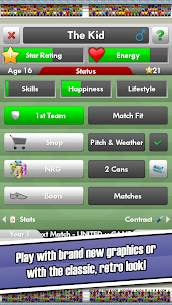
Five relationships sit on the profile screen: Boss, Team, Fans, partner and Sponsors. Each one moves after every fixture, every interview and every dilemma you answer.
Thresholds are what actually matter. The Boss treats 55 percent much like 100 percent, yet below 50 percent you drop to the substitutes and below 10 percent you stop being picked at all.
Sponsors cancel their contracts once they slide under a third, and community consensus is to hold them near 60 percent for safety. Team goodwill has the most direct gameplay effect, because a happy dressing room feeds you more chances during matches. Fans respond to a high work rate paired with wins, which makes them the easiest meter to repair.
The Relationship Priority Order That Actually Works
Order beats effort here. While the Boss sits comfortably above 50 percent, spend your dilemma choices on the Team first, the Boss second and the Fans third.
The moment the Boss dips near that line, flip the order and put him first until the margin returns. Sponsors need only occasional attention to stay above a third. Low overall happiness also triggers negative newspaper coverage, so nursing one meter while ignoring the rest rarely ends well.
Winning the Memory Match Relationship Minigame
The relationship minigame is a card matching test. Icons appear briefly, flip to their backs, and then shuffle, leaving you to remember pairs under time pressure.
Two screenshots solve it. Take one while the icons are visible and another in the short window after they flip but before the shuffle, then compare the two images to place your matches. On a tablet the larger grid makes this easier, and clean runs turn the minigame into free goodwill.
Why the Partner Relationship Comes Last
A partner adds dilemmas, events and expense without adding income or match performance. Nothing in the career requires one, and the relationship falls away only when it drops close to zero.
Some achievements do ask for a partner and for every meter at full. Get the partner, push the relationships up, collect the reward and move on. Meanwhile the same energy spent on Team goodwill produces more chances in the next fixture, which is why experienced careers keep this meter last.
All Lifestyle Items, Boots and Repair Costs
Lifestyle splits into three groups: items such as phones and watches, properties, and vehicles. Roughly 20 boot sets sit alongside them as the only purchase that changes what happens on the pitch.
Items raise your lifestyle rating, which helps attract sponsors and a partner. Properties do the same while speeding up energy recovery between fixtures.
Everything wears out. Repairing early costs a buck or two on cheap items, whereas replacing a fully broken item costs the full price again. Practise with new boots before committing too, since the Boss pays a small bonus for every ten goals scored in training and the feel of each pair differs.
What the 20 Boot Sets Change on the Pitch
Boots add effects rather than raw statistics. Swerve sets bend the ball more sharply, while control sets tighten your first touch and keep the ball closer under pressure.
Swerve tends to offer the better value for the money, particularly for anyone who takes free kicks and corners. No pair is required to progress, so treat boots as a reward once the Stables are paying out rather than as an early purchase.
Items, Properties and the Lifestyle Rating
The lifestyle rating is a visible score built from everything you own. Sponsors weigh it when they approach you, and a higher rating opens better deals than performances alone would earn.
Properties earn their place twice. Faster post-match recovery means fewer drinks bought, and the Stables unlock horse ownership entirely. A modest home plus the Stables beats an expensive apartment for anyone still counting coins.
Repair Everything Before It Breaks Down
Check the repair screen every few fixtures and use the repair-all option. Small, regular bills are far cheaper than replacements, and a broken item stops contributing to your lifestyle rating immediately.
Neglect compounds quickly. Three or four items degrading together can pull your rating low enough to cost a sponsor, and sponsors are harder to win back than they are to keep. A quick check after each weekly review keeps the whole list healthy.
Common Mistakes That End a Career Early
Careers rarely collapse because of poor shooting. They collapse because the Boss meter slid under 50 percent, the energy bar stayed empty for three fixtures running, or a sponsor walked away during a quiet spell.
Each of those has a warning sign. The substitution bar across the home screen is the clearest one, and ignoring it costs appearances.
Money mistakes hurt just as much. Buying an expensive car before the Stables leaves you with a pretty garage and no income, and the store’s own gambling descriptor hints at where careers quietly leak bucks. Recovery is possible in every case, though it costs seasons that a better order would have saved.
Negotiating a Contract Too Early
Negotiation looks like free money and usually is not. The ceiling is two extra wage plus one goal bonus and one assist bonus, which barely registers once your wage reaches 50.
Failure costs Boss goodwill and can strip the armband. The one genuinely worthwhile attempt is the renewal in the second rating band, where a good run can lift terms from 2-1-0 to 4-2-1. Otherwise accept the offer, or reject it and sign elsewhere at the end of the season.
Playing Matches on an Empty Energy Bar
A drained bar does not stop you playing. It simply makes you slower, weaker and less involved, and the ratings that follow drag every relationship down together.
Skipping a fixture is often better than playing it badly. Rest, train nothing that week, and return with a full bar for the cup tie that actually matters. Low overall happiness may also increase how quickly your player tires, which turns a bad week into a bad month.
Letting Sponsors Slide Below One Third
Sponsors leave faster than they arrive. Poor form pushes them away, and so does a neglected relationship meter, which is why holding them above a third is the minimum and around 60 percent is the safer target.
Losing one hurts twice over. Income drops, and both transfer value and international standing take a hit at the same time. Answering a sponsor’s event request costs a quarter of your energy, yet that trade is cheaper than rebuilding a lost deal from scratch.
Best New Star Soccer Tips and Tricks for Beginners
The fastest gains in this football RPG come from three specific habits: how you take penalties, when you stock up on drinks, and how you aim dead balls. None of them requires a single Star Bux.
All three work from the very first season. Better still, they keep working at the top of the game, so nothing here becomes obsolete once your attributes climb.
Skill training raises your ceiling over time, but these habits change results immediately. A converted penalty is worth the same goal bonus in the fourth tier as it is in a European tie. Similarly, a cheap stack of drinks bought at the right moment funds an entire extra season of training.
Pass Backwards on Penalties to Draw the Keeper Out
Penalties are the most reliable free goals in the game once you stop shooting them. Passing the ball backwards pulls the keeper off his line, which leaves a team-mate facing an open net.
Straight down the middle works as the backup. Keepers commit to one side every time, so a flat, moderate strike through the centre beats them more often than a corner does. Both routes beat a hard shot into the top corner, which the aiming drag makes harder than it looks.
Bank NRG Classics While Star Rating 1 Prices Last
Drink prices scale with your rating, and the jump from 2 coins to 5 coins between the first and second bands is the steepest one you will face. Buying a stack before that promotion is the single best use of early money after the Stables.
Storage is not limited, so buy every drink you can spare bucks for. Those cheap drinks then fund training sessions through the expensive middle seasons. For example, twenty drinks bought at 2 coins save you 60 coins compared with the same stack a season later.
Use a Straight Edge on Screen to Aim Free Kicks
Free kicks and long-range shots depend on the angle of your drag, and fingers are imprecise. Laying a postcard, ruler or card edge against the screen gives you a straight reference line to pull along.
Tablet players benefit most, since the larger surface exaggerates small angle errors. Try it during practice sessions first, where prizes are still available and mistakes cost nothing. After a few attempts, the muscle memory carries over even without the card.
Frequently Asked Questions About New Star Soccer
Is New Star Soccer free to play on Android?
Yes. New Star Soccer installs free on Android and iOS, with advertising between sessions and optional in-app purchases including Star Bux packs and an ad removal option. Release notes confirm the old Pro License restriction was removed, so the full career now plays without any paywall behind it.
How long does a career last before retirement?
A career lasts as long as you keep playing, since nothing forces retirement at a set age. A single season runs roughly 40 to 50 fixtures depending on cup runs, and the developers have publicly noted careers where the player passed 100 years old. Retiring converts everything into a leaderboard score.
Does the game work offline and still get updates?
The store lists it as a single player title playable offline, so matches and training run without a connection. Updates still arrive regularly, and recent notes refreshed league data across several countries. Those data changes apply to new careers only, so an existing save keeps the club and league information it started with.
Who Should Start a Career in This Football RPG
This one suits anyone who wants football in short bursts with real consequences attached. Fans of number-driven careers will get more from it than people who want full team control, and the two or three minute fixtures fit commutes better than a squad simulation ever will. Having played several careers to retirement, I still think the moment your first horse wins a race is more satisfying than any promotion, because it means the career finally funds itself. Buy the Stables early, hold the Boss above half, and the rest of the ladder takes care of itself.
Images
Download links
ℹ️ Download link not working? Please refresh the page and try again.
Developer's apps


Related apps





What's new
Android Security Update.
New Apps
Most Played Mobile Games


