
Driving Zone 2 MOD APK (Unlimited Money)

Description
Driving Zone 2 stands apart from most mobile racers because its physics engine actually penalises you for cutting corners the way arcade games let you — highway traffic reacts, lanes close, and speed without control ends in a crash. This post is written for new players and casual drivers who want to unlock cars faster and squeeze more out of every session. Below, you will find everything that matters: the core traffic mechanic, the tuning system, the point-scoring loop, day and night driving strategy, and the best beginner tips.
What Is Driving Zone 2 and How Does It Work
Driving Zone 2 is a realistic traffic racing simulator built for Android. It puts players on open highways filled with live traffic. The core goal is simple — drive fast, avoid crashes, score points, and unlock new cars over time.
How the physics-based traffic racing mechanic works
The physics engine is the heart of this game. Unlike arcade racers that let you smash through traffic and keep moving, this title makes every collision count. Hitting a car at high speed kills your momentum and costs you points.
The engine simulates real vehicle weight. Hatchbacks feel lighter and more responsive in tight gaps. Sports cars carry more momentum and need wider overtake lines. This weight difference becomes obvious the moment players switch vehicle classes.
The open highway setting, tone, and day/night cycle
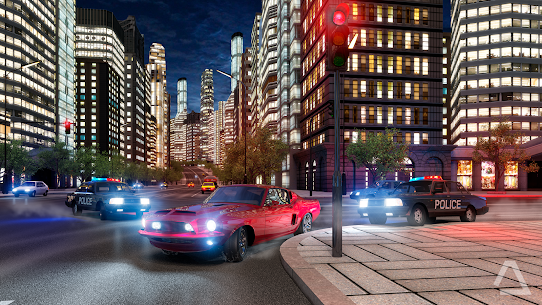
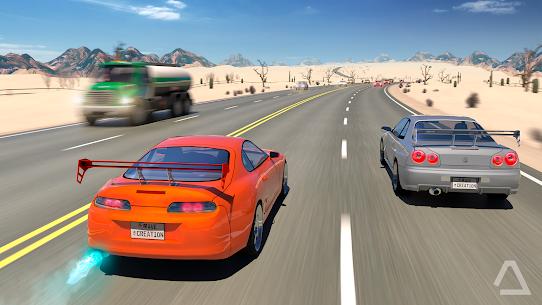
The game takes place on open highways with no track boundaries and no lap structure. Players drive in any direction they choose. Traffic density, lighting conditions, and road layout change depending on the time of day selected.
The tone is grounded rather than cartoonish. Realistic graphics, real engine sounds, and a dynamic musical backdrop create a driving atmosphere closer to a simulator than a party racing game. Day sessions are bright and fast. Night sessions are darker, quieter, and more technical.
How Driving Zone 2 compares to Traffic Racer and similar titles
Traffic Racer keeps things stripped back — one lane-switching mechanic, minimal customisation, and a fast score loop. Driving Zone 2 adds significantly more depth through its tuning system, vehicle variety, and physics fidelity. The two games target the same audience but deliver very different experiences.
Racing in Car focuses entirely on first-person immersion with almost no visual customisation. By contrast, this title layers a full cosmetic and performance tuning suite on top of its highway racing. Players who want both visual identity and mechanical depth will find more to do here.
How Driving Zone 2 Controls and Gameplay Feel in Traffic
The control layout is clean and accessible. Players steer with on-screen tilt or touch controls depending on their device settings. Acceleration, braking, and nitro are mapped to clearly labelled buttons on both sides of the screen.
Steering, acceleration, and braking on open roads
Steering responds proportionally to input speed. At low speeds, tight turns are easy. At high speed, small inputs produce wide arcs. Players need to anticipate gaps earlier at highway speeds rather than reacting when the gap is already closing.
Braking is rarely the right answer in dense traffic. Instead, the game rewards smooth deceleration and early lane changes. Hard braking at speed often triggers chain reactions with cars behind the player. Smart drivers manage speed before the gap closes, not after.
How nitro cylinders and sports suspension change handling
Nitro cylinders provide a short burst of speed that bypasses the normal acceleration curve. However, because nitro increases speed faster than the physics engine adjusts for road conditions, players need clear highway ahead before activating it. Using nitro in dense traffic is the fastest way to crash.
Sports suspension lowers the car’s centre of gravity and tightens its response to steering input. The practical result is a narrower, more controllable overtake line. This upgrade matters most for sports cars and SUVs, which carry significant weight at high speed.
What happens when you complete a high-risk overtake or crash
Successful near-miss overtakes — passing within a very short distance of traffic without touching — generate bonus points above the standard overtaking reward. The game tracks proximity and speed. Closer passes at higher speed produce larger bonuses.
Crashes reset the speed advantage immediately. Additionally, depending on crash severity, the point multiplier resets. Players in a strong scoring run should treat crash avoidance as the primary objective, not speed alone.
How the Car Roster and Vehicle Types Are Structured
The vehicle roster spans five distinct categories. Each category handles differently and suits different driving styles on the highway.
Classic hatchbacks, sedans, sports cars, and SUVs available
Classic hatchbacks are the starter vehicles. They are light, nimble, and easy to thread through tight traffic clusters. Sedans — the family car class — offer slightly more speed but feel heavier in quick direction changes. Both categories are ideal for players still learning the physics engine.
Sports cars are the high-end performance tier. They reach top speeds that hatchbacks cannot match. However, their weight and momentum make traffic threading more demanding. SUVs are the largest class. They feel planted and stable but require more space to manoeuvre.
How new car stickers signal fresh unlocks in the vehicle list
As players accumulate points and time in the game, new vehicles appear in the selection screen. Each new arrival carries a sticker marking it as recently unlocked. This visual flag prevents players from scrolling past new options without noticing them.
The sticker system acts as a simple reward signal. It breaks the vehicle list into what the player already knows and what is newly available. This distinction keeps the progression loop visible without requiring a separate notification system.
What makes luxury and sports cars perform differently in traffic
The 2018 luxury car tier sits between family sedans and sports cars in terms of handling feel. These vehicles combine relatively high top speed with acceptable maneuverability. Therefore, they are a strong middle-ground choice for players who find sports cars too demanding but want more pace than a sedan delivers.
Sports cars separate themselves through acceleration rather than top speed alone. The nitro cylinder upgrade amplifies this advantage significantly. As a result, a fully tuned sports car with nitro installed produces the fastest point-scoring runs on clear highway stretches.
How the Tuning System Works in Driving Zone 2
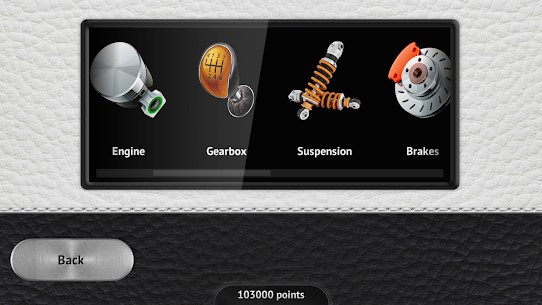
The tuning system divides into two branches: performance upgrades that change how the car drives, and visual customisation that changes how the car looks. Both branches are independent. Players can invest entirely in performance, entirely in appearance, or mix both.
Engine upgrades and what they change in real driving feel
Engine upgrades directly increase the car’s power output and acceleration curve. Each upgrade tier produces a measurable change in how quickly the car reaches highway speed from a standing start. Additionally, higher engine tiers affect the nitro burst ceiling — a stronger engine extends how fast the car can travel during a nitro activation.
Sports suspension is a performance upgrade that works alongside engine tuning. Together, these two upgrades produce a car that accelerates quickly and responds precisely. For players focused on high-score runs rather than visual identity, these two upgrades should come before any cosmetic investment.
Visual customisation — spoilers, neon lights, wheels, and cilia
The visual customisation options are unusually broad for a mobile traffic racer. Spoilers, wheels, air intakes, steering wheels, neon lights, and even eyelash-style cilia on the headlights are all available. Each option changes the car’s on-screen appearance without affecting performance stats.
This depth of visual identity serves a social purpose. Players can photograph their customised car in the dedicated photo mode and share the image directly with friends. The result is a car that feels personally owned rather than generic. This is one of the more distinctive features separating this title from comparable traffic racers.
How the photo mode and car identity features work
Photo mode pauses the visual presentation of the car and allows players to capture a clean image of their customised vehicle. The image can then be shared externally. This feature is not common in the traffic racing genre and adds a layer of ownership to the customisation system.
The identity logic behind this feature is straightforward — the game actively encourages players to make their car recognisable among rivals. Consequently, visual customisation becomes a progression goal in its own right, separate from performance tuning and car unlocks.
How Points and Progression Unlock New Cars
Points are the game’s core currency for progression. Every action on the highway generates or risks points. Players who understand the scoring system unlock new vehicles significantly faster than those who simply drive at maximum speed.
How the point-scoring system rewards risky driving
The scoring system rewards risk in a scaled way. Driving at high speed in dense traffic generates more points per second than cruising on an empty stretch. Near-miss overtakes — defined by proximity and relative speed — multiply the base score during that sequence.
Running red lights also contributes to the point total. However, this action increases the chance of a cross-traffic collision, which resets the active multiplier. Therefore, the highest-scoring players are not the most reckless — they are the most controlled under pressure.
What earns the most points — overtaking, near-misses, and speed
Overtaking alone generates base points for every car passed. The multiplier applied to that base rises when the overtake happens at higher speed or within a narrower gap. Consequently, a series of rapid, clean near-miss passes on a busy highway section produces significantly more points than the same number of overtakes on an empty road.
Speed contributes to the multiplier independently of overtaking. Maintaining highway speed without braking or crashing builds a passive point flow that compounds during active overtake sequences. Players who combine sustained speed with near-miss overtaking will outperform those chasing only one variable.
What unlocking new vehicles adds to the long-term game
Each new vehicle class unlocks additional tuning options and a different driving feel. Sports cars open faster point ceilings because their higher base speed generates larger speed multipliers. SUVs, despite their size, unlock a unique style of play — using their mass to hold wider lanes and force tighter gaps for trailing traffic.
New cars also reset the visual customisation possibilities. A freshly unlocked luxury sedan or sports car arrives without tuning, which gives players a new project to invest in. This reset mechanic extends engagement well beyond simply reaching the top vehicle tier.
Why Day and Night Driving in Driving Zone 2 Changes Everything
The time-of-day system is one of the most underserved aspects of this game in published content. Most players treat it as a visual setting. In practice, it changes traffic behaviour, visibility, and scoring opportunity in meaningful ways.
How traffic density shifts between daytime and night sessions
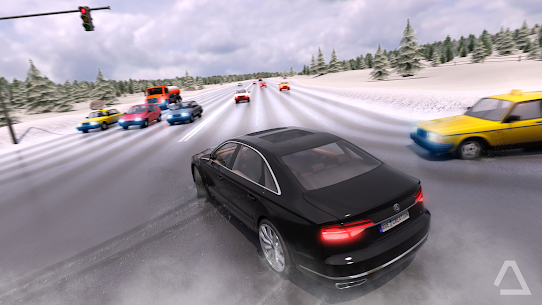
Daytime highway sections carry heavier traffic. More cars on the road means more overtake opportunities per kilometre but also more collision risk. For players focused on building a high point total quickly, daytime sessions provide a denser scoring environment.
Night sessions run with lighter traffic. The road is less cluttered, which allows for longer sustained high-speed runs. However, fewer cars also means fewer near-miss opportunities per minute. Night driving suits players practising control at high speed rather than maximising their score per session.
How visibility affects overtaking lines at high speed
At night, headlamp range defines how far ahead a player can anticipate traffic. At high speeds, the window between spotting a car and needing to react is shorter than during the day. Therefore, players need to choose their overtake line earlier in night mode and commit to it without hesitation.
Neon light customisation is not purely cosmetic in this context. Neon lighting on the player’s car increases its visual presence in night mode, which serves as a useful reference point when judging lane position on dark highway stretches.
Hidden advantages experienced players use in night mode
Experienced players use night mode to practise the physics engine at maximum speed without the distraction of dense traffic. Fewer cars allow for longer nitro runs and cleaner data on how each tuning upgrade changes acceleration. This makes night mode an effective calibration environment before returning to high-density daytime sessions.
Additionally, some players find the lighter night-time traffic easier for completing the long uninterrupted speed runs that build the passive point multiplier. Consequently, alternating between day sessions for overtake scoring and night sessions for speed multiplier building produces a more balanced progression rate than sticking exclusively to one time setting.
Best Driving Zone 2 Tips and Tricks for Beginners
New players consistently make the same three mistakes: they over-rely on braking, they activate nitro in dense traffic, and they ignore the tuning system until much later than they should. Addressing these three habits early makes a significant difference in how fast the vehicle roster opens up.
How to use the physics engine to your advantage early on
The physics engine rewards patience. Instead of forcing gaps, let traffic patterns open naturally and then accelerate through the space. This approach generates cleaner near-miss bonuses than aggressive lane changes that clip other vehicles.
Start with a hatchback and use it to learn how the weight and momentum system behaves before moving to heavier vehicle classes. The hatchback’s light frame makes mistakes less costly and the physics feedback clearer. Moreover, staying in the lighter class longer builds better lane-reading habits that carry over when sports cars become available.
How to earn points fast and speed up car unlocks
Prioritise near-miss overtaking over raw speed in the early game. A cluster of six near-miss passes in quick succession generates more points than a long straight at top speed with no traffic interaction. Therefore, busier highway sections are more valuable for scoring than open stretches.
Also, upgrade the engine first. Better acceleration means reaching the speed threshold for higher multipliers sooner in each run. The combination of engine upgrade and conscious near-miss targeting is the fastest progression path available to beginners.
What to do when traffic locks you into a dangerous lane
When traffic closes around the player simultaneously from both sides, the correct response is controlled deceleration — not hard braking and not nitro. Dropping speed slightly allows trailing traffic to pass and reopens a gap behind the player.
Hard braking in this situation creates a rear-collision risk with cars following at speed. Nitro makes the situation worse by closing the gap ahead before a new lane appears. Smooth, deliberate deceleration is the skill that separates players who score consistently from those who crash out of every good run.
Frequently Asked Questions About Driving Zone 2
Is Driving Zone 2 available on iOS or only Android?
Driving Zone 2 is explicitly developed for Android devices. The game description confirms Android as the primary platform. iOS availability is not confirmed in official game materials. Players on Apple devices should check the App Store directly, as platform availability can change with new publisher releases after launch.
How long does it take to unlock all cars in Driving Zone 2?
Unlock speed depends entirely on how consistently players earn points per session. Focusing on near-miss overtaking in dense daytime traffic is the fastest method. Players who optimise their scoring approach can work through the early vehicle tiers within several hours of active play. The luxury and sports car tiers require sustained high-score sessions.
Does Driving Zone 2 have different endings or a story mode?
Driving Zone 2 does not include a story mode or multiple endings. It is a score-driven traffic simulator with an open progression structure. The goal is accumulating points, unlocking vehicles, and completing the tuning system rather than reaching a narrative conclusion. This makes it well suited to short daily sessions rather than extended single-play runs.
Who Should Play Driving Zone 2 Right Now
Driving Zone 2 is best suited to mobile players who want more depth than a basic endless racer but do not want the complexity of a full simulation title. The physics engine is realistic enough to reward good habits without punishing beginners harshly. The tuning system adds a genuine long-term project that keeps the game interesting well beyond the first few hours.
Players who enjoy visual customisation alongside performance progression will find the most value here. The photo mode and cosmetic options are genuinely broad for the genre, and the offline capability makes it a strong choice for players without reliable data connections. After spending time with the traffic physics, the near-miss scoring system, and the car tuning loop, the game holds up better than most traffic racers at this level. It does not try to be something it is not — and that honest design focus is exactly what makes it worth your time on Android.
Images

Download links
ℹ️ Download link not working? Please refresh the page and try again.
Developer's apps


Related apps


What's new
- Fixes in drag racing mode
- Interface improvements and fixes
New Apps
Most Played Mobile Games


