
Drag Racing MOD APK (Unlimited Money, RP)

Description
Drag Racing hands you one straight strip, six upgrade categories and a single nitrous button, and every win comes down to timing. New racers who keep losing by hundredths of a second get the launch RPM and shift order that close those gaps. Grip and gear ratios shave more time off a run than raw engine power, and that one fact decides most early career races.
How to Play Drag Racing on Android
Drag Racing is a straight-line mobile racer where you hold engine revs at the staging lights, release at a target RPM, then shift each gear inside a narrow window on the tachometer. You add nitrous oxide once during the run and try to cross the 1/4 mile or 1/2 mile line first. No steering exists.
That stripped-down setup hides real depth. Over 50 car styles pull from JDM, European and American design, and each one sits at a fixed car level. Because opponents are matched by level, a slow driver in a fast car still loses.
The title has passed 100 million downloads since its 2011 debut, so the community around tunes is enormous. Six upgrade categories feed into every run, and the dealership sits at the center of long-term progress.
What the Launch, Shift and Nitrous Loop Does
Every race repeats the same four beats: rev, launch, shift, boost. You hold the pedal to build RPM while the staging lights count down, then release so the car leaves the line inside a grip window. Too much RPM spins the tires and you lose half a second immediately.
Shifting is where most time gets found. A perfect shift lands just before the needle touches the red line, and stacking three or four of them in a row separates a 12 second pass from an 11 second one. However, the window narrows as your car climbs levels, so muscle memory from level 2 does not carry to level 7.
The Garage, Career Ladder and Hall of Fame Setting
No cutscenes or story missions exist here. Instead the framing is a garage climb: you start with a cheap hatchback and work toward 1000+ horsepower exotics parked in the same dealership. Your garage holds a limited number of slots, so selling old cars becomes part of the rhythm.
Above the career sits the Hall of Fame, a global leaderboard tracking best times per level and distance. Also worth noting, a recent update pushed the track count to 7 and added a night variant, which changed how some players read the staging lights.
How It Compares to CSR Racing and Nitro Nation
CSR Racing is the obvious mobile rival, and it takes the opposite approach. That game leans on photoreal cars, licensed manufacturers and a heavy crew economy, while this one keeps the visuals plain and puts nearly all its depth into the tuning screen. For example, final drive editing here is exposed directly rather than buried behind part upgrades.
Nitro Nation: Car Racing Game sits closer, partly because it came from the same original studio. It adds drift events and real-time part trading, so it feels broader. By contrast, Racing Classics PRO: Drag Race trims the tuning almost entirely and targets short arcade sessions instead.
Android Version vs the Windows Play Games Version
Google Play lists the title as available on Android and Windows through Google Play Games, so the same account can run on a phone or a desktop. Both builds are free, and progress follows the account rather than the device.
Touch input remains the reference experience. Shift timing was tuned around a thumb tap, and on Windows the keyboard mapping feels slightly early until you adjust. The desktop build does render the 7 tracks more cleanly on a large display, though, and older phones running the roughly 119 MB Android package sometimes drop frames during Pro League starts.
Controls, Perfect Shifts and Nitrous Timing
Three inputs run the entire game: a rev pedal, a gear shifter and a nitrous button. Nothing steers, nothing brakes. Because the car tracks straight automatically, every millisecond you gain comes from when you press, not where you point.
The tachometer is your only real instrument. A green band sits just below the red line, and shifting inside that band produces a perfect shift with no power drop. Miss it and the engine bogs for a fraction of a second.
Nitrous adds a second layer. You set both its duration and its strength percentage in the tuning screen, then fire it once per run. Firing it while the tires are still slipping wastes most of the charge, so the timing matters more than the setting.
Holding Revs and Releasing at the Right RPM
Your launch RPM changes with your car level and your tire upgrade. Around Stage 3, community setups launch near 5,500 to 6,000 RPM. By Stage 4, a quarter mile car wants roughly 8,250 RPM instead, because the extra power needs a harder hit off the line.
Read the staging lights rather than the clock. Most players release as the third yellow light fades, which lands the car moving right as the green appears. First, find the release point that stops the tires spinning. Then push it higher in small steps until wheelspin returns, and back off one notch.
When to Hit the Nitrous Oxide Button
Nitrous oxide does its best work when traction is already settled. In practice that means just after the shift into second gear, when the car is planted and the engine has room to climb. Hit it at the line instead and you convert most of the charge into smoke.
Duration settings matter as much as timing. A short, high-percentage burst suits 1/4 mile runs where the finish arrives fast. Longer, softer settings pay off across 1/2 mile and 1 mile events, since the boost needs to survive into third or fourth gear. Similarly, cars with weak tires want a gentler curve.
What Happens After You Cross the Quarter Mile
The result screen shows your elapsed time, your opponent’s time and the payout. Wins pay cash, and career wins also move you toward the boss race for that chapter. Losses cost nothing in career mode beyond the time.
Your best time per car, per level and per distance gets stored in the garage stats. That record feeds the Hall of Fame board, so a single clean run can outrank hundreds of sloppy ones. Additionally, the game keeps your last saved tune attached to the car, which is why the current version added a confirmation popup before overwriting a setup.
How to Unlock Cars Across the 10 Car Levels
New cars in Drag Racing come from the dealership, and you buy them with cash earned from races or with Respect Points for premium models. Each car carries a fixed level from 1 to 10, and upgrades push that level higher. You unlock nothing by waiting; you unlock by earning.
Over 50 car styles fill the roster, spanning JDM coupes, European hot hatches and American muscle. Garage slots are limited, so most players cycle cars rather than hoard them.
The level system is the part newcomers miss. Level decides who you race, which means a heavily upgraded level 4 car suddenly faces level 5 opponents with more headroom. Smart buyers think about where a car will land after upgrades, not just where it starts.
Buying Your First Car with Cash and Respect Points
Cash comes from winning races and stacks slowly at first. Respect Points arrive far more rarely, and the stores sell them in packs starting around 500 RP, which tells you how the economy is balanced. Spending RP on an early car is the most common regret I hear from new players.
Buy a cheap level 1 or level 2 car and put your first cash into tires. Grip converts directly into launch consistency, while engine power without grip just spins. Then upgrade the engine once the car leaves the line cleanly every time.
Why Class Limits Punish Over-Upgrading
Every upgrade you install adds to the car’s level rating. Cross a threshold and the game moves you up a class, where opponents bring more power than your build can answer. This is the single most expensive mistake in the early career.
Watch the level indicator before confirming any purchase. If a car wins comfortably at level 3, adding a turbo stage that bumps it to level 4 can turn easy wins into losses overnight. Instead, keep a dedicated car per class and tune inside the ceiling rather than through it.
Renamed Car Brands and Finding Matching Tunes
Under the current publisher, newer cars carry in-house names such as Thunderstrike and Blue Serpent rather than manufacturer badges. Older cars kept their original names, so the dealership now mixes both naming styles.
This creates a practical problem nobody warns about. Tune sheets posted years ago reference manufacturer names that no longer appear in your dealership, so matching a tune means comparing stats rather than titles. Check displacement, weight and stock quarter mile time against the sheet. That comparison works reliably even when the badge on the car has changed.
Premium Cars and Their Special Buffs
A recent update expanded the roster with premium cars that carry special buffs, which is a meaningful shift for a game that historically kept all cars mechanically equal. These sit behind Respect Points rather than cash.
They are not required to finish the career. For a beginner, a well tuned standard car beats a poorly tuned premium one every time, and the buffs mostly matter once you are competing near the top of a class. Save your RP until you actually hit that ceiling.
How to Unlock the Pro League and Online Racing
Online racing in Drag Racing opens through the “Online” section, where you race 1 on 1 against friends or random opponents, drive your opponent’s car in a mirrored match, or enter Pro League for real-time races against 9 other players. Access requires an internet connection and a car in your garage. No career gate blocks it.
Multiplayer is where the tuning depth actually gets tested. The AI in career mode runs predictable times, while human opponents adapt their launch and nitrous timing between rounds.
Teams sit alongside all of this. Members exchange tunes and share achievements, which turns the tuning screen from a solo puzzle into a shared one. A strong team saves a new player weeks of trial and error on the drag strip.
Racing 1 on 1 and Driving Your Opponent’s Car
Head-to-head matches work exactly like career races, except the other driver reacts. You can challenge a friend by entering their in-game name, or take whoever the matchmaker finds.
The mirrored option is the more interesting one. In that format you drive your opponent’s car, which strips away every advantage your garage gives you. Because both drivers run identical machinery, the result comes purely from launch RPM and shift accuracy. It is the fairest test of skill the game offers.
Real-Time 10-Player Races in Pro League
Pro League puts 10 cars on the strip at once in real time, meaning you race against 9 other players simultaneously rather than in a bracket. Placement decides the payout.
Connection quality matters here in a way it never does offline. A stutter at the launch costs more than a bad tune, so most regulars avoid Pro League on unstable networks. However, the rewards scale with the field size, which makes it the fastest legitimate cash source once your car is competitive in its class.
Joining a Team to Exchange Tunes
Teams let members swap saved setups directly, discuss strategy and share achievements. For a new player, this is the shortcut that skips a hundred failed runs.
Join early rather than late. Ask for a tune matched to your exact car level and race distance, since a 1/4 mile setup performs badly over 1 mile. Also, share your own results back, because active teams tend to filter out members who only take.
How Career Chapters, Boss Cars and RP Rewards Work
Four wins unlock each boss. Career mode splits into chapters, and every stage asks you to complete all four of its races before the boss race becomes available. Beat the boss and you receive a car plus progress toward the next chapter.
Stage rewards are real cars, not tokens. Stage 1 hands over the BMW 328is E36, and Stage 4 awards the Dodge Charger SRT8, so the ladder feeds your garage as you climb. Progression runs across 10 levels of cars and race categories in total.
Bosses hit noticeably harder than the four qualifying opponents. Many players bring a car one level above the stage to clear a boss, which is legal and widely done. Respect Points appear as rewards along the way, though far less often than cash.
Winning Four Races Before Each Boss Race
The four stage races escalate in difficulty rather than repeating. Each opponent runs a slightly better time than the last, which lets you test whether your current tune has headroom before the boss appears.
Treat the fourth race as your rehearsal. If you win it by less than a tenth of a second, the boss will beat you. Go back to the garage, add one tire or weight upgrade, and check the level indicator did not push you into the next class.
Boss Car Rewards Like the BMW 328is E36
Boss cars arrive stock, which surprises people expecting a finished machine. The BMW 328is E36 from Stage 1 needs the same tire and gear work as anything you buy.
They are still worth chasing, because a free car preserves cash for upgrades. Keep in mind a known quirk the developers have addressed in the current version: the reward could fail to appear if you advanced to the next chapter too quickly. Wait for the reward screen to finish before tapping through.
Where Respect Points Go After the Career Ladder
Respect Points buy premium cars, certain upgrade shortcuts and event entries. They also fund Bet and Race wagers, which is the main way most players spend them.
Career completion does not end the economy. Pro League placements, daily challenges and seasonal events keep RP flowing, and event rewards during limited-time runs have included decals, credits and exclusive vehicles. Consequently, plenty of long-term players treat the career as a tutorial and the online section as the real game.
Common Mistakes That Cost You the Drag Strip
Three errors account for most early losses, and none of them involve driving skill. Players over-upgrade past their class, fire nitrous at the wrong moment, and misjudge what a wager actually returns. Each one is fixable in a single session.
The pattern is consistent across the community. New racers assume more power always wins, because that is how most racing games work. Straight-line racing punishes that assumption harder than circuit racing does.
Grip, timing and economy discipline beat horsepower at every level below 8. I lost most of my first two chapters before that clicked, and the fix cost nothing but a reset of the tuning screen.
Over-Upgrading Past Your Class Limit
An upgrade that raises your level moves you into a tougher matchmaking pool. That trade is almost never worth it mid-chapter, because opponents in the higher class arrive with more total upgrade budget than you have.
Set a target level before you spend. Decide the class you want to dominate, then spend only up to the point where the indicator holds. If you have already crossed the line, selling a component is usually cheaper than buying your way back to competitive.
Firing Nitrous Before the Second Gear Shift
Early nitrous is the most common wasted resource in the game. First gear rarely has the traction to use it, so the charge burns while the tires slip.
Wait for the car to settle after the shift into second, then fire. On a 1/4 mile run this typically leaves enough duration to carry into third gear. For example, a 3 second charge fired at the line might contribute almost nothing, while the same charge fired one shift later can take two tenths off the pass.
Misreading What Bet and Race Actually Pays
Bet and Race deducts your stake when you enter. Win, and the screen shows double the stake returned, which players read as double profit. It is not.
The math works out simply: a 200 RP wager costs 200 RP up front and returns 400 RP on a win, so your net gain is 200 RP, matching your stake exactly. A loss costs the full 200 RP. That means you need better than a 50 percent win rate just to break even, which is why stacking wagers on races you barely win drains RP faster than it builds it.
Best Drag Racing Tips and Tricks for Beginners
Grip beats power in the first five chapters. Tires and weight reduction improve every single run, while engine upgrades only help once the car can already put its power down. That ordering saves new players hours of frustration on the strip.
The tuning screen is free to experiment with. Gear ratios, final drive and nitrous settings cost nothing to adjust, unlike parts in the dealership. Most players ignore this entirely and buy their way through problems instead.
Respect Points deserve real discipline early on. Since RP is the premium currency, spending it on a car you will outgrow in two chapters is the fastest way to stall your progress.
Tuning Gear Ratios Before Buying More Upgrades
Gear ratio tuning is where the game hides its free speed. Shortening the lower gears improves acceleration off the line, while a longer final drive helps on 1/2 mile and 1 mile runs where top speed matters more.
Change one value at a time and record the result. A tenth of a second is a real gain here, and stacking three such gains often clears a boss you were previously losing to. Because tuning costs nothing, exhaust this option completely before spending cash on the next upgrade tier.
Farming Respect Points Through Bet and Race
Wager only on races you win comfortably, not races you win narrowly. Given that net profit equals your stake, a run of close calls will bleed you dry even at a decent win rate.
Build a car that dominates one specific class and distance, then wager repeatedly at that exact combination. This is slower than chasing big stakes and far more reliable. Meanwhile, Pro League placements top up cash without risking any RP at all, which makes the two sources complement each other well.
Fixing the Wheelspin That Ruins Launches
Wheelspin shows as a stationary car with a screaming engine, and it costs more time than any other error. The cause is almost always a launch RPM set too high for your current tires.
Drop your release point by 500 RPM and run again. If the car leaves cleanly, raise it in 200 RPM steps until spin returns, then settle one step below. Upgrading wheels raises the whole window, so redo this test after every tire purchase rather than assuming your old number still holds.
How Livery and Sticker Customization Works
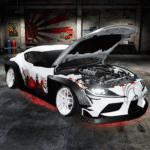
Players build custom liveries in the garage by layering stickers and decals over a base paint colour, with designs contributed by CIAY Studio and Sumo Fish. Customization is purely visual and affects no performance stat.
The system is deeper than most mobile racers allow. You combine multiple decal layers, adjust placement and colour, and save the result to a specific car. Nothing here costs Respect Points for the base options.
For a straight-line racer with no steering, this matters more than it sounds. Your car is the only thing other players see in the Online section, so a livery is the closest thing the game has to an identity.
Decals from CIAY Studio and Sumo Fish
Both studios contributed sticker packs specifically for this title, which is why the decal library skews toward proper racing graphics rather than generic clip art. Sponsor-style logos, stripe kits and Japanese street-racing motifs all appear.
Seasonal events add to the pool. A Halloween event, for instance, awarded themed decals alongside credits and RP for completing daily challenges. Those limited items do not return automatically, so grabbing them during the event window is the only reliable route.
Building a Livery Layout in the Garage
Start with the base colour, then add large shapes before small details. Working in that order stops later layers from being buried under a stripe you add afterward.
Keep the layer count reasonable on older phones. A livery stacked with dozens of decals can add load time when the car renders on the starting line. Save the design once you are happy, since switching cars does not carry a livery across automatically.
Why Custom Liveries Matter in Online Races
In 1 on 1 matches and Pro League, your livery is your signature. Regular opponents recognise recurring designs, and teams often adopt a shared colour scheme so members can spot each other in a 10-car field.
There is a practical angle too. When you race an opponent’s car in a mirrored match, you see their build choices reflected in how it looks and how it launches. A tidy livery on a badly tuned car is a common sight, and it tells you the driver spent their attention on the wrong screen.
Frequently Asked Questions About Drag Racing
Is Drag Racing free to play on Android?
Yes. Drag Racing is a free install on Google Play with no upfront cost, funded by advertising and optional purchases. Respect Point packs are sold in-store, and a paid option removes ads. Google Play rates it for ages 3 and up, with a notice covering digital purchases and user interaction.
Can you play the game without an internet connection?
Yes for career racing, which carries an official Offline tag on its store listing. You can race the chapter opponents and tune cars with no connection at all. Online sections need a live connection. Since a full run takes roughly 30 seconds, offline sessions fit neatly into short breaks.
Is the game still receiving updates?
Yes. The title changed hands from its original studio to a new publisher, and updates have continued since, with the most recent store update landing in September 2026. Recent additions include new vehicles, visual refreshes and a 4×4 career section. Its Google Play rating currently sits at 3.9 stars from about 2.48 million reviews.
Install This Tuning Racer If Milliseconds Matter
This one suits players who enjoy fiddling with numbers more than steering. If adjusting a final drive by 0.05 and watching a tenth of a second disappear sounds satisfying, you will get years out of it. Casual racers wanting scenery and corners should pick something else entirely. Personally, I bounced off it twice before the class system clicked, and now the tuning screen is the part I open first. Fifteen years after launch it remains the sharpest pure straight-line racer on Android.
Images


Download links
ℹ️ Download link not working? Please refresh the page and try again.
Developer's apps


Related apps

What's new
Minor bug fixes
New Apps
-
 Ultimate Boxing Champion MOD APK (Free Shopping)1.6.1
 -
Raft Survival – Ocean Nomad MOD APK (Free Shopping)2.9.4
-
Ferryman from Hades Roguelike MOD APK (Free Shopping)1.19
-
Age of Clicks: Grand Strategy APK (Unlocked FULL GAME)0.70
-
Good Coffee, Great Coffee Mobile MOD APK (Unlimited Money, Gems)1.0.10
-
Most Played Mobile Games


