
Disassembly 3D MOD APK (Unlocked Everything)

Description
Disassembly 3D features a full disassembly physics engine where every single screw, bolt, and component on each of its 51 objects is removable by hand. This walkthrough is written for new players who just downloaded the game and returning players who want to push further into the sandbox and weapons systems. It covers touch controls, the disassembly physics process, how Weapons Mode unlocks, the Sandbox fortress system, VR support, and the best beginner strategies for getting through levels fast.
What Is Disassembly 3D and How Does It Play
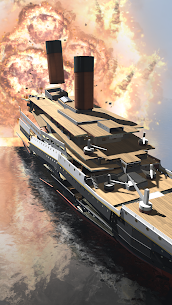
Disassembly 3D: Ultimate Stereoscopic Destruction is a physics sandbox simulation game developed and published by Khor Chin Heong. The game puts players in front of detailed 3D models of real-world objects, from a simple side table or flashlight all the way up to a full Airbus A380 and the Titanic. The goal in each level is to remove every single component until nothing remains attached.
The game launched in 2011 on iOS and has received continuous updates across Android, iOS, PC (Steam), Mac, and Amazon platforms. Its core design is built around one idea: genuine curiosity about how things work, rewarded with a physics system that makes every part feel real when you pull it off.
What the Disassembly Physics Engine Does and How It Feels
The disassembly physics engine powers every interaction in the game. Players tap and drag individual components — screws, nuts, bolts, panels, cables, and internal parts — to remove them from the object. Each part has a position and a connection to the object. Players must release it correctly, or the part stays stuck.
The physics do not allow shortcuts. A screw removed in the wrong order can leave a panel still attached. Because of this, the process feels genuinely satisfying. Pulling off the final component of a complex object like the Coffee Machine or the Hard Disk rewards you with a clear completion signal that immediately unlocks the next phase.
The Setting, Object Variety, and Tone of the Game
The game has no story in the traditional sense. Instead, the setting is a clean, neutral space where each object sits ready to be taken apart. The tone is playful and curious. Objects range from everyday household items — a Toaster, a Blender, a Hair Dryer — all the way to the extraordinary: a Space Station, a Fighter Jet, a Skyscraper, and the Titanic.
This variety is a major part of the appeal. No two objects disassemble the same way. The Bicycle requires a different sequence than the Coffee Machine. The Tank has far more components than the Lamp. So players constantly face new challenges as they move through the object list.
How Disassembly 3D Compares to Similar Mobile Sandbox Games
On Android and iOS, the closest comparable title is Melon Playground — a 2D ragdoll sandbox where players spawn characters and apply physics interactions. However, Melon Playground focuses on character-based mayhem rather than structured object disassembly. Disassembly 3D is more methodical: players work through a real object layer by layer before earning the freedom to destroy it.
Disassembly 3D: Demolition, from the same developer, offers a related experience but focuses on demolishing full buildings rather than disassembling individual objects. For players who want the combination of careful disassembly, weapon-based destruction, and free sandbox play all in one app, the original title stands alone in its category on mobile.
How Disassembly 3D Controls and Physics Work on Mobile
The mobile controls rely entirely on touch input. Players use one finger to rotate the camera around the object, and two fingers to pinch and zoom. To remove a part, players tap and hold the component, then drag it away from its connection point. This works across all part types — from large panels to tiny individual screws.
Controls take a few minutes to feel natural. New players often rotate the object when they mean to drag a part. The key is to tap the part directly before beginning the drag motion. Once that distinction becomes instinctive, the disassembly process becomes much faster and more precise.
How Touch and Drag Input Removes Bolts, Screws, and Parts
Each component in the game responds to touch input based on its physical connection to the object. Screws require a rotational drag gesture to unscrew. Bolts, panels, and covers lift away once their fasteners are removed. Players cannot pull a panel free if a hidden screw underneath still holds it in place.
The game gives no explicit tutorial for most objects. Players have to work out the correct removal sequence themselves. This is intentional. The disassembly physics engine models realistic connections, so the sequence that works on a real device also tends to work in the game.
How the Zoom System and Camera Rotation Help You Find Hidden Parts
Camera zoom is essential in later objects. The Microscope, the Computer, and the Airplane all contain components tucked deep inside the structure. Without zooming in close, these parts are invisible. Players should rotate and zoom into every accessible cavity before assuming a disassembly is complete.
The game does not mark remaining parts on screen by default. However, players who unlock the Part Finder tool can use it to locate any remaining components. For beginners playing the first six free levels, careful zooming and rotation are the primary tools for finding stragglers.
What Happens When You Complete a Full Disassembly
When the final component detaches and all parts sit separate from the original structure, the game registers a completed disassembly. This triggers an immediate unlock: Weapons Mode activates for that level. Players then have full access to the unlockable arsenal for that object — everything from a Classic Bomb and a Handgun to C4 Explosive and a Rocket Launcher.
Completing a disassembly also contributes to overall level progression. Additional object packs open up via in-app purchase. However, the completion itself is the reward that matters most because Weapons Mode transforms a methodical puzzle session into a full destruction experience.
How Weapons Mode Works in Disassembly 3D
Weapons Mode is the payoff for completing a full disassembly. It does not become available before then. The design is deliberate: players must earn the right to destroy what they have just taken apart. This two-phase structure — careful disassembly followed by total destruction — gives the game its distinctive rhythm.
The weapons system is extensive. Players do not just get a single firearm. They get access to an escalating arsenal that expands the further they progress through the object list.
How Weapons Mode Unlocks After Each Disassembly
Weapons Mode unlocks on a per-object basis. Finishing the Lamp unlocks its Weapons Mode. Finishing the Bicycle unlocks that level’s arsenal. Each unlock is independent. So players who skip ahead to a favourite object still need to complete that specific disassembly before blowing it up.
The progression is satisfying because the unlocked weapons feel proportional to the effort. A simple household object rewards a handgun and a grenade. Larger, more complex objects unlock heavier weapons including the Assault Rifle, C4, and the Rocket Launcher. The game scales destruction to match the scale of the object.
How the Ballistics Physics System Handles Bullets and Explosions
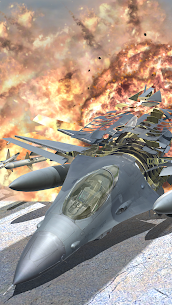
The ballistics system in this title is more detailed than most mobile games attempt. Every shot calculates trajectory, penetration depth, deflection angle, and tumbling behaviour in real time. Firing a Shotgun at a TV does not produce a generic hit effect. The pellets scatter, penetrate the casing at different angles, and create individual 3D bullet holes with actual depth.
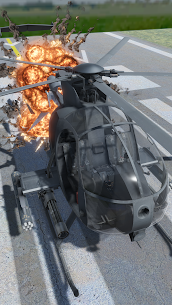
Slow-motion bullet time activates automatically on certain shots, pausing the moment of impact so players can see the ballistics in action. Explosions behave similarly. A Classic Bomb placed inside the Coffee Machine will distribute force through the connected components, not simply delete the object from the screen.
All Unlockable Weapons From Handgun to Rocket Launcher
The current weapon roster includes eight destructive items: Classic Bomb, Handgun, Shotgun, Grenade, Assault Rifle, C4 Explosive, Rocket Launcher, and the Mannequin spawner used in combat. Two tool unlocks supplement the weapons: X-Ray Glasses for seeing through surfaces and the Part Finder for locating remaining components.
Each weapon is available within the level where it was unlocked, and all weapons carry into Sandbox Mode. Players returning to a completed object level can use any previously unlocked weapon freely. The developer has noted that more weapons are planned for future updates.
How Sandbox Mode and Fortress Building Work
Sandbox Mode is available from the start alongside the first six free objects. It operates as a fully open level with no disassembly objective. Players spawn objects, vehicles, weapons, and mannequin enemies from a placement menu. There is no time limit and no failure condition.
The mode is designed for players who want complete creative freedom. Building a fortress, then defending it against waves of ragdoll mannequins, is the central activity. However, Sandbox also works as a testing ground for weapons and physics experiments before committing to a structured level.
How to Spawn Vehicles, Weapons, and Bombs in Sandbox
Spawning works through a tap-to-place system. Players open the spawn menu, select a category — vehicles, weapons, mannequins, or bombs — then tap a point in the environment to place the selected object. Objects appear with full physics active immediately. A Car spawned on a raised platform will roll and fall.
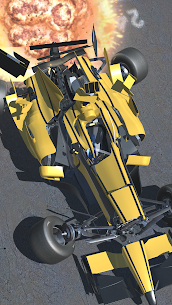
Players can spawn multiple objects and stack them. Placing C4 inside a spawned Car, then detonating it next to a fortress wall, creates a chain reaction that the ballistics system calculates in full. Because each spawn is additive, complex scenes build quickly.
How to Build a Fortress and Position Mannequin Enemies
Fortress building uses the same spawn system. Players place structural objects — walls, vehicles, large components from completed levels — to form defensive positions. There is no dedicated building tool. Instead, the physics sandbox becomes the building material.
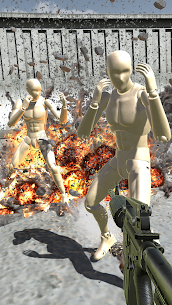
Mannequin enemies have advanced climbing AI. They do not stand still and wait to be shot. They climb over obstacles, scale walls, and navigate around physics objects to reach the player. Positioning a fortress correctly means accounting for vertical attack angles, not just ground-level approaches.
How Ragdoll Combat Physics Make Enemy Fights Feel Physical
The full-body active ragdoll system gives every combat interaction a physical quality that typical mobile games do not attempt. When a mannequin takes a hit, the force applies to the actual body part that receives it. A punch to the chest pushes the torso. A shot to the leg causes a specific collapse. No two combat sequences produce identical results.
This makes Sandbox combat unpredictable and high in replay value. Because the mannequin AI climbs dynamically and the physics apply per-body, each defence of a fortress plays out differently. Players who build the same fortress twice will face mannequins reaching them via different paths.
How Progression and Object Packs Work in Disassembly 3D
The game follows a freemium structure. The first six objects and Sandbox Mode are fully free with no time limits. Additional objects are available in grouped level packs purchased as in-app purchases. This structure means new players can spend significant time with the free content before deciding whether to invest.
The six free objects provide a solid introduction to the disassembly physics engine. Each one increases in complexity relative to the last, giving players enough variation to understand how the touch-drag system scales across different object types.
How the Six Free Levels and Sandbox Give New Players a Start
The six free objects introduce players to simple household items first. Lamp and Side Table establish the basic screw-and-panel removal sequence. Speaker and Pocket Knife add components with tighter internal connections. By the sixth free object, players understand that camera rotation, careful zooming, and part sequence all matter.
Sandbox Mode runs in parallel with these levels. So a player stuck on the fifth free level can switch to Sandbox, experiment with weapons and physics freely, then return with better spatial instincts. The combination makes the free content feel more complete than a simple six-level demo.
What the 51 Objects Include and How They Are Grouped
The 51 objects span six broad categories: household furniture and appliances, electronics and tools, vehicles, large structures, science and specialist equipment, and novelty or experience items. The Titanic, Space Station, and Skyscraper sit at the complex end. The Fidget Spinner and Toothbrush sit at the simple end.
Objects are sold in grouped packs of three by the developer. Each pack contains three objects at varying complexity levels. Players who purchase all packs unlock the complete 51-object roster. The Steam version confirms that completing all objects takes between eight and twelve hours for a standard playthrough.
What Completing Every Disassembly Unlocks Across All Packs
Completing every disassembly in a pack unlocks Weapons Mode for each object in that pack and gives players the full arsenal for sandbox use within those levels. There is no global completion reward, but the process of finishing every object builds familiarity with the Part Finder and X-Ray Glasses tools that make the toughest disassemblies far more manageable.
Players who reach large objects like the Airplane or the Skyscraper without these tools will find the final stages of disassembly significantly harder. Unlocking these tools via pack progression is the most important long-term benefit of working through the object list in order.
What Most Players Miss — VR Mode, Stereoscopic 3D, and Hidden Tools
Most player reviews and articles focus only on the disassembly and weapons systems. However, this title contains three features that almost no coverage addresses. Each one meaningfully changes the experience, and two of them require zero additional cost to activate.
How VR Mode Works With Google Cardboard on Mobile
VR Mode activates from the in-game settings menu. It splits the screen into two separate viewpoints formatted for Google Cardboard and compatible headsets. The full disassembly physics engine and all weapons remain active in VR. Players use a Bluetooth VR controller to interact.
The result is a genuinely different experience. Scaling down to the size of a smartphone component, or standing inside the Titanic as it disassembles around you, produces a sense of presence that the flat-screen mode cannot replicate. Players with a Google Cardboard headset should activate VR Mode as early as the third or fourth free object, where the internal component spaces start to feel large enough to benefit from it.
How Stereoscopic 3D Mode Works Without Glasses
Stereoscopic 3D Mode does not require a headset or special glasses. The game supports wiggle, parallel eye, cross-eye, and SBS formats. Each mode uses a different method to create depth perception from two slightly offset images. Players can switch between them in settings to find the format that works best with their eyes.
This feature has existed in the game since its 2011 original release. However, almost no mobile game coverage mentions it. Players who find the flat-screen mode visually straightforward should try cross-eye or parallel-eye mode when working on complex objects. The added depth makes it easier to see the spatial relationship between connected components.
How X-Ray Glasses and the Part Finder Tool Change the Disassembly Process
The X-Ray Glasses tool lets players see through the outer casing of any object to view internal components without removing the exterior first. This changes the disassembly approach entirely. Instead of removing every external panel to find what is underneath, players can plan the removal sequence by seeing through surfaces.
The Part Finder tool highlights any remaining components that players have not yet removed. On large objects like the Airplane or the Skyscraper, this tool is close to essential. Players who attempt the final stages of these objects without it often spend more time rotating and zooming than actually disassembling. Both tools unlock via pack progression and carry into every subsequently played level.
Best Disassembly 3D Tips and Tricks for Beginners
Starting the game without any preparation leads most players into the same set of frustrating patterns. The disassembly physics engine rewards players who understand how component connections work. A few specific habits, established early, separate players who complete objects quickly from those who spend extra time stuck on the final few parts.
How to Prioritise Screws Before Bolts to Speed Up Each Disassembly
Screws hold panels in place. Panels cover bolts. In most objects, the correct removal sequence starts with surface screws, then works inward. Players who try to pull panels before removing their screws find that nothing moves and assume the game is buggy. The physics engine is not buggy — the order matters.
For each new object, spend the first thirty seconds rotating fully around it at maximum zoom-out. Count the visible screws before touching anything. Then start from the outside and work inward. This sequence works on the Bicycle, the Computer, the Coffee Machine, and every large vehicle in the game.
How to Use Weapons Mode Strategically Without Losing Track of Parts
After Weapons Mode unlocks on a completed level, it is tempting to immediately fire every weapon at the disassembled parts. However, blowing up a large object like the Tank scatters hundreds of components across the physics space. Players who plan to replay the level for speed will find the debris field makes part tracking much harder on the second run.
Instead, use Weapons Mode first on smaller, simpler objects. The Lamp, the Speaker, and the Toaster all produce satisfying destruction without a debris field large enough to create problems. For complex objects, try placing C4 inside a specific cavity rather than firing the Rocket Launcher at the exterior. The internal detonation produces more spectacular results and keeps the ballistics physics system fully engaged.
How to Stop Getting Stuck on the Final Few Parts in Any Level
Getting stuck on the last one or two components is the most common frustration in the game. The disassembly physics engine models connections accurately, so a remaining part is always findable — it simply requires looking in the right place. The Part Finder tool solves this completely, but beginners who have not unlocked it yet need a manual approach.
Rotate the object to each of its six primary faces — top, bottom, front, back, left, right — and zoom all the way in at each angle. Most hidden final parts sit on the underside or the rear face of the object. Objects like the Sink and the Toilet hide components beneath the base, and the Blender hides parts underneath the motor housing. Checking underside surfaces before assuming a disassembly is complete eliminates most stuck moments.
Frequently Asked Questions About Disassembly 3D
Is Disassembly 3D free to play on Android and iOS?
Disassembly 3D is free to download on both Android and iOS. The first six objects and the full Sandbox Mode are permanently free with no time limits. Additional object packs are available as in-app purchases. Players can complete a significant portion of gameplay without spending anything, then purchase specific packs based on their interests.
How long does it take to complete all levels in Disassembly 3D?
Completing all 51 objects in Disassembly 3D takes approximately eight to twelve hours of focused gameplay. Players who also spend time in Sandbox Mode building fortresses and experimenting with weapons will extend that significantly. Speedrunning individual objects takes between two and ten minutes depending on complexity.
Does Disassembly 3D support virtual reality headsets?
Yes. Disassembly 3D supports Google Cardboard and similar VR headsets on both Android and iOS. VR Mode splits the screen into a stereoscopic format for headset viewing, and a Bluetooth VR controller is also supported. The full physics engine, all weapons, and all objects are accessible in VR Mode at no extra cost.
Why Disassembly 3D Rewards Players Who Take Their Time
Disassembly 3D is best suited to players who find satisfaction in problem-solving and methodical progress. Beginners who work through the six free objects carefully will build the spatial instincts needed for every large, complex object that follows. Players who want pure destruction will find it — but only after earning it through the disassembly process, which is the stronger half of the experience.
After working through the free levels and the first purchased pack, it becomes clear that the game’s design philosophy is genuine: it treats curiosity as its own reward. The transition from a perfectly disassembled Coffee Machine to firing a Rocket Launcher at its scattered components is one of the most satisfying loops in mobile simulation gaming. Disassembly 3D does not rush that loop, and neither should the player.
Images
Download links
ℹ️ Download link not working? Please refresh the page and try again.
Related apps





What's new
Fix ad obscuring settings screen
New Apps
Most Played Mobile Games


