
Detention APK (FULL GAME)

Description
Detention forces you to hold your breath — literally — as supernatural creatures called the Lingered patrol school corridors that should feel familiar but have become something deeply wrong. This post is written for first-time players and story-driven horror fans who want to know what they are getting into before pressing play. It covers the point-and-click mechanics, the breath-holding stealth system, the Taiwanese cultural references woven into every puzzle, and the most common mistakes new players make.
What Is Detention? A Mobile Horror Game
Red Candle Games built Detention as a 2D atmospheric horror title set in 1960s Taiwan during the White Terror period. The game won the IndieCade 2017 award and later came to Android and iOS as a premium title priced at $4.99. However, many players who pick it up expecting a fast-paced horror experience are surprised by what they actually find. This is a slow, deliberate psychological horror game with the weight of real historical trauma behind every corner.
The Point-and-Click Side-Scrolling Core Mechanic
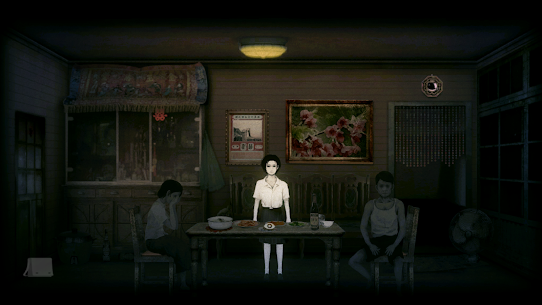
Players navigate Greenwood High School using a simple tap-to-move, tap-to-interact point-and-click system. The 2D side-scrolling format keeps all movement on a single horizontal plane. Because of this, the environment feels contained and claustrophobic. Players tap on objects marked with a question mark icon to investigate them, pick them up, or trigger a scene. There is no combat. The entire core mechanic revolves around observation, puzzle-solving, and knowing when to stop moving.
Most item interactions feed directly into the story. Picking up a specific ritual object or written note does not just add to an inventory — it shifts the narrative. Red Candle Games designed this system to reward curiosity. Players who tap every detail in a room will understand the story at a deeper level than those who rush forward.
White Terror Taiwan: The Setting and Story Premise
The game is set during Taiwan’s period of martial law, historically known as the White Terror era. Two students, Wei Chung-ting and Ray, find themselves trapped inside a school that has transformed into something haunted and hostile. The place they knew has been overrun by the Lingered, creatures rooted in Taiwanese mythology. As a result, the horror is not random. Every supernatural element connects to the political and cultural reality of that period.
The story begins from Wei’s perspective and gradually shifts. Players uncover a tragic series of events involving teacher Miss Yin Tsui-han, a forbidden book club, and betrayal rooted in fear. The tone is heavy from the first scene. Moreover, the game does not offer a relief valve. There are no comedic moments, no power fantasies, and no easy escapes. The horror is earned, and the emotional weight builds toward an ending that many players describe as genuinely devastating.
How Detention Compares to Other Mobile Horror Titles
On Android and iOS, the closest comparable experiences are Fran Bow and The Room series. Fran Bow is also a 2D point-and-click horror game with a story about trauma and loss. However, Fran Bow leans into surrealist visuals and a child protagonist dealing with mental illness, whereas Detention draws from real historical events and Taoist mythology. The gameplay pacing is slower in Detention, and the cultural specificity is much deeper.
The Room series offers atmospheric puzzle design on mobile, but it focuses on mechanical complexity rather than emotional narrative. Detention sits in a different category. It prioritises story, atmosphere, and cultural authenticity over puzzle difficulty. Therefore, players who value emotional resonance over mechanical challenge will find Detention far more rewarding than most mobile horror options.
Detention Gameplay Mechanics and Controls
The point-and-click control scheme translates well to touchscreens. Players tap to move toward a point on screen, and the character walks to that position automatically. Objects the game wants players to notice appear with a small question mark. However, not every question mark leads to a major item. Some interactions are purely for environmental storytelling. Knowing the difference matters.
How the Point-and-Click Movement System Works
Players tap anywhere on the screen to direct their character to that location. Tapping on an object triggers an interaction prompt. The inventory system is minimal. Players collect key items needed to complete specific puzzles, and those items are available in a simple tap-to-use interface. There is no complex inventory management. Because of this, the focus stays on observation and narrative rather than item juggling.
Movement speed is fixed and deliberate. Red Candle Games did not include a run button. This is intentional. The pacing of movement reinforces the tension. Additionally, the side-scrolling layout means players always know roughly what direction to head. The game does not overwhelm players with an open map. Instead, it channels attention into carefully designed corridor-by-corridor progression.
How the Breath-Holding Mechanic Works Against the Lingered
The Lingered are the primary supernatural threat in Detention. Players cannot fight them. Instead, when a Lingered is nearby, players must hold their breath by pressing and holding the screen. The character can hold breath for approximately 15 seconds. After that, the character automatically exhales, which can attract the creature. Therefore, timing is everything.
The key is to start holding breath before the Lingered enters the immediate area, not after. Waiting too long costs the full window. Players who start the hold early gain the full 15 seconds of safe passage. Releasing too soon, however, also triggers detection. Additionally, some sections require players to pass multiple Lingered in sequence. In those cases, managing the timing across two or three creatures back to back is the main challenge. Most players who struggle with these sections are releasing too early rather than too late.
What Happens After Completing a Puzzle or Scene Transition
Completing a puzzle typically triggers a story cutscene or unlocks access to a new area of the school. The pacing between puzzles and story moments is tightly controlled. Red Candle Games treated each chapter as a distinct emotional beat. So when a puzzle is solved, the game rarely just opens a door. It reveals something — a memory, a clue, a confrontation. Consequently, the reward for solving puzzles in this game is more story rather than a new weapon or stat boost.
Scene transitions also use visual effects tied to the game’s art style. The shifts between Wei’s and Ray’s perspectives are signalled through the environment changing tone. Players moving through the school will notice the colour palette shift and the ambient sounds change. These are cues that the narrative has moved to a different emotional register, not just a different room.
Taiwanese Culture and Religious References in Detention
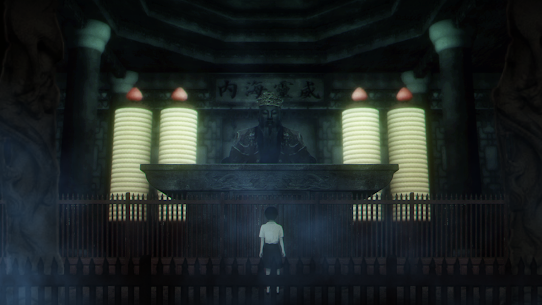
Understanding the cultural layer of Detention makes the horror significantly more effective. Red Candle Games embedded Taoist and Buddhist references throughout every scene. These are not decorative. Each ritual object, each creature design, and each environmental symbol carries specific meaning rooted in Taiwanese belief systems and the political reality of the 1960s.
Taoism, Buddhism, and the Lingered Creatures
The Lingered take their name and design from Taiwanese mythology. In Chinese folklore, lingered spirits are those who cannot pass on — often because of unresolved grief, guilt, or injustice. This directly mirrors the game’s themes. The creatures are not random monsters. They represent the suppressed and the forgotten during the White Terror period. Because of this, each encounter carries thematic weight that goes beyond a standard horror obstacle.
Buddhist concepts of karma and spiritual debt also surface throughout the school environment. Players who pay attention to the written materials they collect will find references to ritual practices used to appease restless spirits. Red Candle Games treated these elements seriously. They did not reduce Taoist or Buddhist symbolism to aesthetic decoration. Instead, each reference functions as a narrative clue about who these creatures were and why the school holds them.
The Bagua, Paper Planes, and Ritual Objects as Story Clues
The Bagua, an eight-symbol diagram from Taoist cosmology, appears in the game as an environmental detail that carries a specific meaning about a character’s state of mind. Players who interact with the Bagua mirror in a specific room receive indirect information about a betrayal in the story. This is an example of how Detention uses cultural objects to tell story beats rather than relying on dialogue alone.
Paper planes appear as recurring symbolic objects throughout the school. They represent messages between characters — specifically a love note that becomes central to the story’s emotional climax. Similarly, ritual objects such as incense holders and offering items mark locations where past events of significance occurred. Finding and interacting with these objects in sequence reveals the full picture of what happened at Greenwood High School before the game’s events began.
How the 1960s Martial Law Setting Shapes Every Game Element
Taiwan’s White Terror period lasted from 1949 to 1987. During this time, citizens faced surveillance, arrest, and execution for political dissent. Red Candle Games set Detention at the peak of this era. Therefore, the fear that saturates the school is not supernatural in origin. It is rooted in the real terror of being reported by someone you trusted.
This historical layer transforms the game’s mechanics. Holding your breath near the Lingered is not just a gameplay system. It mirrors the real experience of people during that era — staying silent, staying small, avoiding detection at all costs. The supernatural atmosphere is therefore a metaphor. Players who understand the historical context will find the second and third playthroughs of the game significantly richer than the first.
The Atmospheric Sound Design and Visual Art Direction
Red Candle Games invested heavily in Detention’s audio and visual presentation. The result is a game that feels completely unlike any other mobile horror title. The art direction draws from 1960s Taiwanese cinema, literature, and graphic design traditions. Combined with an original soundtrack of more than 40 minutes, the sensory experience of Detention is what most players remember long after the story ends.
The 40-Minute Original Soundtrack Breakdown
The OST runs over 40 minutes and functions as an emotional narrator throughout the game. Red Candle Games composed the soundtrack by fusing Electronic, Lo-Fi, and Rock elements with traditional Asian instruments. The result is a sound that feels simultaneously vintage and unsettling. During tense sections, the music shifts to ambient drones and irregular rhythms. During story revelations, it becomes more melodic and personal.
The Lo-Fi quality of certain tracks is not a budget limitation — it is a deliberate stylistic choice referencing 1960s Taiwanese radio and vinyl aesthetics. Consequently, the soundtrack signals time and place as much as mood. Players using headphones will notice spatial audio details that add depth to corridor navigation. The audio design rewards close listening.
Lo-Fi, Electronic, and Traditional Asian Instruments Combined
Traditional instruments such as the erhu (a two-stringed Chinese fiddle) and bamboo flute appear in specific tracks tied to emotionally significant scenes. These instruments carry cultural recognition for players familiar with East Asian musical traditions. For players unfamiliar with these sounds, they register as deeply unfamiliar and therefore heighten the sense of being in an unknown place. Red Candle Games used this cultural gap intentionally.
The Electronic and Rock elements ground the soundtrack in a more contemporary horror register. As a result, the OST never feels like a museum piece. It moves between eras and genres fluidly. Some sections sound like Lo-Fi bedroom recordings. Others build into full atmospheric arrangements. This variety keeps the audio from becoming monotonous across the game’s full playthrough length.
How the 1960s Taiwanese Art Style Creates Dread Without Jumpscares
The visual art in Detention is heavily inspired by 1960s and 1970s Taiwanese film posters, propaganda art, and literary illustration. The colour palette favours desaturated greens, yellows, and reds — colours associated with both traditional Taiwanese aesthetics and decay. Red Candle Games avoided the darkness-and-flickering-lights approach common in Western horror games. Instead, the dread comes from what is wrong with familiar things.
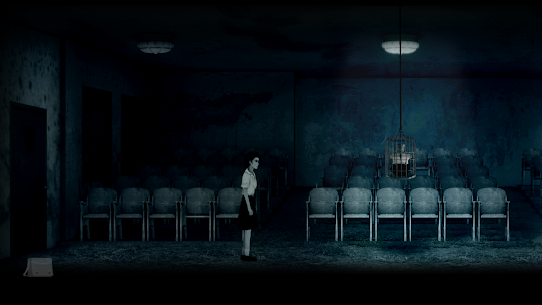
School desks are arranged correctly but look wrong. Doors are open but lead somewhere they should not. The art direction communicates wrongness through composition and colour rather than shock imagery. Therefore, Detention can be deeply unsettling even in its quieter moments. Players who expect jump scare-heavy horror will be surprised. The game’s scariest moments are almost always quiet.
Story Structure and Chapter Progression in Detention
Detention progresses through a chapter structure tied directly to story beats. There is no open world, no side content, and no branching path system. The narrative moves in one direction. However, the depth within that single path is significant. Players who interact with every environmental object will encounter a much richer version of the story than those who only complete required puzzle sequences.
How the Chapter System Works and What Drives Progress
Each chapter of Detention centres on a specific area of Greenwood High School and a specific emotional revelation. Progress requires completing the area’s puzzle sequence and collecting the items needed to advance. The game does not offer a map. Instead, the point-and-click system channels players through each space naturally. When an area is complete, a story cutscene plays and the chapter shifts.
The pacing is slower than most mobile games. Players should expect to spend 20 to 40 minutes per chapter, depending on how thoroughly they explore. Additionally, the game does not offer hints. Players who miss a key item must retrace their steps through the environment. This is by design. Exploration is a core part of what Detention is asking its players to do.
Wei and Ray: The Two Playable Characters and Their Role
Wei Chung-ting is a junior student at Greenwood High School. Players begin the story from his perspective. He is passive, observational, and primarily functions as a lens through which the player absorbs the school’s atmosphere. His sections establish the tone and introduce the Lingered.
Ray is the second playable character, and her sections carry the story’s emotional weight. Her relationship with teacher Mr. Chang, her role in a betrayal she may not fully understand, and her journey toward confronting what she has done form the core of the narrative. Consequently, players who only experienced Wei’s sections early in the game will find the story’s full meaning emerges primarily through Ray’s perspective. Her chapters are also longer and more puzzle-dense.
What the Ending Reveals and Why the Story Resonates
Without revealing specific plot details, the ending of Detention recontextualises events shown early in the game. Players who reach the final scenes will find that certain choices — or the absence of choices — in the story carry moral consequences that the game makes explicit. The emotional impact depends heavily on how much cultural context the player brings. However, Red Candle Games constructed the ending to be affecting even for players unfamiliar with the White Terror period.
The story resonates because it is about real grief, real guilt, and real historical injustice. The supernatural horror is a delivery system for something much heavier. Many players report replaying the game immediately after finishing it. Therefore, the ending does not feel like a conclusion so much as a reframing of everything that came before.
Hidden Cultural Details Most Players Miss on First Playthrough
Most first-time players in Detention focus on puzzle completion and miss the layers of cultural meaning embedded in the environment. This is the most significant difference between a first playthrough and a second. Red Candle Games filled the school with details that function as either story clues or cultural commentary — sometimes both simultaneously.
The Symbolic Meaning Behind the Lingered Creature Design
Each Lingered creature in Detention is designed with specific visual references to Taiwanese folklore. The shapes and postures of the creatures echo descriptions of spirits described in Taoist texts — entities that linger because they are bound to the material world by unfinished emotional business. Players who notice the specific visual differences between the Lingered encountered in Wei’s sections versus Ray’s sections will find they communicate different aspects of the story’s emotional content.
The creatures are also visually abstract rather than photorealistic. Red Candle Games avoided designing gore-heavy monsters. Instead, the Lingered are shapes, suggestions of forms, and wrongly assembled bodies. This abstraction makes them culturally specific without being literal. As a result, they feel deeply connected to the tradition of East Asian supernatural folklore rather than Western horror design conventions.
Religious Ritual Items and Their In-Game Function
Several ritual objects found throughout the school serve a dual purpose. First, they are items players pick up and use to solve environmental puzzles. Second, they carry specific meanings rooted in Taoist and Buddhist practice. For example, incense found in certain rooms signals that something significant — often something painful — occurred in that space. Similarly, offering bowls placed in unexpected locations mark sites of spiritual significance within the school’s history.
Players who take time to read the item descriptions in their inventory will find that Red Candle Games wrote each description with care. These descriptions do not just identify the item. They place it within a cultural context that adds information about the story’s events. Additionally, some items that seem purely decorative turn out to be puzzle components in later chapters. Therefore, picking up every interactable object is always worth the time.
Environmental Clues That Reframe the Story Entirely
Several details visible early in the game become meaningful only after the story’s central revelation. A paper plane seen in an early corridor connects to a specific character’s backstory. A mirror in the girls’ bathroom behaves in a way that foreshadows a major plot point. Classroom blackboards carry text that seems incidental but describes the political climate directly.
These environmental clues are not required to complete the game. However, they significantly deepen the horror of the ending for players who noticed them. Red Candle Games designed Detention so that a second playthrough, with full story knowledge, transforms the school from a frightening unknown into something even more heartbreaking. Consequently, many players rate their second experience of the game as more emotionally powerful than their first.
Best Detention Tips and Tricks for Beginners
When to Hold Your Breath Near the Lingered (and When Not To)
New players typically start holding breath too late when the Lingered appear. The better approach is to begin the breath-hold as soon as the ambient music shifts to its tense, low-frequency tone — this signals a Lingered has entered the active zone. Starting the hold at this point gives the full 15-second window. Additionally, players should release and re-hold between creature clusters rather than trying to chain a single hold through multiple obstacles. Two shorter holds are almost always safer than one extended hold that runs out at the worst moment.
Players should also note that staying completely still is not required. The Lingered respond to sound, not sight. Moving slowly during a breath-hold is generally safe. However, rushing movement while holding breath can still draw detection in certain corridor sections. So the rule is: hold breath early, move slowly, and release only when the creature is clearly past.
How to Read Environmental Question Marks Without Missing Critical Items
Not every question mark in the environment leads to a puzzle item. Some trigger environmental storytelling — a desk inscription, a piece of torn paper, a detail that adds context but does not advance the puzzle state. New players often skip these, assuming they are not needed. However, missing them also means missing story information that makes later puzzle logic harder to follow.
The practical approach is to interact with every question mark in a given room before moving on. This takes an additional one to two minutes per room at most. Because Detention is a short game overall, spending that time on thorough exploration costs nothing significant. Furthermore, some items that seem optional early in the game are required later. Collecting them on first pass avoids backtracking through sections already cleared.
Why Rushing Puzzle Scenes in Detention Always Costs Progress
Detention’s puzzles depend on understanding context before attempting solutions. Players who rush to try every interactive object without reading the item descriptions or observing the environment first will frequently hit dead ends. The puzzle design assumes the player has absorbed the story context of the room before attempting to use items within it.
Therefore, the correct approach to every new area is to walk the full space first, interact with every question mark for information, read every item description, and only then attempt puzzle solutions. This sequencing is never explicitly taught by the game. However, it is the single most effective habit a new player can build. Detention rewards patience in every section, and the players who struggle most are consistently those who treat it like an action game rather than a story-driven horror experience.
Frequently Asked Questions About Detention
Is Detention available on Android and iOS?
Detention is available on both Android and iOS. Red Candle Games released the mobile version in September 2019. It is a premium paid title priced at $4.99 on both the Google Play Store and the Apple App Store. The mobile version runs well on modern devices and preserves the full story and gameplay of the original PC release without content cuts.
How long does it take to finish Detention?
Detention takes approximately 3 to 5 hours to complete on a first playthrough. Players who explore every room thoroughly and interact with all environmental details will land closer to 5 hours. Players who focus purely on puzzle completion without extended exploration can finish in around 3 hours. A second playthrough, with full story knowledge, typically runs faster — around 2 to 3 hours.
Does Detention have multiple endings or replayability?
Detention does not feature multiple endings in the traditional sense. The story follows a single narrative path to a fixed conclusion. However, replayability comes from the depth of environmental storytelling. Many cultural references and symbolic details become fully meaningful only on a second playthrough. As a result, players who replay Detention report a significantly different emotional experience — not because the story changes, but because their understanding of it does.
Who Should Play Detention? A Direct Recommendation
Detention is the right game for players who want horror that leaves a mark. It suits story-driven horror fans, anyone interested in Taiwanese history and East Asian mythology, and mobile players who are tired of games that substitute cheap scares for meaningful atmosphere. It is not the right game for players who want fast action, branching choices, or long playtimes. The game is short, deliberate, and emotionally demanding.
After playing through Detention twice, the ending stayed with me for days — not because of its supernatural imagery but because of what it says about silence, guilt, and the cost of fear. The point-and-click adventure format is a perfect vehicle for its story. Red Candle Games built something that functions as both a mobile horror game and a piece of cultural memory. Detention earns its reputatio
Images


Download links
ℹ️ Download link not working? Please refresh the page and try again.
Related apps


What's new
[Fix]
Updated Unity version to Unity 2022.3.62f2 to patch the CVE-2025-59489 vulnerability.
New Apps
Most Played Mobile Games


