
Crash Dive 2 MOD APK (Unlimited Money)

Description
Crash Dive 2 hands you command of a Gato-class submarine and never tells you how aggressive to be — that decision is entirely yours. This breakdown is written for new players and returning fans of the original Crash Dive who want a clear picture of every major system before they sail into the South Pacific. Here you will find coverage of the stealth and offense mechanics, crew and damage management, the upgrade tech tree, and practical tips for surviving your first campaign missions.
What Is Crash Dive 2 and How Does It Play
Crash Dive 2 is a submarine combat game that blends arcade action with genuine simulation depth. The game puts you in command of a Gato-class submarine operating across the South Pacific during World War II. Your objectives range from sinking enemy convoys to attacking land bases and shooting down incoming aircraft.
The design sits between two poles. On one side, you have stealth-focused torpedo runs. On the other, you have aggressive surface combat with the deck gun. The game never forces you into one approach. Instead, it gives you all the tools and lets mission conditions shape your decision.
However, the blend goes deeper than most players expect at first. Systems like crew health, location-based damage, weather visibility, and the upgrade tech tree all influence how you engage. This is not a game where you pick a tactic once and repeat it every mission.
The core stealth and offense hybrid system
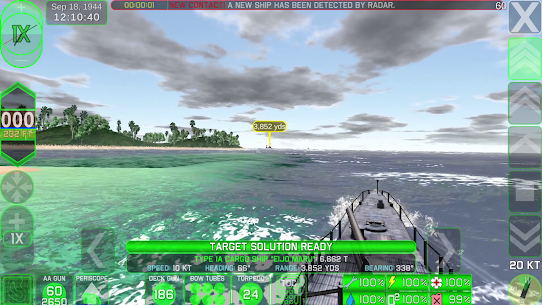
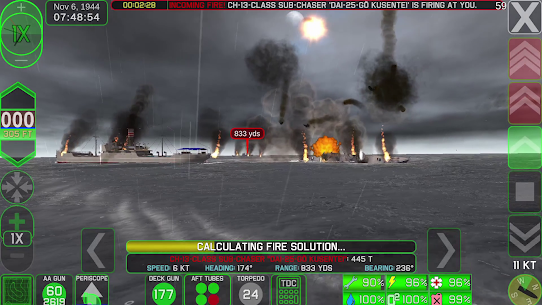
The stealth and offense hybrid is the central design philosophy of Crash Dive 2. You can sneak past destroyers completely and torpedo transport ships without ever surfacing. Alternatively, you can surface early and take on sub-chasers in a direct deck gun duel.
Neither approach is always correct. Stealth costs time but preserves crew health and hull integrity. Surface combat is faster but draws escorts and aircraft onto your position. Because the game tracks both crew condition and hull damage independently, every aggressive choice carries a real cost.
The South Pacific setting and WWII story premise
The campaign takes place across the South Pacific during World War II. You hunt enemy convoys through real-world locales including the Solomon Islands, the Philippines, and the Sea of Japan. Each location has a distinct geography that affects how enemy forces patrol and respond.
The tone is tense and practical rather than cinematic. There is no extended story cutscene structure. Instead, the narrative lives in the mission objectives and the pressure of managing a submarine crew under fire.
What makes Crash Dive 2 different from other sub games
Most submarine games force you to commit to simulation or arcade from the start. Crash Dive 2 does not. The crew management and damage control can be handled manually for a full simulation experience, or handed to the AI so you can focus on combat decisions alone.
Additionally, the built-in modding editor and random mission generator give the game a lifespan well beyond the campaign. By contrast, most comparable titles lock you into developer-authored missions only. That design choice separates Crash Dive 2 clearly from the competition.
How the Main Combat Mechanics Work
Combat in Crash Dive 2 operates across three distinct systems. You have underwater torpedo attacks, surface deck gun engagements, and AA gun combat against aircraft. Each system requires a different approach and uses different resources. Understanding all three early is essential.
The game does not simplify any of these systems to the point of being automatic. You control targeting, positioning, and timing in each engagement type. As a result, the learning curve across all three is genuine — but the payoff in satisfaction is equally real.
Torpedo attacks and convoy interception
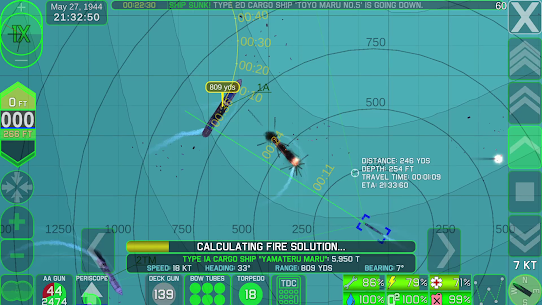
Torpedo attacks are your primary tool against enemy transports and capital ships. You approach submerged, track the convoy’s speed and heading, and fire at an intercept angle. A missed torpedo wastes a valuable resource and may alert escorts to your position.
Therefore, patience matters more than aggression in torpedo combat. The game rewards players who wait for a clean shot. Firing early under pressure usually results in missed shots and a dangerous counter-response from destroyers.
Deck gun duels and AA gun combat
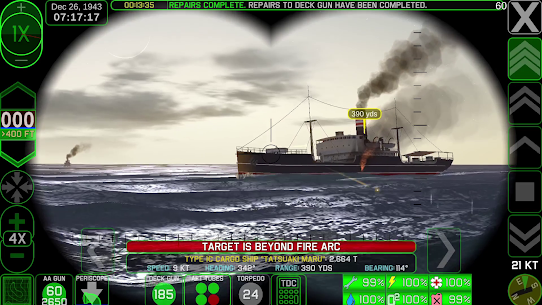
When you surface, the deck gun becomes available for direct combat against sub-chasers and lighter vessels. Deck gun duels require you to stay exposed, which means enemy aircraft and additional escorts become a serious threat simultaneously.
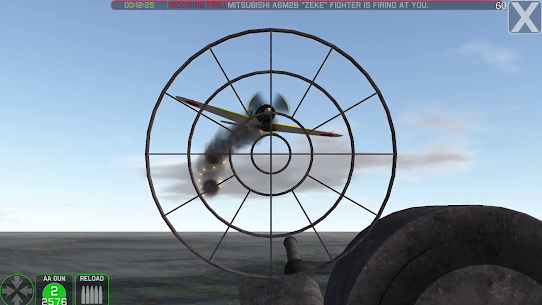
The AA guns handle incoming aircraft on strafing runs. When enemy planes attack, you switch to the AA position and track them down before they damage your hull or crew. Managing both the deck gun and the AA guns in a surface engagement requires fast prioritisation. The game makes that tension feel genuinely dangerous.
How depth charge evasion changes your approach
Destroyers use depth charges to hunt you when you dive. Evading them means changing depth, cutting speed, and using the ocean floor or thermal layers to break sonar contact. Sitting still at a predictable depth is a fast way to take critical damage.
Successful evasion often means abandoning your current attack run entirely. However, breaking contact and resetting your approach is usually better than absorbing depth charge hits that compromise crew health and hull systems. The evasion mechanic rewards patience over stubbornness.
How Day/Night and Weather Shape Every Mission
The full day/night cycle and weather system are not cosmetic features. They directly change enemy visibility ranges, your own surface detection risk, and the effective range of both torpedoes and deck guns. Every mission condition requires a reassessment of how you engage.
Crash Dive 2 does not tell you what the optimal conditions are. Players who understand the system gain a significant tactical advantage. Those who ignore it often find themselves detected earlier than expected or unable to close effective torpedo range.
Visibility changes across the day/night cycle
At night, enemy destroyers have a shorter visual detection range. This makes surface travel significantly safer and allows closer approach before diving for a torpedo run. However, your own visibility of targets also drops, which makes accurate targeting harder.
Night missions therefore favour stealth-oriented approaches. The reduced detection window lets you get closer before committing to an attack. Additionally, night conditions reduce the threat window from enemy aircraft, since visual search patterns are shorter.
How weather conditions affect weapons and movement
Heavy weather reduces visibility for both sides. Rain and storm conditions shorten the detection range of enemy escorts substantially. However, rough seas also affect torpedo accuracy and surface movement speed.
In poor weather, deck gun accuracy drops significantly. So surface combat during a storm is generally a disadvantage, even if enemy detection is reduced. The game models these trade-offs consistently. Players who match their tactic to current weather conditions perform better across every mission type.
When to engage and when to stay submerged
The general rule is to engage on the surface only when weather and enemy proximity make it safe. If destroyers are nearby, staying submerged and using the torpedo system is almost always the better choice. Surface combat becomes viable when sub-chasers are isolated and no air support is present.
Moreover, diving after a surface engagement resets the threat clock. Escorts need time to reacquire your position underwater. Using that window to reposition before they confirm your depth is one of the most effective survival tactics in the game.
How Crew Health and Damage Control Affect Your Sub
Crew health and location-based damage are two of the most distinctive systems in Crash Dive 2. They add a layer of consequence to every engagement that most arcade submarine games ignore entirely. Damage to specific sections of the submarine reduces the performance of the systems located there.
This means a damaged torpedo room reduces your firing capability. A damaged engine room cuts your speed. Crew injuries reduce how quickly systems can be repaired under fire. These are not abstract health bar penalties — they are specific, named consequences that change what you can do next.
Location-based damage and what it costs you
When an enemy attack hits your submarine, the game calculates which section took the impact. Each section has its own integrity value. The conning tower, torpedo rooms, engine compartment, and hull sections all fail independently.
Therefore, taking hits in the wrong location at the wrong time can cripple a critical system mid-mission. A damaged engine in the middle of an evasion run is far more dangerous than hull damage in open water. Players who manage engagement distance carefully take fewer hits to critical sections.
Managing crew health under fire
Crew members stationed in damaged sections can be injured. Injured crew members work slower and repair damage less effectively. So a cascade failure — damage followed by crew injury followed by slower repairs — is the most common way missions go wrong.
Rotating crew away from heavily damaged sections during an engagement reduces injury risk. Additionally, pulling crew from non-critical posts to reinforce damage control in active sections is a valid tactic. The game gives you the tools to manage this manually if you choose to.
Choosing between manual and AI damage control
Crash Dive 2 offers an optional AI system to handle crew and damage control automatically. For new players, this is a sensible choice. It removes a significant management burden while you focus on combat positioning and evasion.
However, manual control gives you meaningful advantages in critical moments. The AI prioritises repairs conservatively. A human player can make faster decisions in high-pressure situations — redirecting crew to save an engine system before it fails completely, for example. Most experienced players eventually take manual control as their skill with the combat systems improves.
How the Upgrade Tech Tree and Progression Work
The upgrade tech tree is an optional system that lets you improve your Gato-class submarine across the campaign. Upgrades cover hull strength, torpedo systems, deck gun performance, AA capability, and engine speed. None of these are mandatory — the AI can manage the tech tree for you if you prefer.
However, players who engage with the tech tree manually will feel the difference. A well-upgraded torpedo system significantly improves firing range and accuracy. Hull upgrades directly reduce the impact severity of depth charge hits on location-based damage calculations.
How the tech tree is structured
The tech tree organises upgrades into branches based on submarine system. You cannot upgrade everything at once. Therefore, your early choices shape what your submarine does well for the first portion of the campaign.
Each branch requires previous upgrades before advanced options unlock. This means planning your progression path before you begin spending points is more efficient than upgrading reactively after each mission.
Which upgrades to prioritise first
Torpedo system upgrades are the highest-value early investment. Because torpedoes are your primary weapon against high-value convoy targets, improved range and accuracy pays dividends across every mission type. Hull integrity upgrades are the second priority — they reduce the cost of unavoidable depth charge hits.
Engine upgrades become important once your torpedo and hull systems are stable. Better speed improves both your approach time and your evasion capability during depth charge runs. AA upgrades are useful but less urgent unless the campaign mission set features heavy air traffic.
Letting the AI manage upgrades vs doing it yourself
The AI upgrade manager distributes points across all branches at a moderate pace. It does not specialise aggressively. As a result, AI-managed submarines tend to be well-rounded but never dominant in any single system.
Manual management lets you build a submarine that suits your preferred playstyle. Stealth-focused players can pour points into torpedo systems and hull integrity. Aggressive surface combat players can prioritise the deck gun and engine branches. The tech tree is one of the clearest ways your playstyle gets reflected in your submarine’s performance.
What Most Players Miss: Replayability, Missions, and the Modding Editor
Many players complete the Crash Dive 2 campaign and assume that is the full experience. However, the random mission generator and built-in modding editor are two major systems that most competing reviews and articles skip entirely. Together they add substantial longevity to the game.
The random mission generator creates new objectives using the game’s full map pool. The modding editor goes further — it lets you change game parameters, mission structures, and content at a fundamental level. These are not minor bonus features. They are core to how the game is designed for long-term play.
How the random mission generator works
The random mission generator produces missions using both randomly-generated maps and real-world locales. Each generated mission has its own convoy composition, escort configuration, and environmental conditions. No two generated missions play out identically.
This system gives experienced players a constant supply of new tactical problems to solve. Because weather, time of day, and enemy force composition all vary, the core skills — evasion, torpedo timing, surface combat prioritisation — remain relevant and tested in new combinations.
Real-world locales and map variety
The game includes named real-world locations: the Solomon Islands, the Philippines, the Sea of Japan, and additional Pacific theatre zones. Each locale has a distinct patrol pattern logic based on its geography. Narrow straits favour defensive destroyer configurations. Open ocean missions favour convoy interception approaches.
Additionally, randomly-generated maps extend variety beyond the fixed real-world locations. These maps use the same weather and day/night systems as the campaign. So the tactical environment stays consistent even when the geography is procedurally built.
What the built-in modding editor lets you change
The modding editor lets players change every aspect of the game. This includes mission parameters, enemy force composition, map layouts, and gameplay variables. It is one of the most comprehensive tools shipped with a mobile-accessible submarine game.
For creative players, the editor opens the game entirely. You can design custom mission scenarios, adjust difficulty variables, and rebuild the tactical environment from scratch. The editor signals that the development team built Crash Dive 2 to be extended, not just completed.
Best Crash Dive 2 Tips and Tricks for Beginners
New players often make the same early mistakes in Crash Dive 2. They surface too early, ignore the day/night cycle, and spend upgrade points without a clear plan. These three habits are easy to correct once you understand what the game is actually measuring.
The game rewards deliberate decision-making more than fast reflexes. Because crew health and location-based damage accumulate across missions, conservative early play preserves options for harder campaign stages later on.
How to approach stealth vs offense early in the campaign
In the early campaign, stay submerged as your default position. Surface combat is riskier than it appears because sub-chasers can draw additional escorts into the engagement. Moreover, early missions are designed to teach convoy interception — torpedo attacks are the intended primary approach.
Use surface combat only when the tactical situation is clearly in your favour: isolated sub-chasers, no air threat, calm weather. As your hull and torpedo upgrades develop, surface options become more viable. But building your skills on stealth first makes the transition to aggressive surface tactics much smoother.
What to focus on in the tech tree before anything else
Prioritise torpedo system upgrades in your first three upgrade cycles. Improved torpedo range means you can fire from outside destroyer detection range, which eliminates the most dangerous part of convoy interception entirely.
After torpedo upgrades, invest in hull integrity before anything else. Because location-based damage compounds across a mission, a stronger hull means critical systems survive longer under depth charge attack. Engine and AA upgrades can wait until these two foundations are solid.
How to handle escorts and sub-chasers without taking damage
The safest way to handle destroyers is to never let them localise your position. Fire torpedoes, then immediately change depth and heading before they can confirm your location. Breaking sonar contact early is far more effective than trying to evade once a destroyer has a confirmed fix on your position.
Sub-chasers are best handled on the surface during night or poor weather conditions. In those conditions, your detection risk drops enough to make deck gun combat viable without attracting additional escorts. Additionally, isolating a single sub-chaser from the main convoy before engaging prevents the escort group from coordinating a response.
Frequently Asked Questions About Crash Dive 2
What platforms is Crash Dive 2 available on?
Crash Dive 2 is available on iOS for mobile devices and on PC. The iOS version is accessible through the Apple App Store, while the PC version is available through major PC storefronts. Both versions include the full campaign mode, random mission generator, and built-in modding editor. Platform-specific control schemes adapt the core gameplay to each device type without removing content.
How long does a full Crash Dive 2 campaign take?
The campaign mode is described as lengthy by the developer, which places it well above most comparable mobile submarine games. Most players report the campaign running between six and twelve hours depending on difficulty settings and how thoroughly they complete optional mission objectives. The random mission generator extends this total significantly for players who want content beyond the main campaign.
Does Crash Dive 2 have multiple endings or strong replayability?
Crash Dive 2 does not feature branching story endings, but its replayability comes from the random mission generator and the modding editor rather than narrative variation. The combination of procedurally generated missions, real-world and random map pools, and a fully customisable modding environment gives the game a long functional lifespan. Players who engage with all three systems will find substantial content well beyond the campaign itself.
Why Crash Dive 2 Rewards Players Who Choose Their Own Playstyle
Crash Dive 2 is best suited for players who enjoy tactical decision-making with room to personalise. The stealth and offense hybrid, optional crew management, and tech tree flexibility all support a wide range of playstyles without forcing a single approach. If you prefer careful convoy interception with torpedo precision, the game fully supports that. If you prefer aggressive surface combat with deck gun duels, it supports that too.
After spending significant time with the campaign and the random mission system, the depth of the location-based damage model is what stands out most. It makes every engagement feel consequential in a way that purely arcade submarine games do not. For anyone who has played the original Crash Dive and wants a more tactically rich experience, the sequel delivers exactly that. Crash Dive 2 is a submarine game that respects your intelligence and rewards the time you invest in understanding its systems.
Images
Download links
ℹ️ Download link not working? Please refresh the page and try again.
Related apps





What's new
• Alert whistle will now sound when a previously-spotted enemy comes back into visual range if contact had been fully lost (chart marker was removed)
• Fixed bug where Waiting in Place while on a “Sink the Target Ship” side mission would cause all escorts to run off and disappear
• Modding: Fixed “Patrol Plane Density Night Mult” not actually doing anything
New Apps
Most Played Mobile Games


