
CarX Rally MOD APK (Unlimited Money, Gold, VIP)

Description
CarX Rally puts a genuine physics engine under your thumbs — one that changes how your car responds the moment you switch from gravel to tarmac. This post is written for beginners and returning players who want to understand the game’s systems well enough to stop spinning out and start winning championships. Below, you will find coverage of the core mechanics, car tuning and tire selection, the championship system, Rally Pass rewards, and the most effective surface-specific driving techniques.
What Is CarX Rally and How Does It Play
CarX Rally is a mobile rally racing game developed and published by CarX Technologies, available for free on Android and iOS. Players race from a start point to a finish line through a series of checkpoints, navigating narrow, winding tracks across multiple surface types. The core goal is not just to finish first — it is to finish clean, fast, and with your car still in one piece.
The game is built around a single-player experience that players can enjoy fully offline. It features 35 championships, a tiered difficulty selection system, and a roster of cars that spans both modern rally builds and classic muscle vehicles. Players earn currency and car parts through race wins, which they then spend on new vehicles and upgrades.
How the Realistic Physics Engine Responds to Each Surface Type
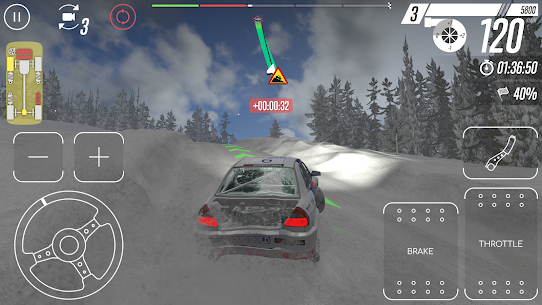
The realistic physics engine is the defining feature of CarX Rally. It does not treat all surfaces the same. Gravel gives you more slide and requires earlier braking. Tarmac offers grip but punishes overcorrection. Snow demands smooth, measured inputs or your car will step out and refuse to come back. Each surface has a distinct feel, and that feel changes based on your car’s weight, setup, and chosen tire compound.
This is where CarX Rally separates itself from arcade-style mobile racers. Players who treat every surface the same will hit walls, miss checkpoints, and burn through repair coupons fast. However, players who learn to feel the difference between surfaces — and adjust their inputs accordingly — begin to drive with flow rather than force. The physics engine rewards patience and punishes panic.
The Rally Racing Setting, Tone, and Career Premise
The game takes place across varied rally locations, from forest stages with tight hairpins to open night-time circuits with detailed dashboard lighting. The tone is gritty and competitive. There is no narrative in the traditional sense. Instead, the progression arc is the story — you begin with a small selection of cars and limited championships, and you build upward through wins, unlocks, and Rally Pass rewards.
The atmosphere leans toward authenticity rather than spectacle. Improved night-time lighting and dashboard animation reinforce the sense that you are inside a real rally car. The locations feel distinct from one another. Additionally, the damage model means no two races play out identically — a single collision at the wrong moment can compromise your pace for the rest of the stage.
How CarX Rally Compares to Rush Rally 3 and Rally Fury on Mobile
Rush Rally 3 is the most direct competitor. Both games target mobile players who want physics-based rally racing rather than arcade-style driving. The key difference is in approach: CarX Rally rewards smooth, flowing inputs and prioritises feel, while Rush Rally 3 rewards precision and offers deeper multiplayer options including real-time online races. Rush Rally 3 also charges an upfront purchase fee, whereas CarX Rally is free to play with optional in-app purchases.
Rally Fury — Extreme Racing is another mobile competitor, but it sits at a more arcade-friendly level. It lacks the surface-specific physics depth that CarX Rally’s engine delivers. For players who want a genuine simulation feel on a mobile device without paying upfront, CarX Rally is the stronger starting point.
How CarX Rally Controls and Gameplay Mechanics Function
CarX Rally offers three distinct control schemes, which means players can find an input method that works for their device and their hands. This flexibility is important because rally driving requires constant micro-adjustments. A control scheme that fights you will cost you stages.
The game also supports Xbox controller connection on Android devices, though without vibration feedback. Most players start with touch controls, then migrate to gyro once they feel confident with the braking and throttle inputs.
Steering, Throttle, and Braking Across Three Control Schemes
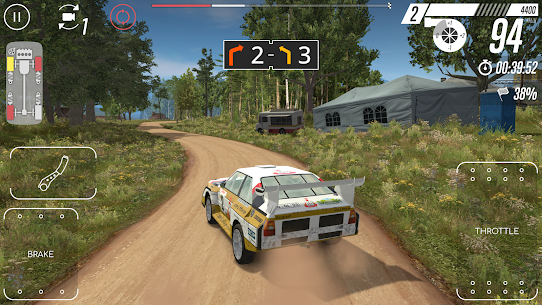
The touch steering option places directional arrows on screen. Players tap left or right to steer, and press the on-screen pedals to brake and accelerate. This scheme is accessible and works well on smaller screens. However, it reduces the range of steering adjustment available to the player, so precise cornering takes longer to develop.
The floating steering wheel option gives a virtual wheel on screen. Players turn it left or right with a finger. This provides more granular steering control. Therefore, many intermediate players prefer this option as they develop their feel for the physics engine.
The Gyro, Touch, and Tilt Control Options Explained
The gyro control scheme uses the device’s built-in tilt sensors to steer. Players physically tilt the phone left or right. This option offers the most natural feel for how a steering wheel responds in real life. However, it requires a stable playing position — gyro inputs are sensitive, and any unintended movement of the device translates directly into unwanted steering input.
Players can fully customise where each on-screen control element sits. This means the accelerator, brake, and steering inputs can all be repositioned to match hand size and screen size. Consequently, players on smaller phones are not penalised by default layout choices. Experimenting with control placement early is one of the fastest ways to cut lap times without changing anything else.
What Happens When You Cross the Finish Line or Miss a Checkpoint
Crossing the finish line records your stage time and tallies it against the championship standings. Each race in a championship is a timed stage — your total time across all stages in a tournament determines your final position. Missing a checkpoint triggers a penalty. Players must either return to the missed gate or accept a time addition, which can eliminate any chance of a podium finish.
The restart coupon system comes into play here. Players who hold restart coupons — earned through Rally Pass rewards and daily challenges — can reset a stage without losing championship progress. This makes coupons a genuine strategic resource, not just a convenience item.
How Car Settings and Tuning Shape Your Race Results
The car settings system in CarX Rally goes deeper than most mobile racing games. Players are not limited to engine upgrades and paint jobs. The game allows adjustment of camber, toe, and shock rebound rate — mechanical parameters that directly affect how the car handles under load. Most players scroll past this screen. However, players who engage with it gain a measurable advantage in championship stages.
The system is optional. Players can race with default settings and still progress. But understanding even the basics of tire choice — the most accessible setting in the menu — will improve lap times significantly. The tuning interface is not explained in-game with a tutorial, so this section fills that gap.
Choosing the Right Tires for Dirt, Gravel, Snow, and Tarmac
Tire selection in CarX Rally is not cosmetic. Each compound is optimised for a specific surface. Soft compounds generate more grip on loose surfaces like dirt and gravel but wear faster and lose performance mid-stage. Hard compounds hold up longer on tarmac and ice but provide less initial grip. Using a soft tire on tarmac overheats it quickly. Using a hard tire on gravel makes the car feel numb and unresponsive.
Before every championship, players see the surface type for each stage. Choosing the right compound for the majority surface in a multi-stage championship is the single highest-impact setup decision available. For beginners, the rule is simple: soft on loose, hard on sealed, and medium when the event mixes both.
Adjusting Camber, Toe, and Shock Rebound for Your Driving Style
Camber controls how far the wheel tilts relative to the road surface. Negative camber — where the top of the tire leans inward — improves cornering grip by maximising contact during turns. However, too much negative camber hurts straight-line stability. Start with small adjustments of one or two degrees and test the result in a practice stage before locking it in for a championship.
Toe refers to whether the front wheels point slightly inward or outward. Toe-in increases stability and reduces oversteer. Toe-out increases turn-in response but makes the car more likely to slide at speed. Shock rebound rate controls how quickly the suspension recovers after compression. A slower rebound suits rough, broken surfaces. A faster rebound suits smooth tarmac stages where the car needs to stay planted.
How Realistic Car Damage Affects Performance Mid-Race
The realistic car damage model in CarX Rally is not just visual. Collisions with barriers, roadside objects, and terrain features cause mechanical degradation. A damaged front end affects steering response. Suspension damage reduces stability. Engine damage cuts power output. Players who drive aggressively through the first half of a long stage may find their car barely controllable by the final corners.
Repair coupons allow mid-session repairs at designated service points within a championship. Players earn these through Rally Pass participation and daily challenges. Using a repair coupon at the right moment — after a damaging section but before a technically demanding one — can save a championship result.
How the Championship System and Rally Pass Work
The championship system is the backbone of progression in CarX Rally. It replaced an older tournament structure with a more flexible system that allows players to select their difficulty before competing. This means beginners are not thrown into the same race conditions as experienced players. However, difficulty selection also affects the quality of rewards on offer.
The Rally Pass adds a second progression layer alongside championships. It operates on a seasonal basis and rewards players for completing race-based tasks within a set period. Together, these two systems create a loop that keeps the game fresh well beyond the initial learning stages.
How the Championship System Structures Progression Across 35 Tournaments
The 35 championships in CarX Rally span a range of car classes, surface types, and difficulty tiers. Players do not unlock all 35 at once. Instead, earlier championships gate access to later ones. Winning a tournament at a given difficulty level earns currency and car parts. Those rewards fund the car upgrades needed to be competitive in the next tier.
Some championships are restricted to specific car categories — classic muscle cars in some, modern rally builds in others. This means players cannot simply buy one car and use it forever. The game encourages building a varied garage. Therefore, spending early currency wisely — rather than sinking everything into one vehicle — is a key strategic decision for long-term progression.
What the Rally Pass Rewards and How to Use Them Effectively
The Rally Pass is a time-limited reward track. Players progress through it by earning Rally Pass points, which come from completing stages, finishing championships, and completing daily challenge tasks. Each tier of the Pass unlocks a reward — repair coupons, restart coupons, engine parts, car parts, and in-game currency.
The free version of the Rally Pass offers meaningful rewards. Players do not need to purchase the premium tier to benefit from the system. However, the most efficient approach is to play daily in short sessions rather than in long infrequent bursts. Daily challenges refresh every 24 hours. Completing them consistently maximises Rally Pass point accumulation without requiring extra race time.
How Repair Coupons and Car Parts Keep You Competitive
Repair coupons allow players to restore their car’s condition at service points during championship events. Without them, a heavily damaged car must finish the stage in its current state. Car parts are used to upgrade specific vehicle components — engine output, suspension stiffness, and braking performance. Both resources are finite and earned, not purchased endlessly.
Managing these resources is a genuine part of CarX Rally strategy. Players who spend repair coupons on minor damage early in a championship may find themselves with a degraded car and no coupons in the final stages. Saving coupons for stages where damage is most likely — rough terrain and night stages — is the most effective approach.
What CarX Rally’s Diverse Car Roster Offers Racers
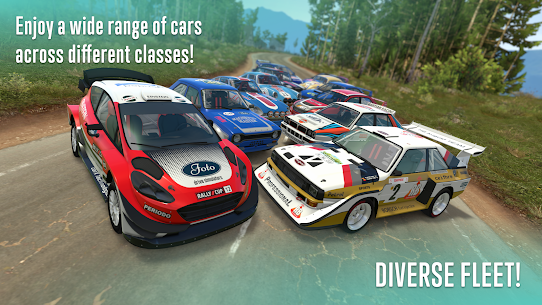
The car roster in CarX Rally covers a wide range of vehicle types. Players begin with access to a small number of cars. Additional vehicles unlock through championship wins and in-game currency purchases. Each car has distinct handling characteristics that reflect its real-world category — a classic muscle car behaves very differently from a lightweight modern rally build.
The selection is designed to satisfy different driving preferences rather than to push all players toward one optimal vehicle. Some players prefer the raw power and drift tendency of heavier cars. Others prefer the nimble, quick-responding feel of purpose-built rally machines. Both paths work within the championship system.
How the Car Selection Covers Different Racing Styles
Classic muscle cars in CarX Rally are heavier and more prone to oversteer. They reward players who are comfortable with the rear stepping out and who can control a slide using throttle alone. Modern rally builds are stiffer, lower, and more direct. They respond faster to steering input but are less forgiving when pushed beyond the limit of grip.
Players who enjoy the physics engine’s surface-dependent character will find the car selection amplifies that experience. A muscle car on snow feels dramatically different from a rally-spec car on the same stage. Switching between car types on familiar stages is also a useful way to develop a more complete understanding of how the physics engine behaves across different weight classes.
How Unlocking New Cars Works Through Race Wins
New cars become available through championship rewards and the in-game store. Players earn currency by finishing stages and completing championships. That currency unlocks both new cars and individual upgrade components. The progression pace is deliberate — it takes consistent play across multiple championships to build a full garage.
Some cars also appear as Rally Pass rewards. Players who participate regularly in each season’s Pass will gain access to vehicles that are not available through the standard championship route. This creates an additional reason to engage with the daily challenge system.
What Makes Classic Muscle Cars Different From Modern Rally Builds
Classic muscle cars in CarX Rally carry more weight and generate more power from lower in the rev range. This makes them physically easier to rotate into corners using the throttle, but harder to catch when the rear breaks loose. On gravel and dirt, this tendency is manageable. On snow and tarmac, it demands constant attention.
Modern rally builds respond differently. Their suspension geometry and lower centre of gravity keep them planted through corners where a muscle car would be sliding. However, they require more precise steering input. Players who switch between both types — rather than committing to one — develop a broader skill set and find themselves more adaptable across the diverse championship surface types.
Top Hidden Features and Advanced Tactics Most Players Miss
Most players in CarX Rally focus on driving technique and ignore the systems that run alongside it. However, three areas of the game are consistently overlooked: the night racing visual layer, the return-to-track button logic, and the graphics quality settings. Each of these has a practical impact on race results, not just on how the game looks.
Understanding these features does not require advanced driving skill. It requires knowing they exist and knowing what to do with them.
How Night-Time Lighting and Dashboard Animation Affect Race Reads
Night stages in CarX Rally use an improved lighting system that makes track edges and surface changes harder to read at speed. The dashboard animation adds a layer of immersion, but it also blocks a small portion of the player’s field of view in cockpit camera mode. Players who struggle on night stages should switch to a chase camera temporarily — this restores full visibility and makes the track edges easier to read until the stage becomes familiar.
The lighting system also reveals surface texture more clearly on dirt and gravel in night conditions. Ruts and bumps cast small shadows. Experienced players use these visual cues to anticipate rough sections and soften their throttle before the suspension takes impact.
How to Use the Return-to-Track Button Without Losing Time
The return-to-track button resets the car to the last valid track position. Many players tap it immediately after going off-road, which is often a mistake. The animation takes time, and the car resets with a slight delay. In some situations — particularly when the car is only slightly off the track edge — self-recovery through throttle and steering is faster than using the button.
Use the button when the car is facing the wrong direction, stuck against a barrier, or sitting off the track with no clear recovery line. Avoid it for minor excursions where the car is still roughly aligned with the track. Saving those extra seconds across a multi-stage championship is where this tactic pays off.
Why Graphics Quality Settings Change the Gameplay Experience on Older Phones
CarX Rally includes adjustable graphics quality settings, which means players on lower-end Android devices do not have to accept stuttering gameplay. Reducing the graphics quality setting improves frame rate consistency, which directly affects control responsiveness. A game running at a stable lower frame rate is more playable than one running at a higher frame rate with intermittent drops.
Players on mid-range devices should test both the medium and high settings in a single stage and compare the smoothness of the steering response — not just the visual quality. Smooth frame delivery matters more in rally racing than visual fidelity, because late input response caused by frame drops is often the reason cars hit barriers.
Best CarX Rally Tips and Tricks for Beginners
The most important habits in CarX Rally are built in the first few hours of play. Players who develop the right approach early progress through the championship system steadily. Players who skip the tuning screen, ignore the checkpoint gates, and spend repair coupons carelessly will find progression stalls quickly.
The three tips below are specific to CarX Rally’s systems and do not apply to other mobile racing games. Each one addresses a failure point that regularly eliminates players from championship contention.
How to Match Tire Compound to Surface Before Every Championship Stage
Before entering a championship, CarX Rally displays the surface type for each included stage. Many beginners ignore this screen and race on whatever tire was last selected. This is the single most common reason beginners lose championships they should be able to win.
Check the stage surface list before confirming your car setup. If the majority of stages are on dirt or gravel, select a soft compound. If most stages are on tarmac or snow, select a harder compound. For mixed-surface championships, medium compounds are the correct default. This one adjustment — matching tire to surface — immediately reduces the number of handling errors per stage.
How to Read the Checkpoint System and Avoid Stage Penalties
Checkpoints in CarX Rally are physical gates on the track. Players must pass through them in order. Missing one does not end the race but it triggers a time penalty. However, the penalty only applies if the player does not return to collect the missed gate. Players can reverse back through a missed checkpoint without penalty if they do it before crossing the next gate in sequence.
The practical implication is this: when approaching a tight corner where the checkpoint gate sits off the racing line, slow down more than feels necessary. Clipping the gate is enough. Players do not need to drive cleanly through the centre. Additionally, learning the location of checkpoint gates on familiar stages removes the need to react to them and allows full focus on the driving line.
Avoiding the Most Common Failure Points in Early Championships
The early championships in CarX Rally are designed to introduce surface variety. Many beginners attempt them on default car settings with no tire adjustment and find themselves sliding off the track repeatedly. The physics engine does not forgive this — the car will not steer back onto the track automatically.
The fix is to brake earlier than feels necessary, especially on gravel and snow stages. The realistic physics engine requires players to slow the car before the corner, not during it. Players who trail-brake — releasing the brake gradually as they turn in — will find the car rotates cleanly. Players who brake in a straight line and then release fully before turning will carry too much speed into the corner. This is the most important technique in the entire game, and it takes deliberate practice on the same stage more than once to develop properly.
Frequently Asked Questions About CarX Rally
Is CarX Rally free on Android and iOS?
CarX Rally is free to download and play on both Android and iOS. The core racing experience, including all championship stages, is fully accessible without spending money. Optional in-app purchases include individual cars, in-game currency, and a premium Rally Pass tier. Players who prefer not to spend can progress through all 35 championships using only earned rewards.
How hard is CarX Rally to play for beginners?
CarX Rally has a learning curve due to its realistic physics engine, which responds differently on each surface type. Beginners may find early stages challenging until they understand braking timing and tire selection. However, the championship difficulty selector allows newcomers to start at an easier level and build skills progressively without being forced into advanced conditions from the first race.
Does CarX Rally get regular updates and new content?
CarX Rally receives consistent updates from CarX Technologies. Recent versions have added new cars such as the QUAD T2 and EVA X, expanded graphics settings, dashboard animations, and the ICE HILLS expansion. The Rally Pass refreshes each season with new reward tracks. Developer updates also address bug fixes, collision physics improvements, and save system stability on a regular basis.
Why CarX Rally Is Worth Your Time as a Mobile Racer
CarX Rally is best suited for players who want a mobile racing game that takes driving seriously. It is not an arcade title. The realistic physics engine, surface-specific tire system, and championship-based progression all demand real attention and skill development. Casual players will still find enjoyment in the variety of cars and locations, but the game’s real reward comes to those who engage with the tuning system and commit to improving their technique. After playing through multiple championship tiers and experimenting with car setup across gravel, tarmac, and snow stages, the satisfaction of a clean, fast stage time feels earned in a way that few mobile racers deliver. CarX Rally is the most complete free-to-play rally racing experience currently available on Android and iOS.
Images


Download links
ℹ️ Download link not working? Please refresh the page and try again.
About Game
- When the game is opened, press the GUEST MODE button.
Developer's apps


Related apps





What's new
Optimization and bug fixes
New Apps
Most Played Mobile Games


