
Beyond the Wall APK (FULL GAME)
Rocking Toy
May 27, 2026
175 MB
2.4.1
Varies with device

Description
Beyond the Wall drops you into a hand-drawn garden world with no dialogue and no on-screen instructions — just clever puzzles and a curious girl searching for her missing friend. This post is written for new players and first-time point-and-click fans who want to enjoy the game without hitting a frustrating wall. This post covers how the core tap-and-combine mechanic works, how to use the sketch-hint system, and the most effective strategies for clearing every one of the 13 levels.
What Is Beyond the Wall and How Does It Compare to Similar Mobile Games
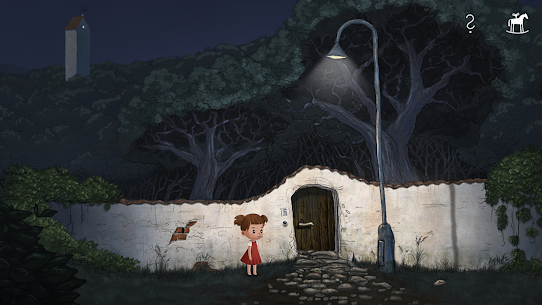
Beyond the Wall is a premium point-and-click adventure developed by Rocking Toy, an independent studio based in the Czech Republic. The game follows a young girl who rings her friend’s doorbell on a summer night, finds the light on but no one answering, and ventures past the wall of a mysterious garden. What begins as a simple childhood mystery unfolds into a fantastical world where reality and imagination blur across 13 hand-crafted scenes.
Rocking Toy built this title entirely for mobile, releasing it first on iOS and Android in 2022. The team focused on atmosphere over volume. Every level is short and focused, designed to be completed in a single sitting. The result is a game that feels curated rather than padded.
The tap-and-combine puzzle mechanic and how it drives every scene
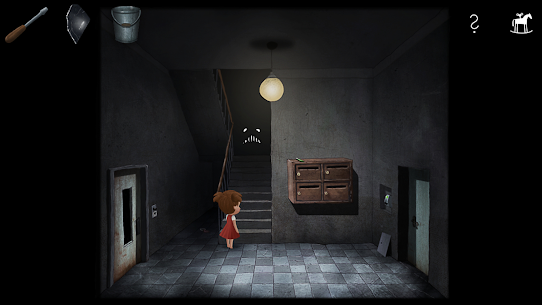
The core of every level is the tap-and-combine mechanic. Players tap objects in a scene to pick them up, store them in a small inventory, and then use or combine them to unlock the next step. No text prompts appear. No arrows point to the right answer. The game communicates entirely through visual logic and scene design.
This approach keeps puzzle solving tactile and immediate. Because there is no dialogue or narration, players read the environment directly. An item that looks out of place usually matters. A creature blocking a path almost always needs something specific to move it along.
The mysterious summer-night story and what gives it its atmosphere
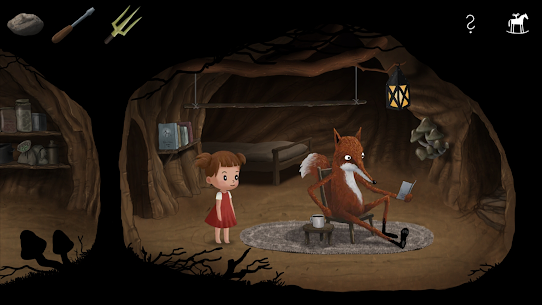
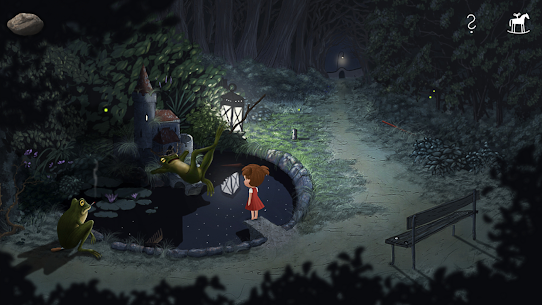
The story is simple on the surface. A girl goes looking for her friend and finds something unexpected beyond the garden wall. However, what makes the narrative work is tone. The game mixes childlike wonder with mild eeriness — shadow monsters appear without explanation, a fox named Mr. Fox blocks your path, and smoking frogs occupy scenes with complete deadpan seriousness.
No spoken words appear at any point. Characters communicate through gesture and expression. This silence creates a dreamlike quality that reviewers have compared to childhood memories. The original soundtrack, which changes with every level, reinforces the mood without over-explaining it.
How Beyond the Wall compares to Lost in Play and Rusty Lake on mobile
Lost in Play (iOS/Android, 2023) is the closest mobile comparison. Both games follow a child protagonist through a wordless fantasy world, both rely on item-based puzzle solving, and both use hand-drawn art to carry the story. However, Lost in Play offers a longer runtime and more varied mini-game mechanics. Beyond the Wall keeps its puzzle logic purer and more traditional.
The Rusty Lake series (iOS/Android) represents a darker tonal comparison. Rusty Lake puzzles are generally stranger and more abstract, while Beyond the Wall keeps its puzzle logic rooted in physical cause and effect. Players who enjoy Rusty Lake’s atmosphere but want something gentler and family-friendly will find Beyond the Wall a natural next step.
How Beyond the Wall Gameplay and Controls Actually Work
The controls in Beyond the Wall are straightforward. Players tap anywhere on screen to interact. A tap on an item adds it to the inventory at the bottom of the screen. A tap on a character, object, or obstacle triggers a reaction, which either advances the puzzle or signals that something else is needed first. There are no virtual joysticks, no swipe gestures, and no timed actions.
This simplicity is deliberate. Because the puzzles vary significantly in design from level to level, the controls stay consistent so players can focus on logic rather than mechanics. The challenge is never about how you input a command — it is always about figuring out what command to give.
Tapping to pick up and interact with scene objects
Each scene contains a small number of interactive objects. Players tap them to collect items or trigger reactions. Some objects react immediately. Others require a specific item from the inventory before they respond. The game never tells players which is which — they learn by trying.
A key detail is that interactive items have no hotspot indicator. No glow, no highlight, no cursor change appears when players hover over a tappable object. This is a deliberate design choice, but it means that small or background objects can be easy to miss. Patience and careful scene-reading are more valuable here than speed.
Combining collected items and when to use them
The inventory holds multiple items at once. Players combine items by tapping one and then tapping another while both are in the inventory. Not every combination works. The game signals a failed combination through a brief animation and returns both items to the inventory. Players need to experiment logically rather than randomly.
Most puzzles use item combination at a critical step. For example, a single collected object might not work on an obstacle alone, but combined with a second object found nearby, it becomes the exact tool needed. Recognising when to combine — rather than when to use items separately — is the key skill the game builds across its 13 levels.
What happens when a level puzzle is fully solved
When all interactive elements in a scene resolve correctly, a short transition animation plays and the girl moves to the next scene. The automatic checkpoint system triggers at this point, saving progress so players never need to replay a completed level. The transition is seamless — there is no score screen, no rating, and no star system.
This linear progression keeps the focus on atmosphere rather than performance. Players always move forward. The story advances even if the puzzle took thirty attempts and three uses of the sketch-hint system. That forward momentum is one of the game’s most relaxing qualities.
What the Hand-Drawn Art and Dialogue-Free Design Add to the Game
Rocking Toy built every visual asset by hand. All backgrounds are hand-drawn and digitally colored. All characters use traditional flat animation, which gives the game a storybook quality that feels distinct from most mobile titles. The result is a visual style that works as both art and gameplay tool — scenes are readable and expressive without needing a single line of text.
This approach required careful composition. Every scene needs to communicate its puzzle logic visually. Players must be able to look at a level and understand what the environment is asking of them without a tutorial or prompt. The hand-drawn style achieves this by making interactive elements feel slightly more vivid than their backgrounds, even without a formal highlight system.
How the hand-drawn visuals and flat animation set the tone per level
Each of the 13 levels has a distinct visual identity. Early scenes feel warm and autumnal — gardens, paths, and familiar outdoor settings. Later scenes grow stranger, introducing shadow figures and surreal spaces that gradually shift the tone. The flat animation keeps characters expressive while staying consistent with the storybook aesthetic.
This tonal progression works because the art direction leads it. Players sense the shift before the puzzles change in difficulty. The visuals prepare them emotionally for each new challenge, which is a sophisticated design choice for a game with no narration.
Why no spoken words forces players to rely on visual puzzle logic
The absence of dialogue is the game’s most significant structural decision. Without words, every puzzle must be self-explanatory through visual context alone. An item on screen signals its purpose by what it looks like and where it sits relative to the obstacle it solves. Players develop a close-reading habit quickly because the game trains them from the first scene.
This approach also eliminates the language barrier entirely. Beyond the Wall works identically in any language because it uses none. Reviewers across multiple regions have praised it for this. The trade-off is that some puzzles require a second look — but that second look is exactly what the game rewards.
How the original per-level music score changes across the 13 scenes
Every level in the game has its own original composition. The music shifts from gentle and playful in early scenes to subtly unsettling in later ones. This is not background noise — it is an active part of the puzzle atmosphere. Certain music cues signal that a puzzle is solvable, while a shift in tone often indicates the scene has changed in some way.
Playing with headphones is worth the effort. The authentic sound effects — rustling leaves, the girl’s small exclamations — layer into the score in ways that reward attention. The combination of per-level music and silence-based storytelling creates an atmosphere that many players describe as uniquely calming for an adventure game.
How the Sketch-Hint System Works in Beyond the Wall
The sketch-hint system is one of the most thoughtful features in the game. Every level contains a question mark button in the top right corner of the screen. Players tap it to see a children’s drawing — a rough, crayon-style sketch that suggests how to approach the current puzzle without revealing the exact solution. It shows a direction, not an answer.
This design respects the player’s intelligence. Rather than handing over the solution immediately, the hint keeps the puzzle alive. Players still need to interpret the sketch and figure out what it means in context. Most of the time, one hint is enough to unstick a stalled attempt without removing the satisfaction of solving the puzzle.
Where to find the hint button in each scene
The hint button appears as a small question mark icon in the top right corner. It is present in every playable scene. Players do not need to unlock it or earn it — it is always available. However, because the icon is small and sits at the edge of the screen, some players miss it entirely in their first session.
Knowing the hint button exists matters most in early levels. New players who get stuck and resort to random tapping often spend far longer on a puzzle than players who check the hint once and return to the scene with a clearer direction.
What the children’s drawing hint shows — and what it deliberately hides
The hint sketch shows the approximate action or interaction needed to advance the puzzle. It might show an item being placed in a specific location, or a character being approached from a particular direction. However, it never shows the full sequence. Players still need to figure out which inventory item applies and in what order.
Because the hints are drawn in a deliberately rough, childlike style, they require interpretation. Two players might read the same hint differently and arrive at the solution from different angles. This ambiguity is intentional. It keeps the hint system feeling like a nudge rather than a cheat.
When to use the hint and when to keep scanning the scene yourself
The hint is most valuable after a player has already interacted with every visible object at least once and still cannot progress. If there are untapped areas of the screen, those should come first. The hint becomes genuinely useful when the puzzle logic is clear but one specific item or interaction is missing.
Players should avoid using the hint at the very start of a new scene. Giving the scene a full minute of independent attention first makes the hint far more effective when it is needed. Additionally, some puzzles reveal their logic only after a first failed attempt — the hint works best as a second opinion, not a first step.
How Progression and Automatic Checkpoints Work Across 13 Levels
Beyond the Wall uses a purely linear level structure. Players move through 13 scenes in a fixed order, with each level building on the atmosphere of the last. There is no branching path, no level select screen, and no way to skip ahead. Every scene must resolve before the next one opens.
This linearity is a strength, not a limitation. Because the game controls its pacing entirely, the tonal shift from early warmth to later eeriness lands as intended. Players experience the story in the order it was designed, which matters in a narrative that depends on atmosphere rather than exposition.
How the linear level structure moves the story forward
Each level advances the girl’s journey by one location. She moves deeper into the garden world, encountering new characters and increasingly unusual environments. The story never explains itself directly — it shows a child navigating a strange world with curiosity rather than fear. Because no text appears, the level design itself carries the plot.
Progress feels earned rather than granted. Players cannot skip a scene they find difficult. Therefore, by the time the later levels arrive, players have built exactly the puzzle-reading skills those scenes require. The difficulty curve is not accidental — it is built into the structure.
How the automatic checkpoint system saves your place between levels
After a level resolves, the game automatically saves. Players who close the app mid-session return to the start of their current level, not the start of the game. This checkpoint system means Beyond the Wall is well suited to short play sessions — ten to fifteen minutes at a time, one or two levels per sitting.
However, checkpoints save between levels only — not within them. If a player exits the game mid-puzzle, they restart that level from the beginning. This is worth knowing before closing the app on a partially solved scene.
What completing all 13 levels reveals about the story’s ending
The final level delivers the story’s emotional conclusion without a word of dialogue. The meaning of the girl’s journey, the nature of the garden world, and the fate of her missing friend all resolve through a short sequence of visual storytelling. Reviewers have described the ending as genuinely affecting — a small but considered payoff for players who stayed patient with the puzzle design.
The ending has more resonance when players take their time. Rushing through with hints on every scene misses the tonal build that makes the conclusion land. The game rewards players who engage with its atmosphere as much as its puzzles.
Why Small Items and Hotspot Visibility Are Beyond the Wall’s Hardest Challenge
The most common complaint in player reviews is consistent: items are small, and there is no visual indicator when a tappable object is nearby. This is the game’s single most significant difficulty spike — not puzzle complexity, but item visibility. Players who understand this going in will handle it far better than those who discover it mid-scene.
The absence of hotspot indicators is a deliberate choice rooted in the game’s mobile origins. On a small screen, every tap must matter. Players learn to treat the whole scene as a puzzle, not just the obvious foreground elements.
Why interactive items have no hotspot indicator and how to find them
Unlike many point-and-click mobile games, Beyond the Wall does not highlight or glow interactive objects when players tap near them. There is no cursor change, no shimmer, and no sound cue that signals an item is nearby. Players must rely entirely on visual reading and logic.
Items that matter tend to sit slightly apart from background decoration. A tool leaning against a fence, a small object in the corner of a path, an animal holding something — these are the visual patterns the game uses consistently. Recognising those patterns early is the fastest way to reduce missed items.
The systematic left-to-right scanning method for each new scene
The most effective approach to a new scene is structured rather than random. Start at the top-left of the screen and tap slowly across the scene in horizontal passes, moving downward. This left-to-right, top-to-bottom scan takes less than thirty seconds per scene and catches most interactive items before attempting the puzzle.
Players who tap randomly in the centre of scenes miss edge-placed items consistently. The game places objects across the full screen canvas, including corners and foreground edges. A structured scan is faster and less frustrating than instinct-driven tapping.
Which scene types are most likely to hide items in plain sight
Outdoor garden scenes with dense foliage are the most common source of missed items. Leaves, branches, and shadows provide natural camouflage for small collectibles. Players should give these scenes extra attention, specifically looking for shapes that break the natural pattern of the background.
Interior or near-wall scenes are generally clearer. Items in these locations tend to sit on flat surfaces or near obvious interaction points. However, low-light scenes — those that occur later in the game near the shadow monster sequences — require extra care because the contrast between items and background is lower by design.
Best Beyond the Wall Tips and Tricks for Beginners
Starting strong in Beyond the Wall means building three habits early. First, resist the hint button until a scene has been fully scanned at least once. Second, always try combining inventory items before assuming a puzzle requires something new. Third, tap every character or creature in a scene, not just the obvious obstacles. Many key interactions are triggered by tapping a character rather than an object.
These habits build on each other. The game rewards methodical players far more than fast ones. Because there is no timer and no score, patience has no cost — it only helps.
How to use the tap-and-combine mechanic without burning through the hint system
The key to keeping hints in reserve is treating item combination as the first step when stuck, not the last. Many puzzles that appear to need a new item actually need two existing inventory items used together. Before checking the hint, try every possible combination of current inventory items first.
Additionally, some items in Beyond the Wall have dual uses — they work on one obstacle alone and on another obstacle when combined. Players who use an item on the first available obstacle and discard the logic after miss these secondary uses. Keep item options open until a level fully resolves.
How to track which items belong to which scene puzzle in the inventory
Beyond the Wall levels are self-contained, meaning every item collected in a scene is used within that same scene. Players do not carry items between levels. However, within a single scene, the inventory can fill with several items at once, and it is easy to lose track of which item belongs to which obstacle.
A useful habit is to associate each item mentally with the obstacle it logically matches the moment it is collected. A rope near a well, a key near a locked gate — these pairings are usually obvious from scene composition. When a combination feels counter-logical, that is often the puzzle’s intended misdirection.
Why rushing past Mr. Fox and shadow monster encounters always costs time
Mr. Fox and the shadow monster sequences are the game’s signature encounter types. Both require specific item interactions to resolve, and both punish players who tap randomly out of instinct. Mr. Fox in particular blocks progress at a key point and requires an item interaction that is not immediately obvious.
Shadow monster scenes shift the visual tone of the game significantly. These scenes tend to be darker and more ambiguous in their puzzle logic. Players who slow down and re-read these scenes carefully — rather than panicking and tapping everywhere — resolve them faster. The hint system is especially valuable here if the structured scan has not surfaced the required item.
Frequently Asked Questions About Beyond the Wall
Is Beyond the Wall available on Android and iPhone?
Yes, Beyond the Wall is available on both Android and iPhone. Players find it on the Google Play Store for Android devices and the Apple App Store for iOS. The game also released on Steam for PC in March 2023. It is a premium title with a one-time purchase price and no ongoing subscription required.
How long does it take to complete Beyond the Wall?
Beyond the Wall takes most players between 30 minutes and one hour to complete, depending on experience with point-and-click games. Players who use the sketch-hint system freely will finish faster. Players who avoid hints and scan scenes carefully will take longer. The game contains 13 levels, each designed for a short focused session.
Does Beyond the Wall have in-app purchases or ads?
Beyond the Wall contains no in-app purchases and no advertisements. It is a fully premium game — players pay a one-time fee of $1.49 to $2.99 depending on platform and region. According to the developer Tomas Barnet, the app’s privacy practices include no data collection, making it a clean, ad-free experience from start to finish.
Why Beyond the Wall Is Worth Playing for Mobile Puzzle Fans
Beyond the Wall is best suited to players who want a calm, focused puzzle experience with genuine artistic craft behind it. It is not the right game for players seeking hours of content or complex branching mechanics. However, for mobile users who value atmosphere, hand-drawn visual storytelling, and puzzle design that trusts the player’s intelligence, this title delivers something rare.
The sketch-hint system, the dialogue-free narrative, and the per-level music score are not incidental features — they are the whole experience. Rocking Toy built a game that treats silence and observation as its primary mechanics. In my time with the game, the moment that stayed with me was not a difficult puzzle but a quiet scene where the music shifted and the visual tone changed without warning, signalling that the story had moved somewhere unexpected.
For its price, Beyond the Wall offers something most mobile adventure games do not: restraint. Every element earns its place. Point-and-click fans who can accept its short runtime will find one of the most carefully crafted mobile adventures currently available on iOS and Android.
Images
Download links
ℹ️ Download link not working? Please refresh the page and try again.




New Apps
Most Played Mobile Games


